Households with a full weekly load
If you want to dry shorts alongside other clothes, the usable hanging space needs to match the floor space available.


When drying cotton shorts alongside a mixed weekly load, the key is whether the rail layout and spacing suit your clothes and the space available. A heated winged airer can be a good choice if you need room to hang several items side by side; for a smaller load, a narrower model may be enough. Heat doesn’t replace following garment care instructions or airing the room regularly, and it doesn’t tell you how long a load will take to dry.
If you want to dry shorts alongside other clothes, the usable hanging space needs to match the floor space available.
If you want to put the airer away after drying or need a narrower option, compare its dimensions when set up and folded.
If you’re adding heat, remember to check garment care instructions, power consumption and the need to air the room.
A good fit if: You want to hang shorts and other items side by side, then fold the airer flat for storage. According to Adler, the AD 7821 measures 148 × 52.5 × 90 cm when set up and 113 × 52.5 × 8 cm when folded.
Things to consider: You’ll still need a relatively wide space for the airer while it’s in use.
A good fit if: You have less floor space and want to use several tiers. Adler lists the AD 7831 as measuring 73 × 58 cm across the base and 139 cm high when set up.
Things to consider: Check that shorts and larger items fit between the tiers with enough space around them. According to Adler, it remains 139 cm high even when folded.
A good fit if: You only need to dry a few items and are considering a freestanding or wall-mounted option. DOMO says the DO7117DR can be freestanding or wall-mounted using the accessories supplied.
Things to consider: The manufacturer’s dimensions of 52.5 × 36.5 × 90 cm don’t automatically make it suitable for a full weekly load. Check the installation and usage instructions too.
A good fit if: You have enough time and space to dry your laundry and don’t need optional heat. Leifheit lists a drying length of 23 m for the Classic Extendable 230 Solid.
Things to consider: There’s no heating function, and regular ventilation remains important when drying laundry indoors.
| Priority | What to check when buying | Who is this important for? |
|---|---|---|
| Usable space for your load | Compare the rail layout, clearances, dimensions when set up and the size of your clothes. | If I want to dry shorts alongside other items, I need enough space between them, not just lots of rails. Around 28% of consumers put usable hanging space for the whole load first. |
| Floor space and storage | Compare the dimensions when set up and folded separately with the drying space and storage space available. | If you need to put the airer away between uses, check both sets of dimensions. Around 22% of consumers prioritise a small footprint. |
| Suitability for different fabrics | Follow garment care labels and the temperature and usage instructions in the appliance manual; dry items separately if needed. | If I’m drying items with different care needs, or delicate fabrics, I don’t want to switch the heat on without checking first. Around 17% of consumers put fabric care first. |
| Moisture when drying laundry indoors | Check that you can ventilate the drying room properly; if you have problems with damp, keep an eye on humidity levels. | If I dry damp laundry indoors, I still need to be able to ventilate the room well. Around 17% of consumers put managing room humidity first. |
| Power consumption of the heating function | Consider the stated power rating and the actual operating time separately; the rated power isn’t a measurement for each load. | If you want to use extra electric heat as efficiently as possible, consider how long you’ll need to run the airer too. Around 16% of consumers put the power consumption of the heating function first. |
Even an airer with lots of heated rails may not leave enough room for wide shorts or larger clothes.
Compare the dimensions of your usual load with the rail layout and the airer’s dimensions when set up. What matters is whether you can hang items with space between them.
Laundry releases moisture into the air; the heating function doesn’t remove that moisture from the room. The German Environment Agency recommends ventilating more when drying damp laundry indoors.
Choose a suitable place to dry your laundry and make sure you allow for enough air circulation, even when the heater is on.
Ratings of 150 W, 220 W and 1200 W apply to different appliances and aren’t comparable drying-time measurements.
Compare the type of appliance and the operating time you’ll need separately. The wattage alone doesn’t tell you how long your particular load will take to dry.
The models featured here show two different heated designs: a winged airer and a taller tower airer.
The DO7117DR is a narrow heated airer which, according to DOMO, can be used freestanding or wall-mounted.
Dupledry Blue is a covered warm-air dryer with clothes hangers, rather than an airer with heated rails.
The MD 15351 is a narrow heated towel and clothes rail. Check the usable space carefully if you’re considering it for a mixed weekly load.
The Classic Extendable 230 Solid is an unheated alternative to consider if drying length matters more to you than optional heat.
This selection includes foldable heated clothes airers and covered warm-air dryers. The latter work differently from airers with heated rails, so compare their design with your laundry and the space available.
 Image unavailable
The fold-out side wings and central drying area are useful for mixed loads; check that your clothes will fit with space between them.
The description lists a load capacity of up to 10 kg and 230 W. The product title states 45–55 °C; follow your clothing care instructions and the appliance manual.
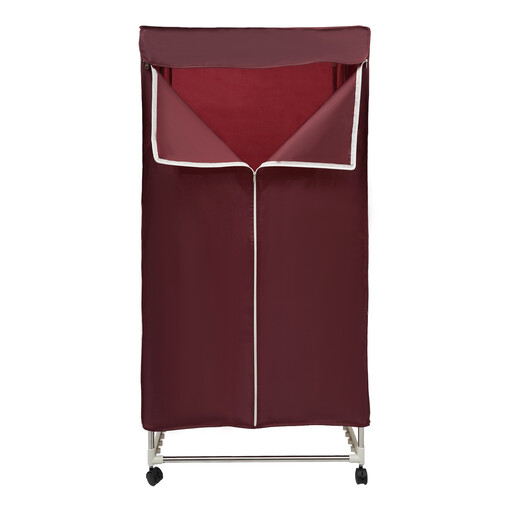 Image unavailable
The adjustable single or double tiers are designed for clothes of different lengths; wheels and a foldable design are useful when moving it between its drying and storage locations.
The description lists a load capacity of up to 66.14 lb and 1200–1500 W. As a covered warm-air dryer, it’s designed differently from an airer with heated rails.
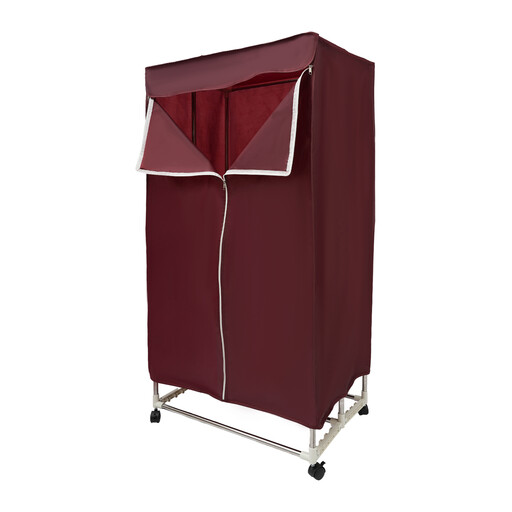 Image unavailable
The stated load capacity may suit larger mixed loads; check that the tiers and drying space work for your clothes.
The title lists 1200 W and a load capacity of up to 66.14 lb. The description also mentions a timer, touchscreen and wheels. It uses a cover rather than heated rails.
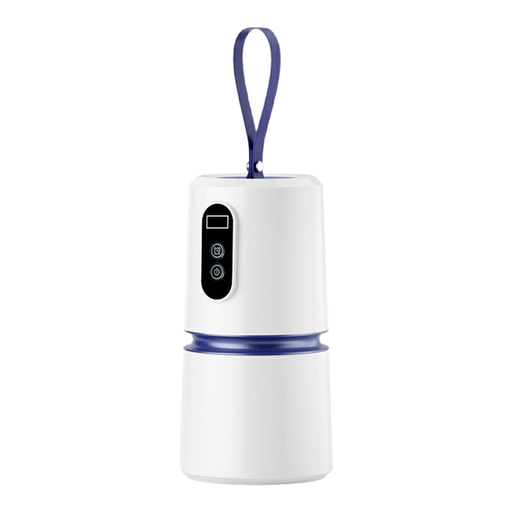 Image unavailable
The stated capacity of 5–10 kg and drying bag may suit smaller loads; compare the capacity with the load you need to dry.
The title lists a timer of up to 240 minutes and a power rating below 500 W. This appliance dries clothes in a bag rather than on heated rails.
Only if the way you hang them and the heat setting are suitable for the care instructions for each item and the appliance manual. The fibre content alone doesn’t tell you whether every item is suitable. According to the manufacturer, you can also switch off the heat on the Adler AD 7821.
Yes, if you’re drying damp laundry indoors. The German Environment Agency recommends ventilating more often or for longer when dealing with this additional source of moisture; the heating function doesn’t remove moisture from the room.
The wattage alone doesn’t tell you how long the appliance will run for your load. Don’t use the stated power rating to compare drying times or energy use per load unless you have measurements for those things.
Check the labelling, manufacturer’s information, instructions and warnings, and the intended location for the specific appliance. The European Commission explains that manufacturers use the CE marking to declare that their product complies with the relevant EU rules; it doesn’t confirm that the appliance is suitable for every location.