Flatshares with towels that are often damp
If you share space for towels and laundry, look for enough usable hanging space and a spot where the air can circulate well.


If towels in your flatshare repeatedly fail to dry in time, a folding airer with heated bars could be a useful addition – provided you have space to set it up and can share the extra electricity costs. If you have enough time, an unheated clothes airer needs no additional electricity for heat; the German Federal Environment Agency lists clothes airers and washing lines as energy-efficient ways to dry laundry. When drying clothes indoors, regular ventilation is important. Before buying an electrical appliance, check that the specific product complies with the relevant requirements.
If you share space for towels and laundry, look for enough usable hanging space and a spot where the air can circulate well.
If you need to clear the drying area after use, compare both the airer’s open dimensions and its folded dimensions.
If you share the running costs, consider how often you really need the extra heat and whether an unheated airer would be enough for your day-to-day needs.
| What matters | What to check | Who is this particularly important for? |
|---|---|---|
| Drying time | Check the number and layout of the heated bars, as well as the space available for your towel sizes. The manufacturer’s drying-time claims are not an independent comparison under your own conditions. | If we regularly need our towels again, a practical hanging arrangement is essential; around 29% of consumers put the drying aid available to them first. |
| Floor and storage space | Measure the space needed while drying and where you’ll store the airer once folded. A compact folded size alone doesn’t tell you how much floor space it will take up when in use. | If you need to clear the shared space after drying, pay particular attention to both sets of dimensions; around 29% of consumers prioritise the space available. |
| Electricity costs | For a rough estimate, multiply the rated power in kilowatts by the actual hours of use, then multiply the kWh figure by your electricity tariff. This gives you an estimate, not a measured reading of energy use. | If we share the running costs in our flatshare, the extra electricity use matters; around 21% of consumers make running costs their main concern. |
| Room conditions and location | Make sure you can ventilate the room regularly and follow the instructions on where the appliance can be set up. An IP22 rating does not automatically mean it can be used anywhere in a bathroom. | For consumers drying clothes indoors who need a suitable place to set up their airer, ventilation and safe electrical use are key; around 21% prioritise room conditions and location. |
A figure in watts shows the rated power, not the measured electricity use for a particular towel or a complete drying cycle.
Compare appliances over the same running time and use your own electricity tariff for the calculation. The actual cost depends on how long you run the appliance.
When you dry clothes indoors, moisture gets into the air. Heat doesn’t remove it from the room. The German Federal Environment Agency recommends regular ventilation when drying damp laundry at home.
Choose a well-ventilated location and continue to let fresh air circulate, rather than relying on the heating function alone.
An airer may take up very little space in storage but still block a passageway or shared room when it’s set up.
Measure the floor space it needs when open and the space available for storage. Allow for the room you’ll need to hang up and take down your towels, too.
An airer with heated bars, a warm-air dryer and a permanently installed dryer all differ in how they’re set up and used.
First decide which type suits your room. If you’re planning a permanent installation in a rented flat, check the local requirements and your tenancy agreement beforehand.
The features mentioned apply to specific product ranges and manufacturers’ claims, not to every product from a brand.
Adler describes the AD 7821 as a folding, mains-powered clothes airer with heated bars for indoor use.
InnovaGoods offers Warmmat, a folding airer with heated bars, and Dupledry, a portable warm-air dryer with a cover.
A heated Clarsen clothes airer is specifically described as suitable for towels, too.
According to the manufacturer, Foxydry Pro is a ceiling- or wall-mounted solution with a warm-air function, designed for permanent installation.
The products below cover different designs: a folding airer with a heating function, portable warm-air dryers and a freestanding heated towel rail. These appliances aren’t interchangeable versions of the same drying system.
 No image available
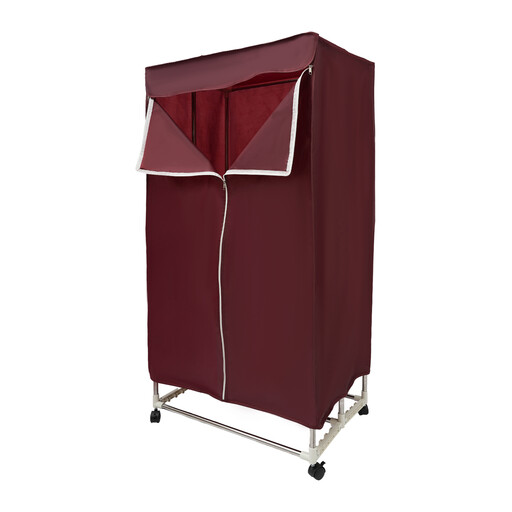
A good fit for a flatshare where you want to dry towels on a freestanding airer that can be folded away afterwards.
The product description on Joybuy lists 230 W, a temperature range of 45–55 °C and dimensions of 144 × 53 × 96 cm.
The rated power isn’t a measured figure for the electricity used per drying cycle. If you dry clothes indoors, regular ventilation is still important.
 No image available
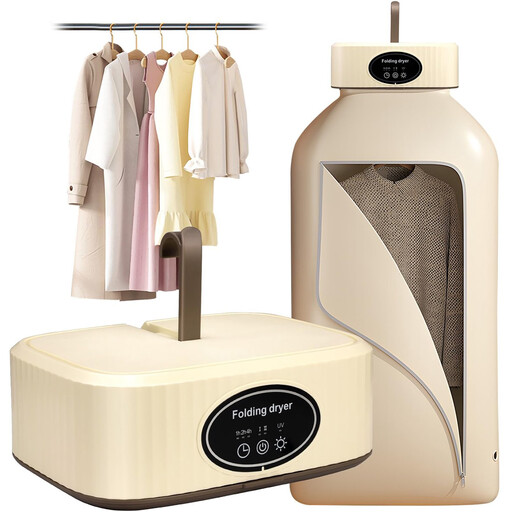
This type could suit you if you’re looking for a portable warm-air dryer for a flat or halls of residence, rather than an airer with heated bars.
The product description on Joybuy lists 1,200 W, touchscreen controls and four timer settings.
A warm-air dryer isn’t a freestanding airer with heated bars. Its rated power alone doesn’t tell you how much electricity one drying cycle will use.
 No image available
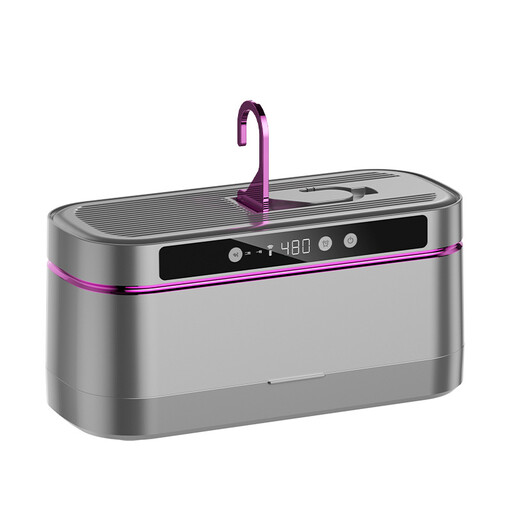
The product description lists towels and halls of residence as suitable uses for this warm-air dryer.
Joybuy lists 600 W, a folding design and timer settings for 1, 2 or 4 hours. It differs from an airer with heated bars.
When using a warm-air dryer indoors, you’ll still need to consider ventilation.
 No image available
The product name is aimed at small rooms in halls of residence and describes a folding, portable design.
It’s described as a warm-air dryer, not a rack with heated bars. Check whether its design suits the floor and storage space you have available.
If you’re drying clothes indoors, remember to allow for regular ventilation.
 No image available
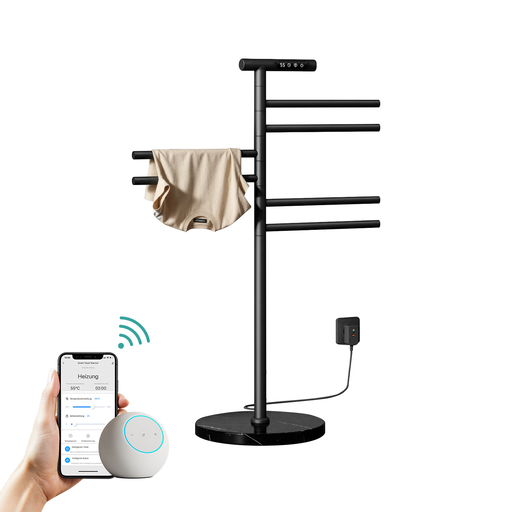
This freestanding alternative is described as suitable for several towels, but it doesn’t provide the folding drying space of a clothes airer.
The product description on Joybuy lists 140 W, six swivel bars, a thermostat and a timer. It also describes app and voice control.
Check where the appliance is intended to be set up and follow the instructions for using electrical appliances in the bathroom.
Yes. The German Federal Environment Agency recommends regular ventilation when drying damp laundry indoors, because the heat from the airer doesn’t remove moisture from the room.
The term ‘heated clothes airer’ doesn’t mean it’s approved for use in a particular spot in the bathroom. VDE outlines safety zones in bathrooms and advises keeping electrical appliances away from showers and baths. Check the appliance instructions; any planned permanent electrical installation should be assessed by a qualified professional.
Divide the rated power in watts by 1,000, then multiply the kilowatt figure by the hours of use. Multiply the result in kWh by your actual electricity price per kWh. This calculation uses the rated power and isn’t a substitute for measuring energy use.
No. Your statutory rights apply to claims against the seller if goods are faulty; a guarantee is an additional voluntary promise, subject to its own terms. The German consumer advice centre explicitly distinguishes between statutory rights and guarantees.
For electrical appliances covered by the EU Low Voltage Directive, CE marking is one of the relevant conformity requirements. The European Commission explains the scope of the Directive; according to Your Europe, the manufacturer uses the CE mark to declare that the product meets the applicable EU rules. It isn’t an independent quality mark and, on its own, doesn’t prove that a specific product listing is compliant.