A heated clothes airer is an option if the care labels on your clean leggings and outdoor layers allow the relevant level of heat, and the airer offers enough separate hanging space. If you need to dry larger garments or want to keep additional electricity use down, a spacious unheated airer may be a better fit. When drying clothes indoors, you still need to ventilate to remove moisture, as recommended by the consumer advice centre.
Who is a heated clothes airer suitable for?
Leggings wearers who take care with laundry
When drying stretchy sportswear, follow the care instructions on the label rather than assuming that extra heat is suitable. Bosch Home Appliances recommends checking the wash symbols; Patagonia’s advice on cleaning waterproof jackets applies to the garments it describes.
Households with several outdoor layers
If you need to dry several clean garments at once, the usable layout of the rails and the airer’s footprint matter. Compare models with differently arranged rails or several tiers, taking into account the space you have and the garments you need to dry.
People who dry clothes indoors
If you don’t have a suitable outdoor space for drying, consider indoor humidity as well as the airer’s footprint. The consumer advice centre recommends regular ventilation to remove moisture.
What should you look for when choosing one?
First compare your clothes’ care instructions, the hanging space you need and the conditions in the area where you plan to dry them.
Heated winged airer with temperature control
Suitable if: you can hang clean clothes separately and their care instructions allow the selected heat setting.
Consider: it needs floor space and electricity; heat is no substitute for cleaning or ventilation.
Basic heated folding airer
Suitable if: a folding airer with heated rails will do, and it fits in your drying area when set up.
Consider: check the available temperature settings and make sure the specific location is suitable.
Large unheated clothes airer
Suitable if: separate hanging space for larger layers matters more than extra heat from the rails.
Consider: it provides no electric heat; a stated drying length does not guarantee a particular drying time.
| What matters |
What to check before buying |
Who it matters to |
| Drying fabrics appropriately |
Care labels, advice on removing dirt and the appliance’s available temperature settings. |
If I’m drying leggings and outdoor clothing, I want to follow each item’s care instructions and avoid using heat indiscriminately. Around 26% of consumers put fabric care first. |
| Separate hanging space |
Rail layout and spacing, tier height and the stated maximum load. |
If I need to dry several pairs of leggings and larger layers at once, I need enough space without overlapping garments. Around 21% of consumers prioritise hanging space. |
| Indoor humidity |
Plan where to put the airer and how to ventilate the room thoroughly or create a cross-draught; monitor indoor humidity if needed. |
If I can only dry clothes indoors, I want to keep an eye on the extra moisture in my home. Around 21% of consumers put indoor air quality first. |
| Floor and storage space |
Check the dimensions when set up and folded separately, and measure the space where you plan to use it. |
If I need to put the airer away after drying, the space it takes up when in use matters just as much as its folded size. Around 16% of consumers prioritise available space. |
| Electricity use |
Compare the rated power and planned running time; the rated power alone doesn’t tell you how much electricity each load will use. |
If extra heat isn’t more important to me than electricity use, I want to factor the planned running time into my decision. Around 16% of consumers put electricity use first. |
Common selection mistakes
-
Assuming heated rails remove dirt or are suitable for every fabric
Heat is no substitute for cleaning dirty outdoor clothing or following the different care instructions for each garment.
Remove heavy dirt before washing, and check the care labels on every item before applying extra heat.
-
Confusing heating with dehumidifying
A heated clothes airer won’t remove moisture from your laundry and carry it out of your home. Inadequate moisture removal can encourage mould growth.
Choose a suitable place to dry your clothes, ventilate regularly and monitor indoor humidity if needed.
-
Comparing only wattage or drying length
The rated power doesn’t tell you how much energy a particular load will use. A stated drying length also doesn’t show whether bulky layers can be hung with enough space between them.
Compare the rail layout, dimensions when set up and folded, and planned running time separately.
Suitable brands and models at a glance
Adler
The AD 7821 is a folding heated winged airer with stated dimensions for use and storage.
- Adler lists 18 heating elements and a rated power of 220 W for the AD 7821.
- The manufacturer’s description doesn’t specify a drying time for leggings and outdoor layers. The IP22 protection rating isn’t a blanket approval for every location.
InnovaGoods
Warmmat is a heated winged airer with a stated choice of temperature settings and a timer.
- According to InnovaGoods, Warmmat has 20 heated rails, six temperature settings from 35–60 °C, a timer of up to 12 hours and a maximum load of 15 kg.
- These manufacturer’s specifications don’t guarantee a particular drying performance for the mix of laundry described here.
Leifheit
The Classic 250 Flex Black is an unheated alternative to consider if you need more drying space.
- Leifheit lists three height-adjustable tiers and 25 m of drying length for this model.
- This model has no heating function. Drying length doesn’t tell you how quickly a particular load will dry.
Brabantia
The HangOn 15 m is an unheated, folding option with a stated drying area.
- Brabantia lists 15 m of drying space and a space-saving folding design for this model.
- Before buying, check the specific dimensions and make sure there’s room for larger outdoor layers; this option has no heating function.
Joybuy products for drying clothes
The Joybuy products below offer options for hanging space and heated drying. Check the specific features of each airer, and make sure you can ventilate the room when drying clothes indoors.
 No image available
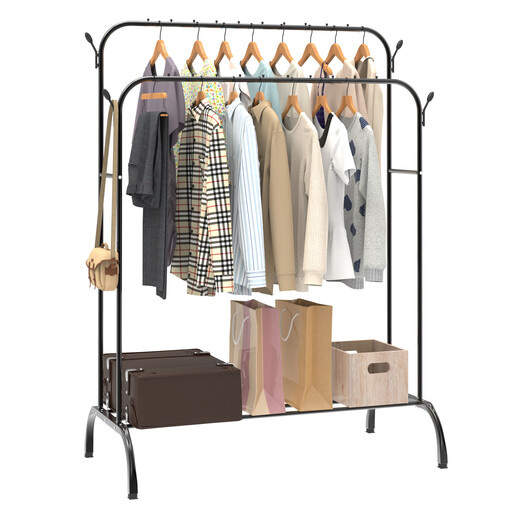
Freestanding clothes airer with double rail and storage shelf
The product description lists two rails for hanging jackets and everyday laundry.
According to the description, the airer has a storage shelf at the bottom. Before buying, check that the specific features suit the garments you need to dry.
View at Joybuy
 No image available
Folding heated clothes airer, 45–55 °C, 144 × 53 × 96 cm
An option if you’re specifically looking for a heated folding clothes airer; use the heat settings in line with the care labels.
The product title lists 45–55 °C and dimensions of 144 × 53 × 96 cm; the description gives a maximum load of up to 10 kg. Before buying, check the EU requirements that apply to this specific electrical appliance, including conformity assessment and CE marking.
View at Joybuy
 No image available
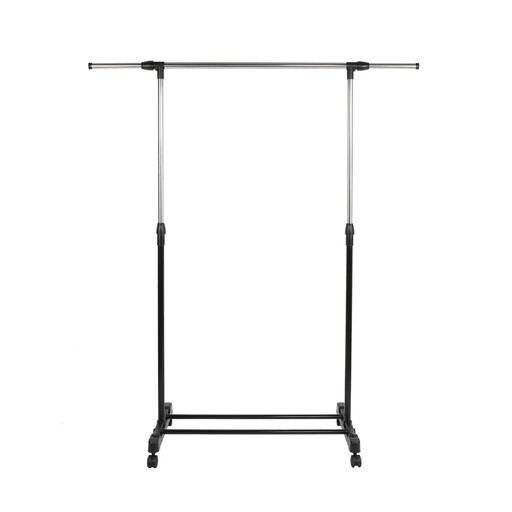
Extendable clothes airer with single rail, 90–158 cm, stainless steel, with castors
The single rail is an option for clothes that need to be dried hanging up; check whether it will be enough for all the items you need to dry.
The product title lists an adjustable height of 90–158 cm. The product description also mentions an adjustable width and castors.
View at Joybuy
Frequently asked questions
Should muddy outdoor clothing go straight on a heated airer?
No. Drying isn’t a substitute for cleaning. Remove heavy dirt, then wash and dry the garment according to its care label. Patagonia describes this cleaning step for its own waterproof jackets; the advice doesn’t automatically apply to every outdoor layer.
Can all waterproof jackets and leggings go on heated rails?
Not without checking the material and care instructions, as well as the appliance manual. Patagonia’s recommendation to apply heat to certain waterproof shells after washing isn’t a general go-ahead for other materials, nor does it guarantee that a heated clothes airer will have the same effect.
Do I still need to ventilate when drying clothes on a heated airer?
Yes. When drying clothes indoors, the moisture they release needs to be removed through suitable ventilation. The consumer advice centre recommends airing rooms regularly by opening windows wide or creating a cross-draught, and suggests using a thermo-hygrometer to monitor indoor humidity.
How can I estimate the electricity use of a heated clothes airer?
Multiply the rated power in kilowatts by the planned running time in hours to calculate the energy use in kilowatt-hours. This isn’t a measurement for a specific load of laundry; to estimate the cost, you’ll also need your own electricity tariff.
What certification marking applies to heated electric clothes airers?
For electrical appliances covered by the relevant EU regulations, CE marking forms part of the manufacturer’s conformity assessment. It isn’t an independent quality mark. The Low Voltage Directive 2014/35/EU and information from the European Union set out the relevant requirements; check how they apply to the specific appliance and its intended use.


