When you have several separate loads of washing, the first thing to consider is whether there’s enough usable drying space, with suitable gaps between items and sufficient load capacity. Extra heated bars can’t make up for a lack of space. A heated airer is worth considering if you want to wear your shorts again sooner, but the rated power doesn’t tell you exactly how long they’ll take to dry. When drying clothes indoors, you’ll still need to ventilate the room to remove moisture, as recommended by the Verbraucherzentrale (German consumer advice centre).
Who might benefit from a heated clothes airer?
Households with several loads
If you want to hang up several separate loads at once, you’ll need enough usable space and a suitable load capacity. Todeco lists three tiers and a maximum of 5 kg per tier for its heated airer. Leifheit’s Classic 250 Flex Black has three tiers and space for up to three washing-machine loads.
Indoor drying when time is short
If you’re drying shorts indoors and need them again soon, compare the heating function, controls and timer. InnovaGoods lists temperature settings and a timer for the Warmmat, but this doesn’t tell you exactly how long your clothes will take to dry.
Households short on space
If you need to put the airer away between loads, consider both the space it takes up when opened out and its folded dimensions. Adler lists the dimensions of the AD 7821 in both configurations.
What should you look for when buying?
First decide whether extra heat matters for your schedule. Then compare the design and usable drying space, taking the footprint, spacing and load capacity into account.
| Consideration |
What to check |
Who is it important to? |
| Space for several loads |
Check the usable bars and spacing when the airer is fully loaded. Also check the load capacity per tier or for the whole airer. |
If I’m hanging up separate loads at the same time, I want enough room for them without crowding the shorts together. Around 28% of consumers say space for several loads is their top buying priority. |
| Shorter drying time |
Check the heating function, controls and, if applicable, timer on the specific model. Don’t use the wattage alone to estimate drying time. |
If I need the shorts again soon, I might consider extra heat, but I don’t want to rely on a drying time worked out from the wattage. Around 22% of consumers put a shorter wait for clothes to dry first. |
| Floor space and storage |
Compare the dimensions when opened out and when folded separately. Remember to allow space to hang the clothes, too. |
In my home, the airer needs to fit while clothes are drying and be easy to put away afterwards. Around 17% of consumers prioritise the floor and storage space available. |
| Energy use |
Consider the rated power and the actual number of hours the airer runs per load. The wattage alone doesn’t show the energy used per wash. |
When drying several loads, I want to limit the extra energy used by the heating function. Around 17% of consumers put energy use first. |
| Room humidity |
Choose a suitable spot where you can ventilate the room. If needed, monitor the humidity with a hygrometer. |
When I dry clothes indoors, I need to keep an eye on the moisture they release, rather than treating heat as a substitute for ventilation. Around 16% of consumers put room humidity first when drying indoors. |
Buying and usage pitfalls
-
Assuming the number of bars means there’s room for several full loads
The number of bars or tiers alone doesn’t tell you how many cotton shorts you can hang up with enough space between them.
Check the footprint, accessible bars, spacing and load capacity for the loads you actually want to dry. Also compare unheated models with more drying space.
If there isn’t enough room for a load, you may need to run another drying cycle.
-
Assuming a lower wattage automatically means lower overall energy use
The 220 W, 230 W and 300 W figures given by the manufacturers for the models mentioned are rated power, not measurements of the energy used to dry a load.
Consider how long and how often you’ll use the heating function for each wash. If you’re not in a hurry, you could also consider drying clothes without using electricity.
-
Thinking heat will solve problems with room humidity
Drying clothes releases moisture into the air. The Verbraucherzentrale (German consumer advice centre) warns that a lack of regular air circulation can encourage mould.
Choose a suitable spot where you can ventilate the room, and monitor the humidity if you have problems with damp.
Brands to consider
Todeco
The heated airer with three tiers reviewed here is an option if you want to hang up separate loads of shorts at the same time.
- Todeco lists 300 W, three tiers and a maximum load capacity of 5 kg per tier.
- These specifications don’t confirm the available spacing for every item or guarantee a particular drying time.
InnovaGoods
The Warmmat is designed for shoppers looking for a folding wing airer with a heating function and adjustable controls.
- InnovaGoods lists 20 heated bars, 230 W, temperature settings of 35–60 °C, a timer of up to 12 hours and a maximum load capacity of 15 kg.
- The manufacturer’s specifications don’t guarantee a particular drying time or confirm that every cotton short is suitable for every setting.
Adler
The AD 7821 and AD 7829 models reviewed here are folding wing airers with heated rails.
- Adler lists 18 heating elements and 220 W for the AD 7821, and 30 heating elements and 300 W for the AD 7829. According to the manufacturer, the AD 7829 can also be used as a regular clothes airer without being plugged in.
- The different manufacturer specifications don’t allow for an independent comparison of the performance of the two models.
Leifheit
The Classic 250 Flex Black is an unheated alternative to consider if you mainly need drying space for separate loads of washing.
- Leifheit lists three tiers and 25 m of drying space, enough for up to three washing-machine loads.
- This model has no heating function. When drying clothes indoors, you’ll still need to ventilate the room to remove moisture.
Clothes airers for several loads
This selection includes heated wing airers and folding, unheated clothes airers to suit different space and drying needs.
 No image available
Heated wing clothes airer, 45–55 °C
For separate loads on a heated airer with a central section and fold-out side wings.
Power: 230 W; temperature range: 45–55 °C; maximum load capacity: 10 kg; dimensions: 144 × 53 × 96 cm; aluminium frame.
View on Joybuy
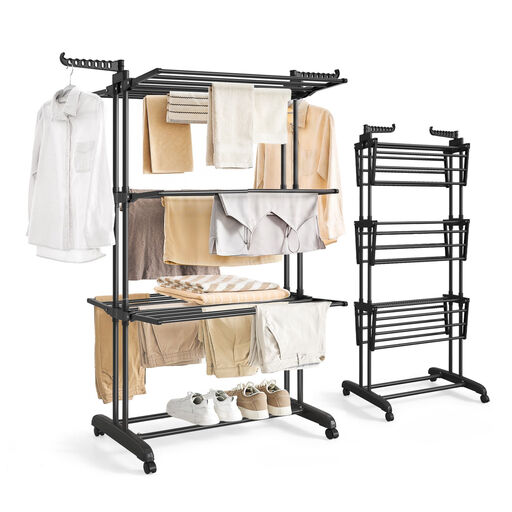 No image available
SONGMICS folding wing clothes airer, 4 tiers
An unheated option for hanging several items on separate levels.
Four drying tiers with extra hanging space on the wings; static load capacity: 35 kg; four castors, two with brakes; dimensions when open: 64,2 × 126,6 × 169,2 cm.
View on Joybuy
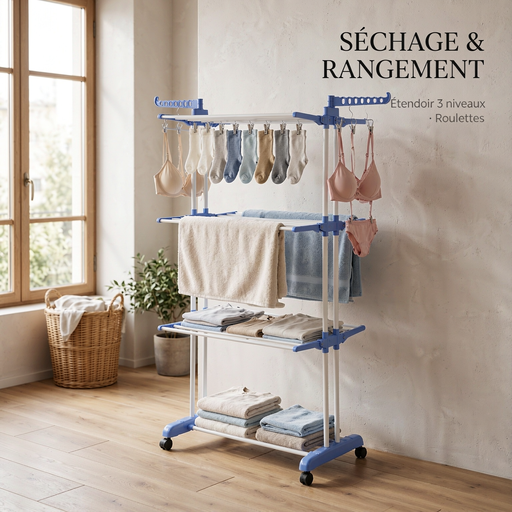 No image available
Folding clothes airer with 3 tiers and castors
For drying several items on different tiers and moving the airer between rooms.
Three tiers with 43 cm of clearance; two folding side wings; four castors, two with brakes; footprint: 75 × 49 cm; height: 170 cm.
View on Joybuy
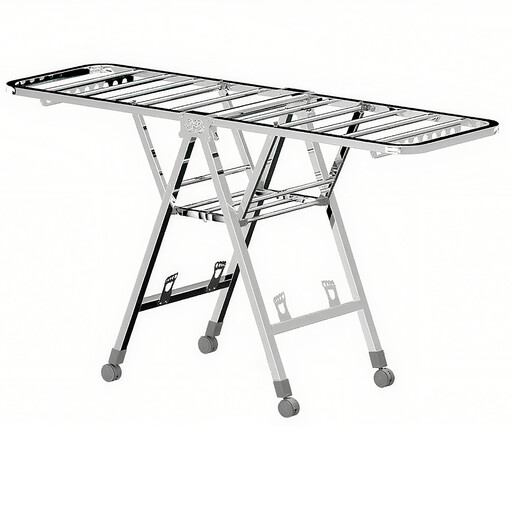 No image available
SNSP stainless steel wing clothes airer
A folding, unheated wing-style design that provides extra hanging space.
Material: stainless steel; freestanding and foldable design.
View on Joybuy
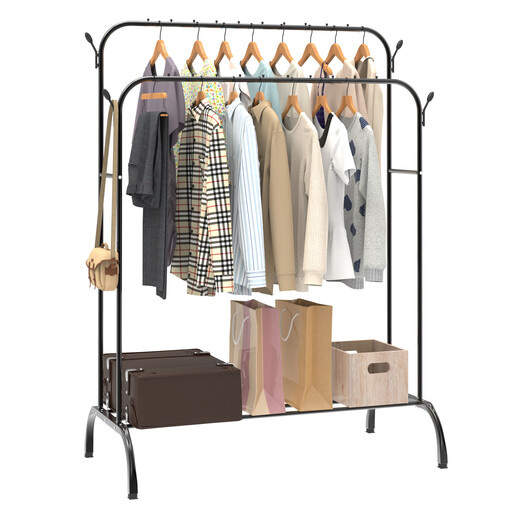 No image available
Freestanding clothes airer with two clothes rails
An unheated alternative if two clothes rails and a lower shelf suit the design you’re looking for.
Stated load capacity: 20–30 kg; dimensions: approx. 110 × 55 × 150 cm.
View on Joybuy
Frequently asked questions
Do all cotton shorts need to be dried at the same temperature?
No. The material alone doesn’t determine how each item can be treated. Check the care label and the instructions for the airer you’re using. GINETEX explains that care symbols indicate the maximum treatment permitted.
How should I arrange shorts from separate loads on the airer?
Hang the shorts with enough space between them and stay within the load limits for your specific airer. For the Todeco airer reviewed here, the manufacturer lists a maximum of 5 kg per tier. This figure doesn’t apply to other models as a general rule.
Is the heating function enough to prevent damp air in the room?
No. The heating function doesn’t remove the moisture released during drying from the room. The Verbraucherzentrale (German consumer advice centre) recommends regular ventilation. If needed, a thermo-hygrometer can help you monitor the humidity.
How can I estimate the energy needed for several loads?
Multiply the rated power in kilowatts by the actual running time in hours per load, then add the figures for each load. This gives you an approximate amount of energy, not a measured figure. The rated power alone isn’t enough for a comparison.
Is the CE mark an independent safety certificate?
No. For a product covered by the relevant EU rules, the CE mark is the manufacturer’s declaration that it meets the requirements. It isn’t an independent certification by a central authority, as the European Commission explains.


