Sports tops in the wash regularly
If you wash sports tops regularly, you’ll want to hang them somewhere airy rather than leave them damp in a pile. Decathlon advises against leaving sportswear damp and crumpled in the laundry basket.


A heated clothes airer could suit you if you wash sports tops and individual layers regularly, provided the care label, available space and ventilation arrangements are all suitable. For larger outdoor clothing, having enough room to hang items and following their care instructions matter more than any blanket promise of faster drying. An unheated airer avoids using extra electricity. Before buying a mains-powered appliance, check the labelling and product documentation for the specific model.
If you wash sports tops regularly, you’ll want to hang them somewhere airy rather than leave them damp in a pile. Decathlon advises against leaving sportswear damp and crumpled in the laundry basket.
With jackets and other larger layers, you’ll need to consider dirt, the space they take up and the care instructions for each item. Patagonia recommends removing surface dirt from shell jackets before washing them.
A folding airer can be put away when not in use, but if you dry clothes indoors, you’ll also need to plan how to ventilate the room regularly. The German Environment Agency recommends paying particular attention to regular ventilation when drying damp laundry.
A good fit if: You regularly dry individual sports garments or layers laid flat indoors and have room for the airer.
The trade-off: Heated bars don’t guarantee a specific drying time for a full load of laundry. The moisture released still needs to be removed by ventilating the room.
A good fit if: You only need space for a few items or towels. The manufacturer describes the DOMO DO7117DR as a freestanding or wall-mounted model.
The trade-off: A smaller hanging area gives you less room for several bulky outdoor layers. Check the installation requirements and intended location.
A good fit if: You can avoid using extra electricity and have enough time, space and a way to ventilate the room.
The trade-off: Without a heating function, drying may take longer if room conditions aren’t ideal. You’ll still need to remove the moisture from the air.
| Priority | What to check before buying | Who it matters most to |
|---|---|---|
| Drying sports tops with care | Check the care label, hang items separately and review the heating function of the specific model. | If I dry sports tops regularly, I want to follow their care instructions and hang them somewhere airy. Around 36% of consumers put drying sports tops in a way that suits the fabric first. |
| Large or dirty outdoor layers | Compare the care label and the airer’s dimensions when open; Patagonia recommends removing heavy surface dirt from shell jackets before washing them. | With a large or dirty jacket, I want to follow the care instructions and have enough room to hang it. Around 29% of consumers prioritise space for outdoor layers. |
| Space and damp in the home | Check the airer’s dimensions both in use and when folded, and make sure you have a practical way to ventilate the room. The German Environment Agency advises paying particular attention to regular ventilation when drying damp laundry. | If my home has limited floor space, I need an airer I can put away, and I also need to consider the moisture released as clothes dry. Around 21% of consumers see space and indoor humidity as a top priority. |
| Electricity use and running costs | Consider the rated power, planned running time and your own electricity tariff; don’t try to work out a flat cost from the power rating alone. | If I only want to use heat when I need it, I want to estimate the potential electricity use and weigh up an unheated airer as an alternative. Around 14% of consumers put ongoing electricity costs first. |
A clothes airer won’t remove mud. For shell jackets, Patagonia recommends removing surface dirt before washing; the right care depends on the individual item.
Clean outdoor layers according to their care instructions, then choose how to dry them.
Drying clothes releases moisture into the air. The German Environment Agency recommends paying particular attention to regular ventilation when drying damp laundry, as it adds moisture to the room.
When choosing where to put the airer, plan how you’ll ventilate the room regularly.
The wattage tells you the appliance’s power, not the actual energy used for one load. The manufacturer lists the Adler AD 7821’s rated power as 220 W; four hours running continuously at full rated power would work out to 0.88 kWh, but this isn’t a measurement of a drying cycle.
The appliance uses extra electricity while the heating function is on; the cost depends on how long it runs and your electricity tariff.
Factor in the rated power, planned running time and your own tariff, and compare this with using an unheated airer.
The AD 7821 is a wide, folding indoor airer with heated bars.
The manufacturer describes the DO7117DR as a slimmer model for a few items or towels. It can be used as a freestanding or wall-mounted airer.
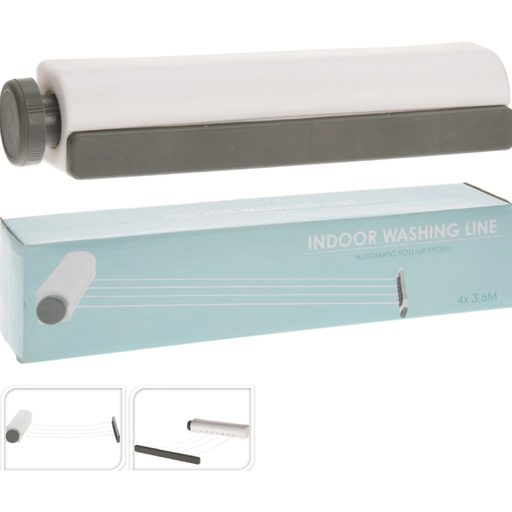
Here you’ll find Joybuy products for drying laundry indoors: a heated airer and a retractable washing line with no specified heating function.
 No image available
It’s only suitable for sports tops if their care labels allow the stated heat. For larger layers, compare the dimensions with the space you have available.
Described as foldable; stated heating temperature: 45–55 °C. Dimensions: 144 × 53 × 96 cm.
Heated bars don’t guarantee a specific drying time. Before buying, check the labelling and product documentation for the specific mains-powered appliance, and ventilate regularly when drying clothes indoors.
 No image available
This retractable design could be a good option if you don’t want a permanent drying area on the floor; it isn’t a heated alternative.
The product name specifies four lines, each 3,6 m long.
Before buying, check whether you can install it between two walls in your room as intended.
The airer won’t remove dirt. Remove any heavy soiling and check the care label for each item; Patagonia recommends removing surface dirt from shell jackets before washing them.
Yes, if you’re drying laundry at home. The German Environment Agency advises paying particular attention to regular ventilation when drying damp laundry, as it adds moisture to the air.
The cost depends on how long it runs and your electricity tariff. The manufacturer lists the Adler AD 7821’s rated power as 220 W; four hours running continuously at full rated power would work out to 0.88 kWh, but this isn’t the measured consumption for a load of laundry.
Electrical equipment within the relevant EU voltage range is subject to the European Commission’s Low Voltage Directive; for AC, this range covers 50 to 1.000 V. According to the EU’s Your Europe information page, the manufacturer affixes the required CE marking; it isn’t an independent quality mark. Check the labelling and product documentation for the specific appliance.
For a fault, contact the seller, not the manufacturer. In August 2026, the Verbraucherzentrale stated that newly purchased goods are generally covered for two years from the date of purchase or handover; this is separate from any voluntary manufacturer’s guarantee.