A heated clothes airer is suitable for summer dresses in a shared flat only if its design matches the care label and recommended drying position, and there is enough room for the dress. For dresses that need to dry flat, a suitable flat-drying surface matters more than extra heat; when hanging them, check that there is enough clear length and space around the garment. Heat is a key consideration if you plan to use it regularly, but floor space, automatic shut-off and ventilation are important too: heated rails do not remove moisture from the room.
Who might benefit from these appliances
Those who take care of their clothes
If you want to dry summer dresses hanging or flat in line with their care labels, don’t assume that one general recommendation about heat applies to every dress. GINETEX explains that care symbols also indicate the method and position for natural drying.
Flatmates with limited space
If you need to clear the drying area once you’ve finished, the footprint, folded dimensions and usable length for dresses are all important. Adler, HOMCOM and DOMO models vary in design and dimensions.
People using shared drying rooms
If you share a drying area with your flatmates, you’ll need to agree on where to set it up and how to ventilate the room. The German Environment Agency and the consumer advice centre point out that damp laundry adds moisture to the air and highlight the importance of regular ventilation.
What to consider when choosing
Start by checking the care label and the recommended drying position. Then weigh up the design, space requirements and heating function for a room you share with others.
| What matters |
What to check before buying |
Who it matters most to |
| Dress care |
The care label and a suitable hanging or flat-drying area; ‘do not tumble dry’ does not mean heated rails are suitable. |
If I want to dry dresses in line with their care labels, I need the right position and enough space. Around 31% of consumers prioritise dress care. |
| Floor space |
Dimensions when open and folded, as well as usable length; multiple tiers do not necessarily leave room for long dresses. |
If I need to clear the shared room once the laundry is dry, the folded dimensions matter just as much as the available length. Around 25% of consumers prioritise floor space. |
| Room humidity |
Agree on a drying spot and ventilation with your flatmates; heating does not replace ventilation. |
If I dry laundry indoors in a shared space, I want to plan for a suitable spot and regular ventilation. Around 25% of consumers prioritise room humidity. |
| Running time and electricity |
Consider the rated power, timer and switchable heating function alongside how you plan to use it; wattage alone doesn’t tell you the cost of drying a dress. |
If I want to decide when and for how long the heater runs in our shared flat, running time and the ability to switch it off matter. Around 19% of consumers prioritise operating time and electricity use. |
Common mistakes when choosing
-
Assuming ‘do not tumble dry’ means heated alternatives are suitable
Care symbols distinguish between natural drying methods and positions. They do not replace checking whether a particular dress is suitable for heated rails or a hot-air drying cabinet.
First check the recommended drying position, then choose a suitable design. Also follow the care instructions for the specific dress.
-
Confusing heating with dehumidifying
Wet laundry remains a source of moisture indoors, even when the rails are heated.
Agree on a drying spot and ventilation with your flatmates. The German Environment Agency recommends paying particular attention to regular ventilation when drying damp laundry indoors.
-
Comparing wattage as a measure of electricity costs per dry dress
Heated rail airers and hot-air appliances are different designs. Their rated power alone doesn’t show how much electricity is needed to achieve a comparable drying result.
For a rough estimate, multiply the rated power in kilowatts by the number of hours it runs. Actual consumption may vary.
Electricity costs depend on the actual power consumption, running time and your tariff.
Notable brands and designs
Adler AD 7821
A folding airer with heated rails, designed for rooms where you need to put the appliance away after use.
- According to Adler: 18 heating elements, 220 W; 148 × 52.5 × 90 cm when set up and 113 × 52.5 × 8 cm when folded.
- The manufacturer’s claim of shorter drying times does not prove that it is suitable for summer dresses. Check that there is enough clear length for the dress in question.
HOMCOM 850-048
A folding, heated tiered airer that, according to the supplier, can also be used without the heat switched on.
- HOMCOM lists two tiers, 50–55 °C and an IP22 rating for this model.
- Two tiers do not guarantee that a long dress will hang freely. Check the usable length and follow the model’s set-up instructions.
DOMO DO7117DR
A compact heated airer with a timer. According to the manufacturer, it can be freestanding or wall-mounted using the supplied fitting kits.
- DOMO lists 150 W, dimensions of 52.5 × 36.5 × 90 cm and an IPX4 rating.
- Its compact design doesn’t tell you how many long dresses will fit. The IP rating does not replace the instructions or checking that the chosen location is suitable.
InnovaGoods Dupledry Blue
A hot-air drying cabinet with a cover and hanger supports, rather than individual heated rails.
- The manufacturer lists 1200 W, six hanger supports, a timer from 30–180 minutes and a maximum temperature of 70 °C.
- The way it applies heat differs from a rail airer. Check the care instructions for each dress; manufacturer claims that it is suitable for all types of clothing are not independent proof.
Related products from Joybuy
This Joybuy selection includes heated folding airers and electric hot-air clothes dryers. The right design for you will also depend on whether the care label allows the dress to be dried in the way the appliance is designed for.
 Image unavailable
Folding heated clothes airer, 45–55 °C
For dresses that the care label says can be hung to dry; check that the usable length is sufficient.
Heating function: 45–55 °C; power: 230 W; dimensions: 144 × 53 × 96 cm; capacity: up to 10 kg. Described as having fold-out side wings.
Joybuy
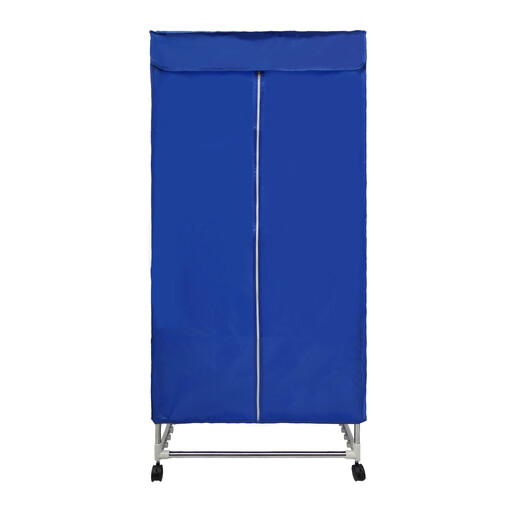 Image unavailable
Folding electric hot-air clothes dryer with timer
This hot-air design is only suitable if the care instructions for the dress allow the heat treatment it uses.
Listed power: 1200–1500 W. Four timer settings: 60, 120, 180 or 240 minutes. According to the description, the rack layout can be adjusted for different garment lengths; the appliance is foldable and has wheels.
Joybuy
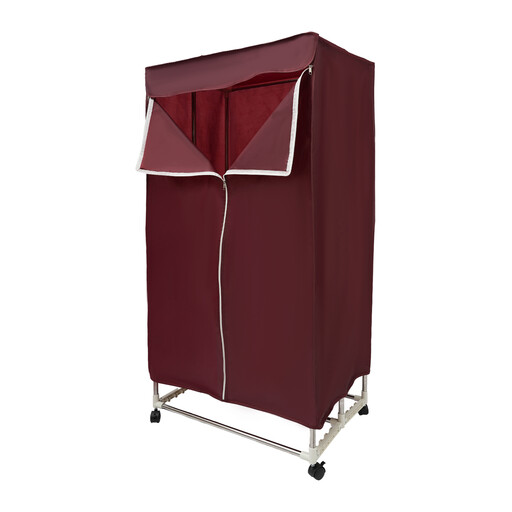 Image unavailable
Folding electric clothes dryer, 1200 W, Wine Red
The adjustable rack layout may be useful for different garment lengths; before use, check that the heat treatment is suitable for the care label.
Power: 1200 W. Timer settings: 60, 120, 180 or 240 minutes. The description lists a folding single- or double-tier layout and wheels.
Joybuy
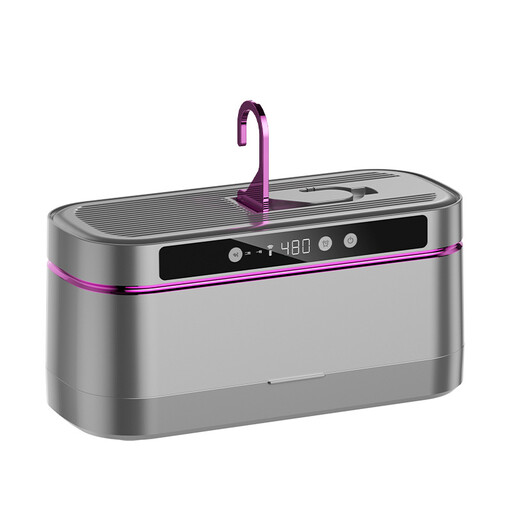 Image unavailable
Portable folding clothes dryer for compact student accommodation
The description presents this as a portable, foldable appliance for drying laundry. Before use, check that the drying position and heat are suitable for the dress in question.
Joybuy
Frequently asked questions
Can every summer dress go on warm rails or in a hot-air drying cabinet?
No. The appliance description alone does not mean it is suitable for every dress. Check the care label, particularly the recommended natural drying position, and the instructions for the specific dress before using a heated design.
How should I care for a heated clothes airer?
Follow the instructions for your particular model. The DOMO instructions for model DO7117DR recommend unplugging it and letting it cool down before cleaning; this advice does not automatically apply to other appliances.
What are my rights if an online purchase is faulty?
According to consumer information from the European Union, purchases from a business seller are generally covered by a legal guarantee of at least two years from the date you receive the goods. Online purchases also generally come with a 14-day right to cancel from delivery; exceptions and possible return costs should be taken into account.
What should I look for when it comes to labelling and disposing of an electrical appliance?
The European Commission explains that electrical and electronic equipment must carry a CE mark when required by the relevant harmonised EU rules. The mark is a declaration by the manufacturer, not an independent quality seal. The German Environment Agency notes that waste electrical equipment must be collected separately in Germany and can generally be handed in free of charge at municipal collection points.


