People who share a laundry schedule
If towels need to dry between agreed laundry days, you’ll need enough hanging space for the number and width of towels. The manufacturers’ descriptions show that models vary in design and hanging options.


If your towels need to dry before your next shared laundry day, start by considering how many you need to hang and how much space you have. A compact towel rail serves a different purpose from a wide, folding clothes airer. Heating does not replace ventilation or checking that the intended location is suitable. You should also consider the power rating and how long you plan to use it.
If towels need to dry between agreed laundry days, you’ll need enough hanging space for the number and width of towels. The manufacturers’ descriptions show that models vary in design and hanging options.
If you hang towels indoors because you don’t have a suitable outdoor drying space, remember to consider the moisture in the room. The German Environment Agency recommends ventilating regularly when there are sources of moisture, such as damp laundry.
If you don’t want a clothes airer getting in the way all the time, a folding, wall-mounted or ceiling-mounted design could be an option, depending on where you plan to put it. Check that the dimensions and mounting options really suit your space.
Start with the hanging space you need and where you plan to put the airer. Then compare the mounting options, ventilation requirements and electricity use for the length of time you expect to run it.
| What matters to you | What to look for | Who should pay particular attention? |
|---|---|---|
| Drying space for the time available | Count how many towels you need to hang at once and check the usable rails, spacing and dimensions when set up. | If several towels need to dry before your next shared laundry day, having enough hanging space is essential. Around 36% of consumers put this first. |
| Moisture where you dry your towels | Consider where the towels will dry and how moisture will be removed. If you plan to use the airer in a bathroom, check the requirements for the specific model and location. | If you dry laundry indoors, you’ll want to keep an eye on moisture levels and choose a suitable drying spot. Around 28% of consumers put this first. |
| Floor space and storage | Compare the dimensions when set up and folded away. For wall- or ceiling-mounted models, make sure the intended mounting location is suitable. | If you don’t want the airer to take up floor space all the time, mounting and storage are important considerations. Around 22% of consumers prioritise this. |
| Electricity use with regular use | Calculate kWh by multiplying the power in kW by the operating time in hours, and factor in your electricity tariff. The German Environment Agency describes a clothes airer or washing line as the most energy-efficient way to dry laundry. | If you plan to use the airer regularly, you’ll want to estimate the extra electricity use for the time you expect to run it. Around 14% of consumers prioritise this. |
Power ratings, heating elements and manufacturers’ descriptions don’t guarantee a set drying time for your towels. How damp the towels are and the conditions in the room also make a difference.
Choose an airer with enough hanging space for the number of towels you actually need to dry. Estimate electricity use based on an assumed operating time, not on an unsubstantiated promise about drying performance.
Moisture still enters the air when you dry laundry on a heated airer. The German Environment Agency recommends drying laundry outside the home where possible and ventilating regularly when drying it indoors.
Choose a suitable drying spot and ventilate according to the room and the amount of moisture produced.
Design, ingress protection rating and features can vary, even between models from the same brand. A protection rating or manufacturer recommendation for one model does not automatically apply to another.
Check the model number, instructions, protection rating, dimensions and mounting options for the specific version you’re considering.
The manufacturer describes the DO7117DR as a compact towel airer that can be freestanding or wall-mounted.
Adler describes the AD 7821 as a folding winged airer with 18 heated rails and a 220 W power rating.
The models described are quite different: the 850-048 is a two-tier folding airer, while the 850-283V90SR is a towel warmer with eight rails and freestanding or wall-mounted options.
Foxydry describes the Pro as a motorised ceiling- or wall-mounted airer with air circulation and optional warm air.
This selection includes wall-mounted towel radiators and a folding heated clothes airer. Check whether a model requires an existing hot-water heating system or a suitable place to install it.
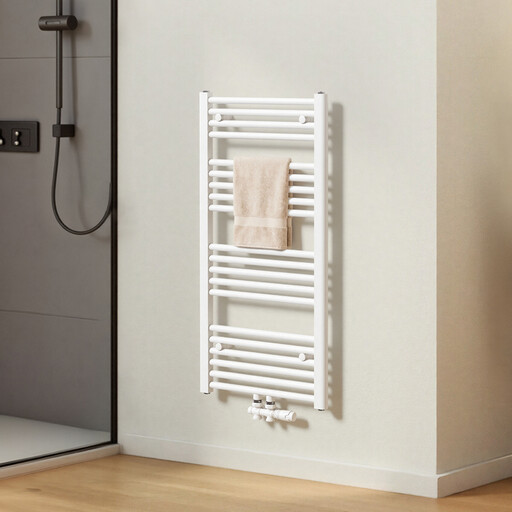 No image available
For anyone looking to connect a centre-connection towel radiator to an existing hot-water heating system.
1000 × 500 mm; 427 W; centre connection. The heating system, connection and wall mounting must all be suitable for installation.
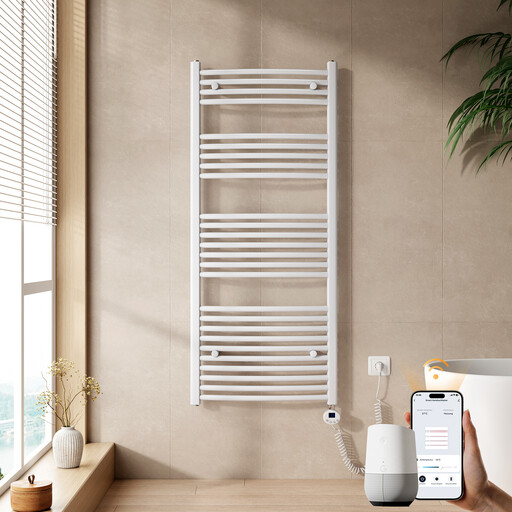 No image available
For anyone considering an electric towel radiator with Wi-Fi control.
1400 × 600 mm; 600 W; thermostat and heating element. Designed for wall mounting; check that the installation location is suitable.
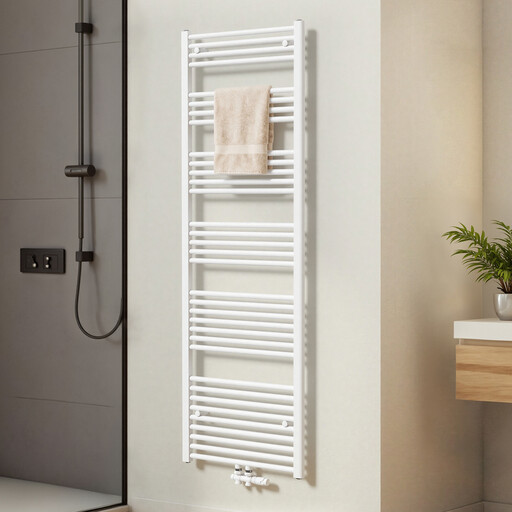 No image available
For anyone considering a larger wall-mounted towel radiator and who has a suitable hot-water heating system.
1800 × 600 mm; 860 W; centre connection, G1/2 connection and wall mounting. The connection and wall must be suitable for installation.
 No image available
For anyone who wants to fold away and store a heated airer after use.
45–55 °C; 144 × 53 × 96 cm. The airer takes up floor space when set up.
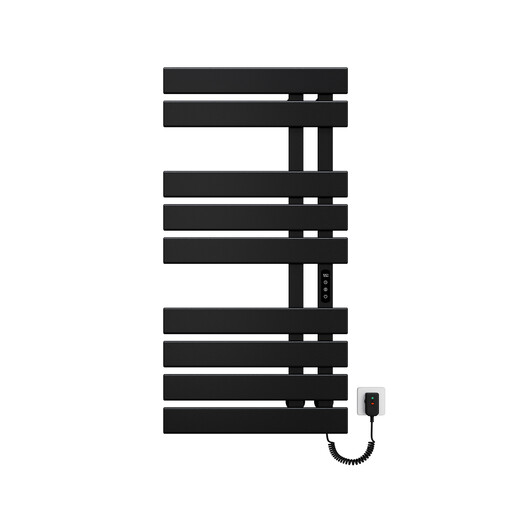 No image available
For anyone considering a wall-mounted electric towel radiator with Wi-Fi app control.
100 × 50 cm; thermostat and timer. Designed for wall mounting; check that the installation location is suitable.
No. The German Environment Agency recommends drying laundry outside the home where possible and ventilating regularly when drying it indoors. A heated airer is no substitute for a suitable drying location or removing moisture from the room.
No. It depends on the specific model and where you plan to use it. DOMO gives the DO7117DR an IPX4 rating, while Adler gives the AD 7821 an IP22 rating. Don’t assume a protection rating or manufacturer recommendation applies to another appliance, and always follow its instructions.
Multiply the stated power in kW by the estimated operating time in hours, then multiply the resulting kWh by your electricity tariff. At 150 W and an assumed four hours, the calculation gives 0.60 kWh. This doesn’t tell you whether a towel will be dry by then.
With CE marking, the manufacturer declares that the product meets the relevant EU requirements; it is not a general, independent quality mark. The German Federal Network Agency lists marking and manufacturer information among the things it checks when monitoring the market. Your statutory rights if goods are faulty are separate from any voluntary guarantee. The German consumer advice centre notes that statutory rights must be exercised against the seller.
In Germany, online purchases generally come with a 14-day right to cancel from the day you receive your order; exceptions and the applicable conditions should be checked. The German consumer advice centre explains this period. If the airer needs mounting, measure the intended space before ordering.