A bathroom with no spare floor space
If you don’t want to block floor space or a walkway while your towels are drying, a wall-mounted model could be the answer – provided the wall, mounting position and connection are suitable.


When floor space is limited, a suitable wall-mounted dryer is usually the obvious choice. If there’s nowhere suitable to mount one, a small freestanding dryer could work, but it will need floor space while in use. A large folding airer can be stored flat, but that doesn’t necessarily mean it takes up less room when set up. Whether heating is worth it depends on whether the warmth from heated rails is worth the extra electricity use to you; air-drying without heat is another option.
If you don’t want to block floor space or a walkway while your towels are drying, a wall-mounted model could be the answer – provided the wall, mounting position and connection are suitable.
If you want to move your dryer or put it away after use, allow for both the space it takes up while in use and the space you’ll need to store it. Wall mounting may also be an option.
If you want to keep electricity use down, compare heated models with air-drying without heat. Remember, too, that damp towels need regular ventilation.
First, check whether there’s a suitable place to mount a model on the wall. Then consider the floor space and storage you have, the type of heating you want, and where it will be mounted and connected.
| What matters when buying | What to look for | Who it matters most to |
|---|---|---|
| Floor space while drying | Measure the floor space or wall width, the projection from the wall and the clearance needed for extended arms. | If I need to keep the walkway clear while towels are drying, I measure the space in the configuration I’ll actually use. Around 36% of consumers have this as their main priority. |
| Flexibility and storage | Compare the dimensions when set up and when stored separately. For wall-mounted models, check whether permanent installation is possible and suitable for you. | If you want to set up, move or store your dryer as needed, pay attention to both sets of dimensions. Around 29% of consumers prioritise this. |
| Electricity use | Consider the rated power and how long you plan to use it. The wattage doesn’t tell you how much electricity is used to dry an individual towel. | If I want to limit the extra electricity used by the heating function, I compare a heated model with air-drying without heat. Around 21% of consumers say this matters most to them. |
| Moisture and connection location | Check ventilation options, as well as the planned location, bathroom zone and electrical connection. If in doubt, consult a qualified electrician. | If you’re particularly concerned about moisture in the room and finding a suitable place to use an electrical appliance, check both before installation. Around 14% of consumers have this as their main priority. |
A folding clothes airer can still take up a lot of floor space when it’s in use. Adler gives the dimensions of the AD 7821 when set up as 148 × 52.5 × 90 cm.
Measure the space that needs to stay clear while your laundry is drying, then compare it with the dimensions when set up.
An IP rating on its own doesn’t confirm that a particular mounting position and connection point in a bathroom are suitable. You also need to consider the bathroom zones and the specific installation.
Check the mounting position, instructions and type of connection before buying. If you’re unsure, ask a qualified electrician to assess the situation. VDE and ELEKTRO+ are among the organisations that provide guidance on bathroom zones.
Heated towels still release moisture into the room. The German Environment Agency recommends paying particular attention to regular ventilation when drying damp laundry indoors.
Make sure you can ventilate the room regularly where you plan to use the dryer.
These examples relate to the specific product ranges and variants mentioned. A brand being featured doesn’t mean a particular model is available everywhere.
The DOMO DO7117DR is a compact heated dryer, which the manufacturer describes as suitable for freestanding use or wall mounting.
The AD 7821 is a heated, folding clothes airer for households that want to hang up laundry as well as towels.
The electric Orbrad PTR7743X3W is a wall-mounted model with swivelling arms.
When used electrically, the Zeno Wing combines a bathroom radiator with a fold-out heated towel rail.
The Telegant 36 Protect Plus is an unheated wall-mounted airer, making it a useful alternative for drying towels when floor space is limited.
The EMKE products below include wall-mounted towel radiators for existing central heating systems, as well as electric wall-mounted and freestanding models. The hot-water model requires a suitable heating circuit and compatible connections.
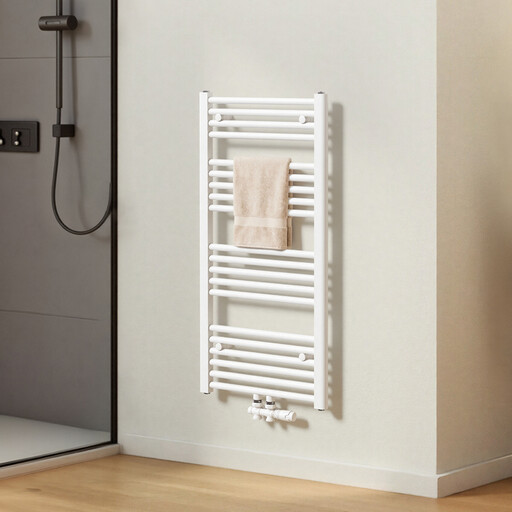 No image available
For drying towels when floor space is limited, provided you have a suitable hot-water heating circuit.
Wall-mounted; 1000 × 500 mm; 427 W; G1/2 connections. Requires a compatible heating system and suitable connections.
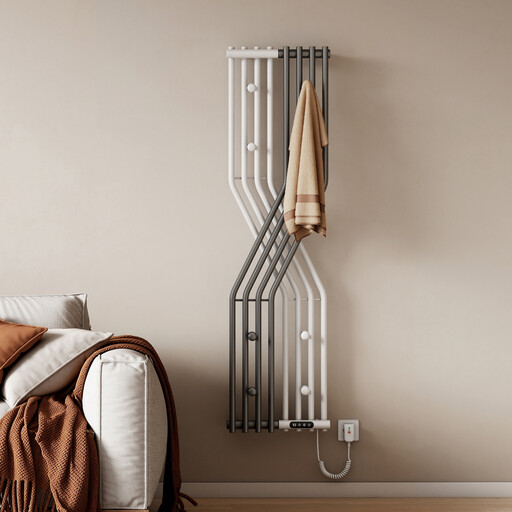 No image available
For heated drying without a freestanding airer, if wall mounting and professional installation are possible.
Electric towel radiator; 1400 × 375 mm; 580 W; thermostat, timer, app and voice control according to the product name. Check that the bathroom location and connection are suitable.
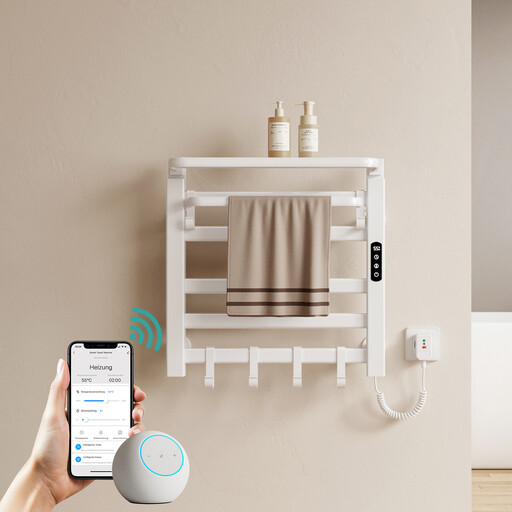 No image available
For heating and hanging or laying out towels on the wall, rather than on a freestanding airer.
50 × 50 cm; 140 W; fold-out shelf and six hooks according to the product name. An IPX5 rating alone doesn’t confirm that it’s suitable for every bathroom location; check the bathroom zone and connection.
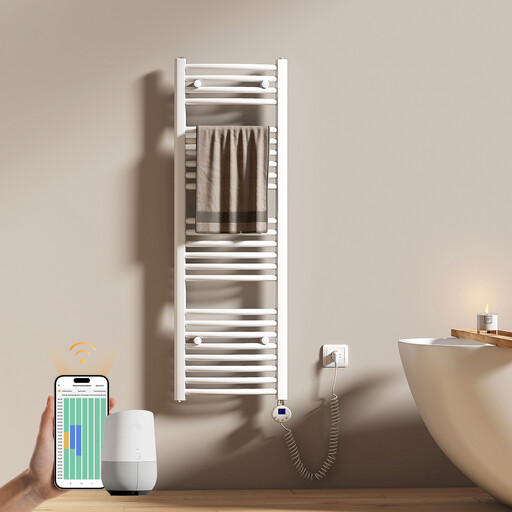 No image available
For heated towels in a fixed wall position, provided the integrated heating element suits where you plan to use it.
Electric towel radiator; 1200 × 400 mm; WiFi version with timer according to the product information. The stated IP rating doesn’t replace the need to check the bathroom zone and connection.
 No image available
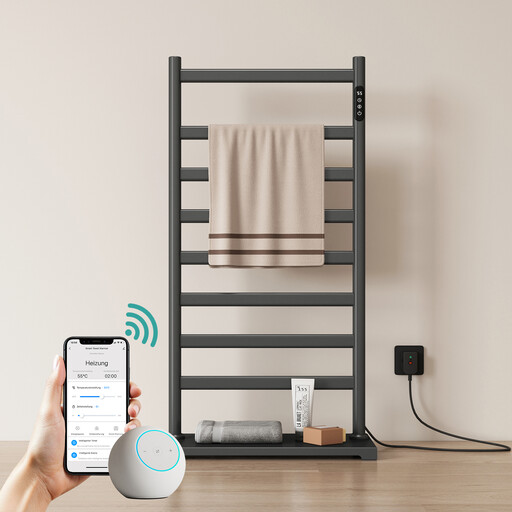
For heating towels if you want to avoid drilling and have floor space available while the unit is in use.
Freestanding model with shelf; 285 W; thermostat, timer and WiFi control according to the product name. It takes up floor space while drying; you should also check that the bathroom location is suitable.
Measure the available space while the dryer is in use and the storage space separately. The Adler AD 7821 has very different dimensions when set up and folded away. For wall-mounted models, also allow for how far they project from the wall and the space needed for swivelling arms.
No. An IP rating alone isn’t enough to confirm that a particular installation or connection point is suitable. Bathroom zones and the specific installation must also be considered. If you’re unsure, ask a qualified professional to assess the situation. VDE and ELEKTRO+ are among the organisations that provide guidance.
Yes. The German Environment Agency recommends paying particular attention to regular ventilation when drying damp laundry indoors, as towels release moisture into the air.
If using as little electricity as possible is important to you, air-drying without heat is an alternative. The German Environment Agency describes clothes airers and washing lines as an energy-efficient way to dry laundry. When considering a heated model, take its rated power and how long you plan to use it into account.
No. An IP rating doesn’t cover every applicable product requirement. For mains-powered appliances covered by the Low Voltage Directive, the manufacturer must assess the applicable requirements, prepare the conformity documentation and apply the required CE marking. A model’s specifications alone don’t prove this for every individual product listing.