If you wash pyjamas frequently and need them to dry quickly, a heated clothes airer can provide extra warmth to the items hanging on it – but this doesn’t tell you how long they’ll take to dry. If you have enough time, an unheated airer will do the job without using extra electricity. The key things to consider are whether there are suitable places to hang your clothes, how much space the airer takes up when open, regular ventilation and, for electrical appliances, checking the labelling and required German-language documents for the specific product listing.
Which option suits you?
Drying pyjamas between wash days
If you wash small loads frequently and need your pyjamas again soon, what matters is how many hanging spaces you can actually use and the drying conditions in the room. A wattage figure alone won’t tell you when a garment will be dry.
Limited space for setting up an airer
If you can’t leave a large airer set up all the time, compare its dimensions when open and folded, or check whether a hanging airer can be securely and suitably attached to a fixture you already have.
Keeping extra electricity use down
If there’s enough time between washes, an unheated airer can dry your laundry without using extra electrical heat. If you dry clothes indoors, regular ventilation is still important.
What to look for when buying
| Priority |
What to check when buying |
Who this matters most to |
| Drying time |
Check that the top and bottoms fit on the heated bars with enough space between them. The rated power doesn’t tell you how long drying will take. |
If you need your pyjamas again soon, it’s important to arrange them appropriately for the conditions in your room. Around 29% of consumers prioritise the shortest possible drying time. |
| Floor space and storage |
Compare the dimensions when open and folded. Hanging airers need a suitable place to attach them. |
If you have room for only a few garments in a small space, you’ll need an airer that’s easy to set up and put away in everyday use. Around 24% of consumers prioritise a small footprint. |
| Extra electricity use |
Consider the rated power and actual running time. You’ll also need your electricity price per kWh to work out the cost. |
If there’s enough time between wash days and you’d rather not use extra electrical heat, an unheated airer may be enough. Around 18% of consumers mainly want to keep extra electricity use down. |
| Humidity in the room |
Choose a drying spot where you can ventilate regularly; a hygrometer can show you the relative humidity. |
If you regularly dry clothes indoors, you may want to keep an eye on the humidity in your home. Around 17% of consumers pay particular attention to monitoring indoor humidity. |
| Looking after your pyjamas |
Check the care label and the appliance instructions for guidance on where to place garments. |
If some of your pyjamas need special care, make sure your drying method is suitable. Around 12% of consumers prioritise treating fabrics appropriately. |
Common misconceptions
-
Assuming heating power guarantees a particular drying time
An appliance’s rated power doesn’t tell you how long a particular pair of pyjamas will take to dry. The load, residual moisture and conditions in the room also play a part.
Start by comparing the usable hanging spaces and the dimensions when set up. To estimate electricity costs, you can use an assumed running time, but don’t treat it as a measured operating time.
If the appliance runs for longer than expected, it will use more electricity.
-
Thinking a heated airer solves damp in the room
Wet laundry releases water into the air; heat from the bars doesn’t remove this moisture. The German Environment Agency recommends regular ventilation when dealing with sources of moisture such as wet laundry.
Choose a well-ventilated drying spot and keep an eye on the humidity if needed.
Regularly drying clothes indoors may mean you need to ventilate more often.
-
Confusing a radiator airer with an electrically heated airer
Models such as the WENKO Twin and the Relaxdays hanging airer are unheated; they don’t have their own electric heating function. A hanging airer also needs a suitable place to attach it.
Consider whether you want extra electrical heat or simply a space-saving way to hang clothes.
Brands and models to consider
Adler
The electrically heated, folding wing airer AD 7821 is a useful option to compare for small loads.
- Adler lists 18 heating elements, a rated power of 220 W and folded dimensions of 113 × 52,5 × 8 cm for the AD 7821.
- These figures don’t tell you how long pyjamas will take to dry. Before buying, also check the labelling and required documents for the specific electrical appliance.
Relaxdays
The unheated hanging airer 10053880 may suit small loads if you have a suitable place to attach it.
- Relaxdays lists a drying length of around 10 m and a load capacity of around 5 kg for this model.
- The model has no built-in heating function and needs suitable hanging brackets or an appropriate place to attach it.
WENKO
The unheated Twin 3703500 radiator airer is designed for very small loads and requires a suitable place to hang it.
- WENKO lists two aluminium bars and a width of 60 cm.
- Whether the top and bottoms will fit at the same time with enough space between them depends on how you arrange the clothes. Any heat comes from the radiator, not the airer.
Leifheit
The unheated Classic 200 Easy wing airer is a useful option to compare if you want to hang longer garments as well as smaller loads.
- Leifheit lists a drying length of 20 m and folding wings for this model.
- According to Leifheit, its open dimensions are 98 × 181 × 55 cm, so you’ll need enough floor space.
Clothes airers at Joybuy
The Joybuy models below include one heated airer and several unheated options. Compare the stated dimensions and designs with the space you have and the type of hanging space you need.
 No image available
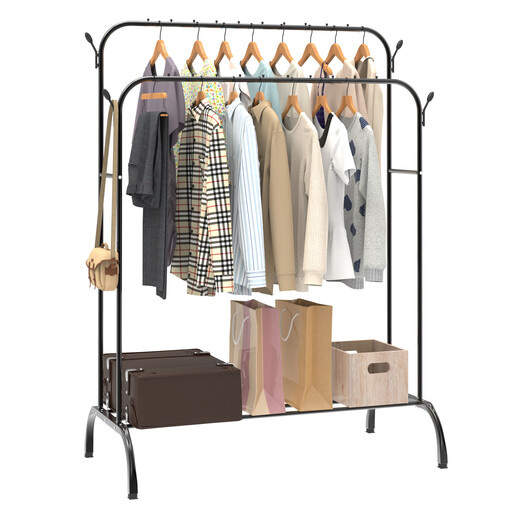
Freestanding clothes airer with two rails
May suit you if you want to hang several garments on a freestanding airer.
The product title specifies two rails and a lower shelf. Check that there’s enough space between the rails for a top and bottoms.
View at Joybuy
 No image available
Folding heated clothes airer
May suit you if you want a heated airer and have room for it when open; the product details don’t tell you how long drying will take.
The product title lists a temperature of 45–55 °C and dimensions of 144 × 53 × 96 cm. Before buying, check the specific product listing for the required labelling, German-language instructions and safety information.
View at Joybuy
 No image available
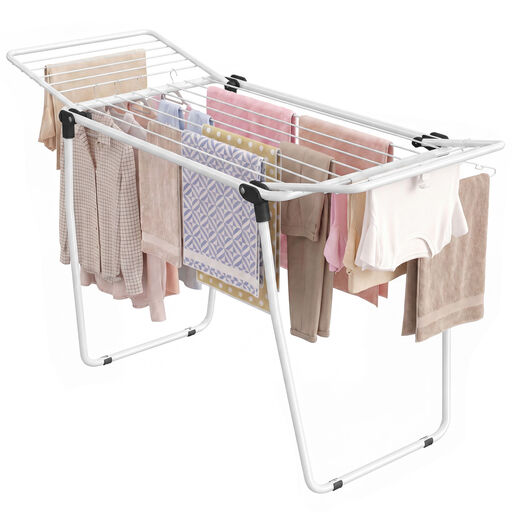
SONGMICS folding wing clothes airer
May suit you if you’re looking for an unheated wing airer for air-drying clothes and have enough room to set it up.
The product title lists a matt white and dove grey finish and open dimensions of 158 × 53 × 93 cm.
View at Joybuy
 No image available
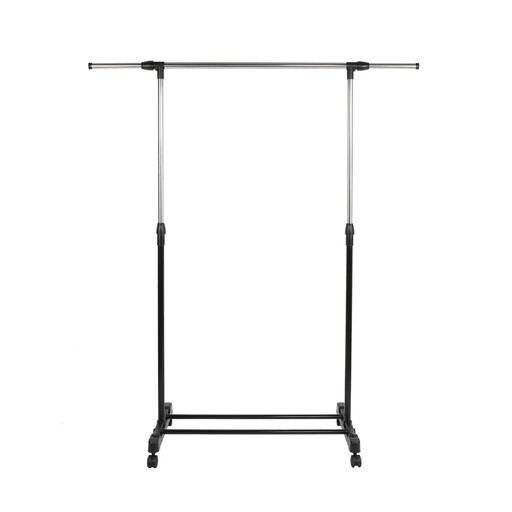
Extendable clothes airer with a single rail
May suit you for individual garments if you’d prefer a single rail to a wing airer.
The product title lists stainless steel, castors, a folding design and an adjustable height of 90–158 cm.
View at Joybuy
 No image available
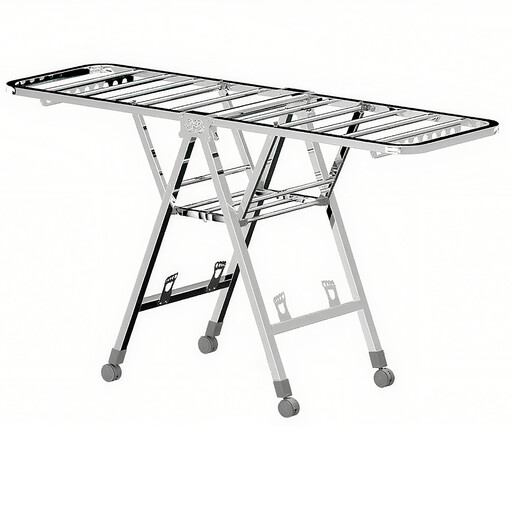
SNSP folding stainless steel wing clothes airer
May suit you if you’re looking for an unheated floor-standing airer with wings rather than a single rail.
The product title specifies stainless steel and use on the floor or balcony. Check that it has enough hanging space for the load of pyjamas you plan to dry.
View at Joybuy
Frequently asked questions
Will a heated airer definitely dry pyjamas by the following evening?
No. You can’t work out a specific drying time from the rated power or the number of heating elements. For the Adler AD 7821, the manufacturer lists 220 W and 18 heating elements; the load, residual moisture and conditions in the room also affect drying.
What should I bear in mind when drying clothes indoors?
Ventilate regularly and choose a drying spot where you can do so. The German Environment Agency recommends regular ventilation when dealing with sources of moisture such as wet laundry; heat from the airer doesn’t remove the moisture from the room.
How can I estimate the electricity use for a small load?
Multiply the power in kW by the assumed running time in hours to get an estimated energy figure in kWh. If the Adler AD 7821 uses its full rated power of 220 W continuously for three hours, that would amount to 0.66 kWh, based on this assumption; it isn’t a measured figure.
What are my rights when buying online in Germany?
Online purchases generally come with a 14-day right to cancel. The Verbraucherzentrale distinguishes this from your statutory rights if goods are faulty and from a voluntary guarantee; check the terms of the specific offer.
Is a CE claim in an advert enough to make a buying decision?
An advertising claim alone isn’t a substitute for checking the specific product listing and the appliance you receive. The German Federal Network Agency lists CE marking and the required accompanying documents, including German-language instructions and safety information, among the points retailers must check.


