For people with long or delicate dresses
If you want to hang summer dresses or dry them flat, follow the care label and look for enough clearance or a suitable flat surface. The right way to dry them depends on the fabric.


A heated winged airer could suit you if you regularly dry clothes indoors, have space to set it up and would like extra warmth from the bars. For long dresses and a full weekly wash, a tall, unheated airer may be a better fit if you can do without heated bars. Whichever type you choose, check care labels and make sure you ventilate the room well. The product information does not specify a drying time for this mix of laundry.
If you want to hang summer dresses or dry them flat, follow the care label and look for enough clearance or a suitable flat surface. The right way to dry them depends on the fabric.
If you want to dry dresses and smaller items at the same time, weigh up the usable hanging space against the floor space and storage space available.
Extra warmth from the bars may influence your choice. Also consider electricity use, where you’ll set up the airer and whether you can ventilate the room to remove moisture.
First check the care label and available hanging length, then consider the size of your wash and the space you have. Weigh up the extra warmth against electricity use and the need for good ventilation.
| What you need | What to check before buying | Who should pay particular attention? |
|---|---|---|
| Drying dresses appropriately | Check the care label, as well as the available clearance at the chosen bar or whether there is a suitable flat surface for drying flat. | If I’m drying a long or delicate summer dress, I want to choose the right drying method and keep it off the floor. Around 25% of consumers put garment care first. |
| Hanging out the weekly wash all at once | Compare the usable bars and spacing, and, for tiered airers, check the available clearance between levels. | For a mixed weekly wash, I want to hang dresses and smaller items at the same time without the tiers restricting the hanging length. Around 25% of consumers prioritise drying a full load at once. |
| Removing moisture from indoor spaces | Consider where you can set up the airer, regular ventilation and the appliance instructions. | If I regularly dry clothes at home, I need a spot where air can circulate: heat from the airer does not remove moisture from the room. Around 20% of consumers put room humidity first. |
| Making sure it fits and can be stored away | Compare the airer’s open and folded dimensions with the space available and the hanging length you need. | If I want to put the airer away after use, I compare its dimensions when open and folded with the space I have. Around 15% of consumers focus mainly on floor space and storage. |
| Weighing up electricity use for heating | Consider the rated power and actual running time of the specific model; an unheated airer does not provide extra warmth from the bars. | If I want to avoid using electricity for heating, I check whether extra warmth is important for the way I’ll use the airer. Around 15% of consumers focus on electricity use for heating. |
The heating function alone does not mean that every fabric is suitable for it. The right way to dry a dress depends on the individual garment.
Check the care label first, then choose whether to hang the dress or dry it flat, and whether to use the heating function.
A long dress could catch on a middle tier or touch the floor, even if the drying area looks generous.
Measure the clearance at the rail you plan to use and consider where the rest of the weekly wash will go.
Moisture from your washing still enters the room, even when you use a heated airer. The product information does not specify a drying time for a mixed weekly wash.
First check whether you can ventilate the room where you’ll set up the airer. Then weigh up the need for heat and the actual running time against an option without heated bars.
The foldable Adler AD 7821 is an example of a winged airer with heated bars.
The 850-048 is a heated, foldable airer with two tiers.
The Pegasus Family Maxx and Classic 250 Flex Black models mentioned here are unheated alternatives, with different hanging options.
The Joybuy products below offer different types of clothes airer for dresses and mixed loads. Compare the hanging length, dimensions and features you want with the space where you plan to dry your clothes.
 No image available
An option if you’d like extra warmth from the bars and are looking for a foldable airer for mixed loads. The heating function does not mean that every summer dress is suitable for it, so check the care label.
Foldable; dimensions: 144 × 53 × 96 cm; stated temperature range: 45–55 °C.
 No image available
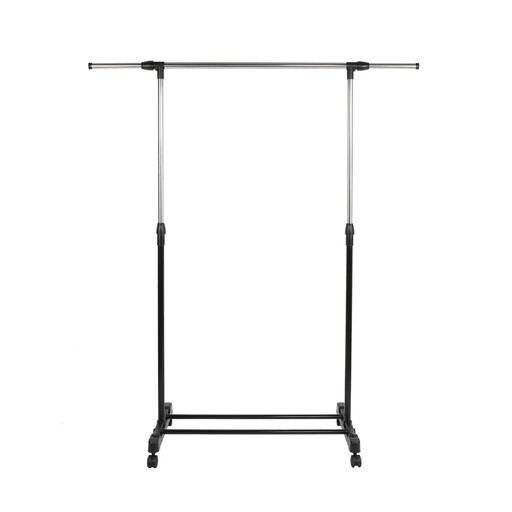
A single height-adjustable rail could suit you if you want to hang dresses and adjust the height to suit your needs. Check that the hanging length you set is enough for your longest dress.
Single rail; height-adjustable from 90 to 158 cm; stainless steel; with wheels; foldable.
 No image available
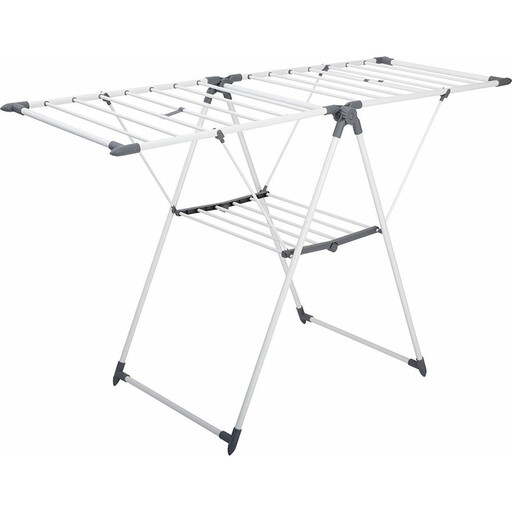
A freestanding clothes airer for several items. Check the stated dimensions against the floor space you have available.
Material: metal; dimensions: 150 × 61 × 96 cm; colour: silver.
No. The heating function does not automatically make every dress suitable for drying on heated bars. Check the care label for the garment in question: GINETEX distinguishes between line drying and drying flat, among other methods. Manufacturer claims are no substitute for checking.
Choose a spot where you can set up the airer and ventilate the room regularly. The German Environment Agency advises regular ventilation when drying wet clothes indoors. If you have an electric model, also check the recommended location in the instruction manual.
Multiply the rated power in kilowatts by the actual running time and your price per kilowatt-hour. Adler lists a rated power of 220 W for the AD 7821: at that power for two hours continuously, the calculated usage would be 0.44 kWh. This does not tell you the actual running time or the energy used for one drying cycle.
In Germany, you can claim your statutory rights against the seller; a voluntary guarantee is separate. The Verbraucherzentrale generally states that the statutory warranty period is two years from delivery.
No. For products covered by the relevant EU rules, the manufacturer uses the CE mark to declare that they consider the requirements to have been met; it is not an approval from a central EU body. For the specific model, check the marking, product identity and instruction manual.