Which type of heating suits you?

For anyone whose desk is cold from time to time

If I use different workspaces, I want quick warmth when I need it, and I can safely position a portable heater without its airflow disturbing anyone else. Rowenta and Trotec describe fan heater models designed to provide this kind of extra warmth.

For anyone who needs peace and quiet at a permanent desk

If I regularly work at the same desk, I want to keep fan noise and draughts to a minimum. An infrared panel may be an option, provided it can be installed and positioned appropriately at my desk. Klarstein describes its Wonderwall model as operating without a fan.

For people sharing the space who need broader room heating

If more than one workstation needs to be warm, I need to agree on where and how to use the heater, as well as the electricity costs, with the other people using the room. The ADAC and Trotec also describe convectors as a type of heater that warms the air in a room.

What should you look for when buying?

Portable fan heater

A good fit if: you only need occasional warmth at your desk and the airflow and operating noise are acceptable in the room.

Consider: The fan circulates warm air, but also moves it around and may disturb others. Longer use will increase electricity consumption.

Infrared panel

A good fit if: you work in the same spot, can install the panel suitably and want targeted warmth without a fan.

Consider: The panel’s position, installation and clearances must suit the specific model. There’s no evidence that a small panel will heat an entire room.

Portable convector

A good fit if: you want to warm the air across a larger area as well as the space around your desk, and have room for the heater.

Consider: If only one person needs warmth at their desk, heating a larger volume of air may not meet their needs. The type of heater alone does not prove that it will cost less to run.

Priority What to check before buying Who is this important to?
Safe use Clearances and positioning specified by the manufacturer; an undamaged cable and a suitable power connection. If I’m placing the heater in a shared room, I need a stable spot and enough distance from flammable objects. Around 31% of consumers put safe use in a shared room first.
Warmth at your desk Adjustable heat settings; positioning and the space required. If I only use my desk occasionally, I want to switch on heat right there rather than warm the whole room. Around 25% of consumers say that quick warmth at their desk is their top buying priority.
Noise and draughts Whether it has a fan and where the airflow is directed. If I’m working in a room with other people, I don’t want fan noise or airflow disturbing them at their desks. Around 25% of consumers prioritise quiet, unobtrusive operation.
Electricity costs Power consumption in kW; expected hours of use and your electricity tariff. If the heater will be used regularly, I want to consider its power, actual running time and my electricity tariff together, rather than assume a certain type will save money. Around 19% of consumers put predictable running costs first.

Avoid common buying mistakes

  • Expecting a small plug-in heater to heat a whole room

    The Verbraucherzentrale considers small plug-in fan heaters unsuitable for heating entire rooms. Personal extra warmth at your desk is a different need from room heating.

    Before choosing a heater, compare the area you want to warm, its power consumption and how long you’ll actually use it.

    Using a small heater for longer than necessary can waste electricity if it doesn’t meet your room-heating needs.

  • Assuming infrared or a marketing claim automatically means lower costs

    A different type of heater or lower power consumption does not, on its own, prove that it will cost less to meet the same heating requirement. A manufacturer’s general claim about savings is no substitute for comparing like-for-like usage scenarios.

    Compare the area you want to warm, the power, running time and your electricity tariff instead of relying solely on advertised savings.

  • Choosing a type of heater without checking the space and power connection

    A panel needs a suitable place to be installed; a portable heater needs enough clearance from flammable objects and a suitable power connection. If you’re using it at work, you should also consult the person responsible.

    Check the intended location and the instructions for the specific heater before buying it or switching it on.

    An unsuitable installation position may mean extra work to find a suitable place for the heater.

Brands and models to consider

Rowenta

The Instant Comfort Compact SO2320F2 is a portable fan heater for personal extra warmth.

  • Rowenta lists two heat settings, a mechanical thermostat and automatic shut-off for this model.
  • The heater uses a fan and has no timer. A reference to the older Regulation (EU) 2015/1188 does not prove that it meets later ecodesign requirements.

Trotec

The TFC 17 E and TCH 19 E models represent two different types of heater: a fan heater and a convector.

  • Trotec lists 1,200/2,000 W, a thermostat and tip-over protection for the TFC 17 E ceramic fan heater. The TCH 19 E convector is listed with up to 2,000 W, three heat settings and a thermostat.
  • Trotec gives a sound pressure level of 57 dB(A) for the TFC 17 E. This figure alone doesn’t tell you how disruptive it will be at a particular desk.

Klarstein

The 30 × 100 cm version of the Wonderwall Smart 300W is an infrared panel for wall or ceiling installation.

  • Klarstein describes the model as operating without a fan, and lists a thermostat and timer.
  • Suitable, permitted installation and positioning are essential. The advertised cost savings are not an independent comparison for the same heating requirement.

De’Longhi

The Capsule HFX30C18.AG is a portable fan heater for a flexible workspace.

  • De’Longhi lists 900/1,800 W, ceramic technology, a safety thermostat and a carry handle for this version.
  • The heater uses a fan, so air movement and operating noise may be a concern for others sharing the room.

Joybuy products

The products below include infrared panels, convectors and portable fan heaters for extra warmth at your desk. The key factors are the area you want to warm, your tolerance for noise and draughts, and the conditions at the installation site.
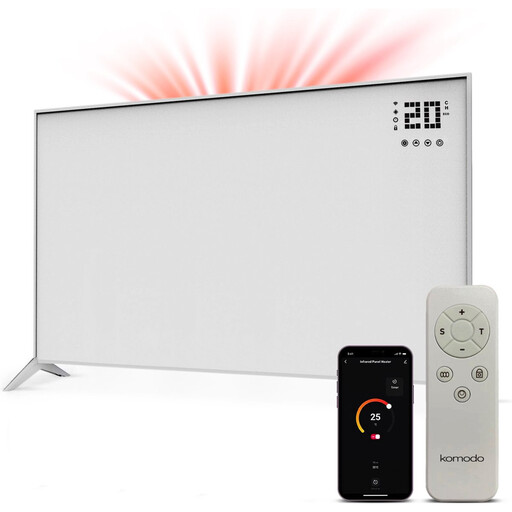
Komodo Blazi 800W infrared heating panel, 100 × 80 cm

Komodo Blazi 800W infrared heating panel, 100 × 80 cm

If you want to warm a fixed area without a fan, this panel could be an option, provided it can be positioned or installed appropriately in your space.

800 W; 100 × 80 cm; thermostat, timer and app control; IP24; described as freestanding or suitable for wall mounting. The surface may become hot during use.

View at Joybuy
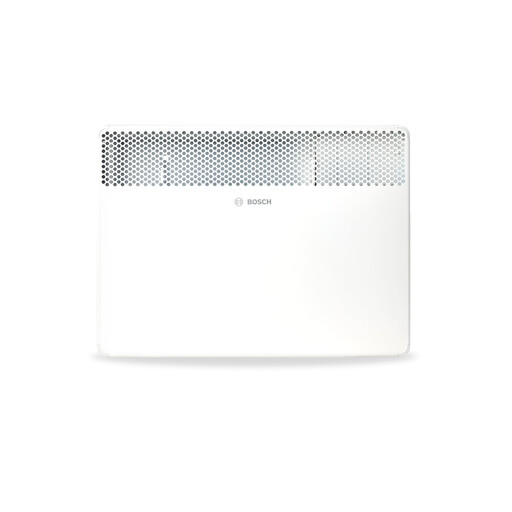
Bosch HC 4000-15 convector, 1,500 W

Bosch HC 4000-15 convector, 1,500 W

If you want to warm a larger area of the room as well as your desk, a convector could suit your needs.

1,500 W; described as suitable for up to 15 m²; seven presets, weekly programme, Eco mode and open-window detection. Designed for wall mounting or floor-standing use; feet for floor-standing use are available separately.

View at Joybuy
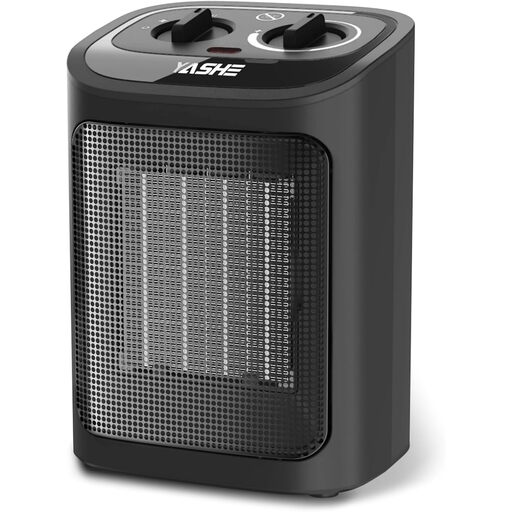
YASHE PTC-919 ceramic fan heater, 1,500 W

YASHE PTC-919 ceramic fan heater, 1,500 W

If you want quick warmth right at your desk, this compact fan heater could be an option, provided its airflow won’t disturb others in the shared room.

1,500 W; three heat settings; Eco mode; overheat and tip-over protection; carry handle. The fan circulates air; the product description specifies a clearance of at least 1 m from flammable materials.

View at Joybuy
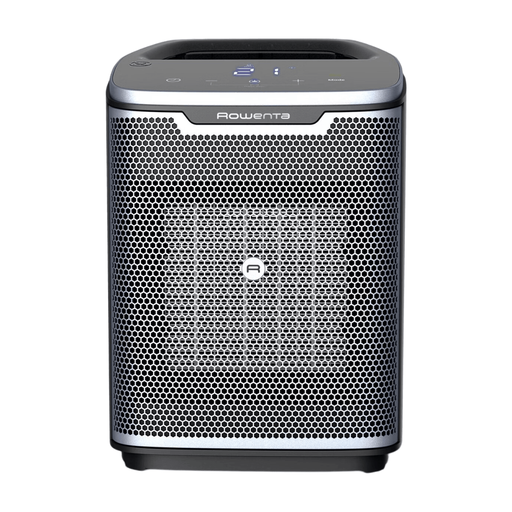
Rowenta SO9360 ceramic fan heater

Rowenta SO9360 ceramic fan heater

If you want to use a fan heater at your desk, check that its airflow and operating noise are acceptable to the other people sharing the room.

2,000 W; timer and overheat protection; stated maximum noise level of 55 dB; described as suitable for use on a table or console. The product description specifies a clearance of at least 1 m from flammable materials and an earthed socket.

View at Joybuy
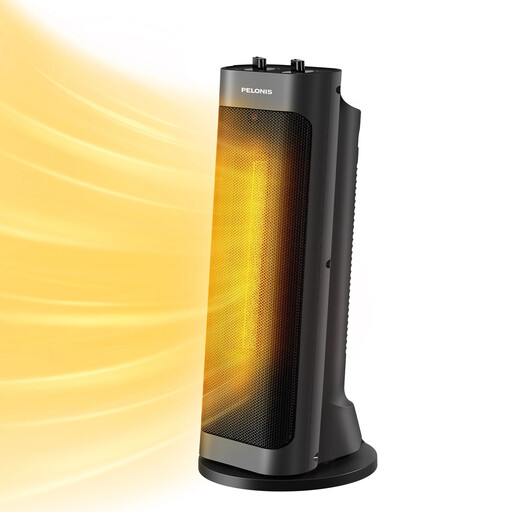
PELONIS 2,000 W PTC ceramic fan heater

PELONIS 2,000 W PTC ceramic fan heater

If you want to direct warmth flexibly around your space, this portable model offers a fan heater option, although its airflow may disturb others in the room.

2,000 W; 70° oscillation; overheat and tip-over protection. The product description specifies a clearance of at least 1 m from flammable materials and says it is for household use.

View at Joybuy

Frequently asked questions

Which type of heater is right if only my desk is cold?

For short bursts of warmth at your desk, an adjustable fan heater could be a good fit if its airflow and noise are acceptable. If you want to avoid a fan and draughts, and suitable installation is possible, an infrared panel positioned towards your desk may be an option. A convector is more suited to a broader need for warm air throughout the room.

What should I bear in mind when positioning and using a heater?

Always follow the instructions for the specific heater, choose a safe location and leave enough clearance from flammable objects. The German Fire Service Association also advises against drying clothes on heaters or overloading sockets. Damaged cables should not be used.

Can I simply plug in a heater I bought privately at work?

In a shared room used for work, don’t plug in the heater without first consulting the appropriate person at your workplace. The DGUV assigns responsibility for privately owned work equipment used at work to the company; this does not mean that all privately used shared rooms require general workplace approval.

How can I estimate the electricity costs of a heater?

Multiply the power in kW by the actual hours of use, then multiply the result by your price per kWh. Thermostat breaks affect how long the heater runs, so compare heaters using the same period of use and the same heating requirement.

Which labels and requirements should I check?

According to the Federal Institute for Occupational Safety and Health, mains-powered products covered by Germany’s Electrical Equipment Regulations and placed on the German market must carry a CE marking from the manufacturer or its authorised representative before being made available. The European Commission states that electric local space heaters covered by Regulation (EU) 2024/1103 have been subject to ecodesign requirements since 1 July 2025; check how the specific version of the product is classified. The European Commission distinguishes these requirements from energy labels and does not include electric appliances among the types that require an energy label.