
Lieferung heute & morgen

Qualitätsgarantie

Willkommens-Angebote freischalten: KOSTENLOSE Lieferung | Bis zu 80 % RABATT | Kostenlose 30-Tage-JoyPlus-Testphase
App herunterladen
A heat pump tumble dryer can make everyday laundry easier for families, multi-person households and homes without an external vent. The choice ranges from compact 7 kg models to heat pump tumble dryers with a 10 kg capacity. However, product names and feature descriptions do not always reveal how well a model will suit your personal routine.
As a Joybuy Product Recommendation Officer, I filter the relevant information using clear, transparent criteria. Energy consumption, capacity, maintenance, noise levels and the features that actually protect your fabrics are particularly important.
The energy efficiency scale ranges from A to G. You should also check the weighted energy consumption per 100 drying cycles. A larger appliance may have a favourable energy rating, but when fully loaded it can use more electricity overall than a smaller model.
Also check whether the figures come from the same product generation and are based on the same EU energy label. Older ratings such as A++ or A+++ cannot necessarily be compared directly with today’s scale.
A tumble dryer with a self-cleaning condenser can reduce the amount of manual cleaning required. However, the lint filter, door seal and condensate container still need to be maintained according to the manufacturer’s instructions. On models without a direct drain connection, the water container must be emptied regularly.
A double or multi-layer filter system is convenient, but it does not replace cleaning after every drying cycle.
A tumble dryer with SensorDry measures residual moisture and ends the programme according to the selected dryness level. This can help prevent over-drying. However, you must sort laundry according to the care labels and avoid overloading the drum.
Wool, silk, coated outdoor clothing and fabrics containing rubber or foam often require special programmes or may not be suitable for tumble drying.
Ideally, your washing machine and tumble dryer should have the same capacity. Before buying, also check the height, width, depth, door opening angle and door hinge position. A reversible door can be helpful in compact utility rooms.
Heat pump technology reuses heat within the circuit and generally operates at lower temperatures than conventional vented or condenser tumble dryers. This is one reason why an energy-efficient tumble dryer can use less electricity during operation. At the same time, many Eco programmes take longer.
Therefore, pay attention to:
For installation in a kitchen, bathroom or near living areas, a quiet heat pump tumble dryer with a low decibel rating is advantageous. Many appliances in this category have noise levels between 59 and 66 dB(A). The perceived noise also depends on the floor, how level the appliance is and the load.
A tumble dryer with an anti-crease function rotates the drum at set intervals after the programme has finished. This can help reduce creasing, but it does not replace removing the laundry promptly. Wi-Fi, app control and voice assistants are useful if you want to monitor programmes remotely. However, they cannot replace suitable fabric programmes.
For hygiene programmes, pay close attention to the exact wording. Claims such as bacterial or viral reduction should be understood as manufacturer information and are linked to specific programme temperatures and conditions. They do not constitute a general medical or therapeutic promise.
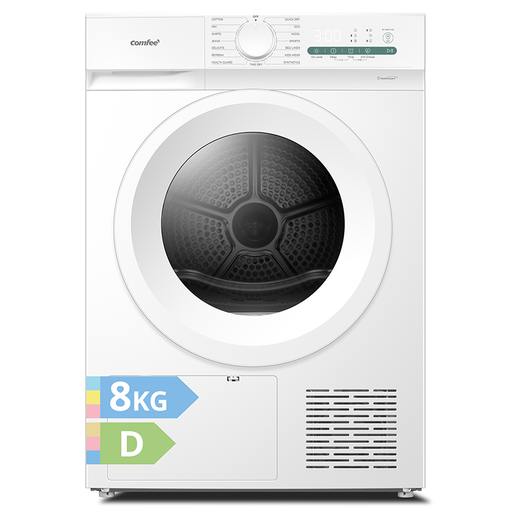
Why this product suits this profile: This 8 kg model is designed for households with regular everyday laundry needs and features a clear LED display and several drying levels.
Three adjustable drying levels and heat pump technology help tailor programmes to the load and fabrics, rather than drying solely according to a fixed run time.
8 kg capacity, UV light function according to the manufacturer’s information, refresh programme and two-layer lint filter.
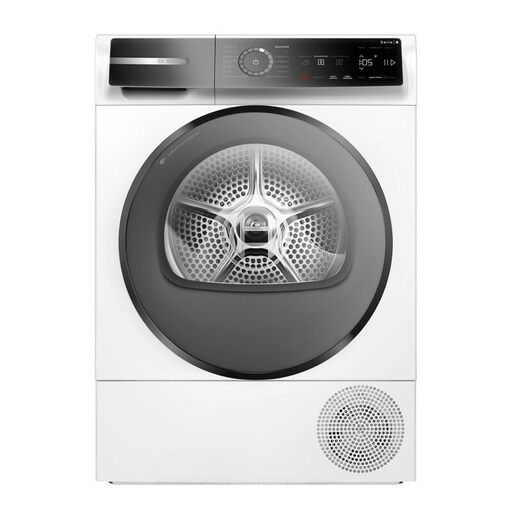
Why this product suits this profile: This appliance combines a 9 kg capacity with a moisture sensor, Wi-Fi connectivity and a stated noise level of 59 dB.
AutoDry and the SelfCleaning Condenser address two common weak points: unnecessarily long drying times and the increased effort involved in cleaning the condenser.
9 kg drum, Home Connect, add-laundry function, anti-crease function and condenser self-cleaning according to the product information.
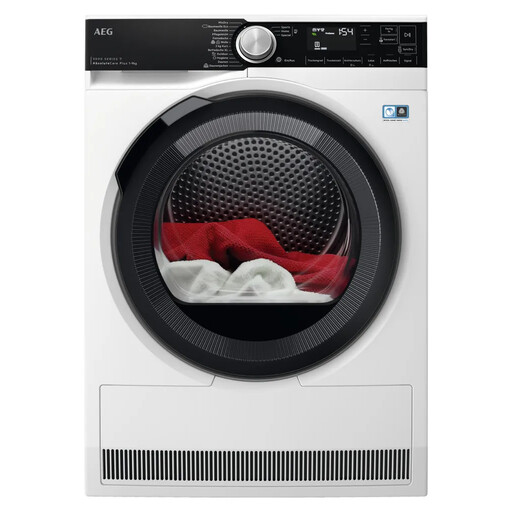
Why this product suits this profile: The combination of 3D Scan, wool and silk programmes, MixDry and a hygiene programme is well suited to households with different fabrics and frequent drying cycles.
Moisture measurement within the fabric and material-specific programmes reduce the risk of treating delicate clothing solely with a standard programme.
9 kg capacity, Wi-Fi, MixDry, ProSense and 3D Scan; hygiene information refers to the manufacturer’s designated programme.
We have compiled a complete, regularly updated list of products that fully meet these strict selection criteria and the safety regulations applicable in the EU.
Place the heat pump tumble dryer on a stable, level surface and keep the ventilation openings clear. Use an earthed socket without a multiway adaptor or extension lead. Before every load, empty all pockets and check the care labels.
For long-term operation, follow these three simple rules:
It is not possible to give a reliable fixed lifespan for every model. It depends on frequency of use, load size, installation location, cleaning and maintenance. Regular filter care and following the operating instructions can help maintain the appliance’s intended performance.
Heat pump technology uses a closed heat circuit and generally lower temperatures. As a result, electricity consumption can be lower than with older tumble dryer technologies. For a realistic assessment, compare consumption per 100 cycles and take your actual laundry volume into account.
No. A heat pump condenser tumble dryer generally does not need an external vent hose. Moisture is condensed inside the appliance and collected in a container or drained through a connected drain hose.