
Lieferung heute & morgen

Qualitätsgarantie

Willkommens-Angebote freischalten: KOSTENLOSE Lieferung | Bis zu 80 % RABATT | Kostenlose 30-Tage-JoyPlus-Testphase
App herunterladen
A heavy-duty shelving unit for the garage creates space for tools, tyres, supplies or gardening equipment. At first glance, choosing one seems straightforward: a metal frame, several shelves and a high weight rating promise a tidy space. In practice, however, a few common misunderstandings can lead to a shelving unit that isn’t right for your garage, cellar or workshop.
A shelving unit with a total load capacity of 600 kg won’t automatically hold 600 kg on every shelf. The key figure is the maximum static load per shelf. With the weight evenly distributed, for example, each shelf may be rated for 120 kg, while the combined capacity of all five shelves is 600 kg.
The way you load the shelves matters too. A point load — such as a single heavy toolbox with small feet — can put more strain on a shelf than evenly distributed boxes.
Many heavy-duty metal shelving units have a steel frame and MDF shelves. MDF, or medium-density fibreboard, may be suitable for dry indoor spaces. In a damp garage, an unheated shed or a cellar with high humidity, however, the material needs particular protection.
So check the exact combination of materials, the frame’s surface finish and the guidance on where the unit can be used. A galvanised or powder-coated steel frame can help protect against corrosion, but it’s no substitute for a dry, well-ventilated location.
A boltless shelving unit can be assembled using a connector or slot-in system. This can reduce the time it takes to put together, but it doesn’t mean every surface is suitable. The floor should be firm, level and able to support the load. You should also secure the shelving unit to the wall using the supplied anti-tip device, particularly if it will be heavily loaded or the weight won’t be evenly distributed.
First, estimate the weight of the items you plan to store long term. For tool cases, paint tins, spare parts or drinks crates, consider the load on each shelf separately. A stated load capacity usually applies to a static load distributed evenly. Movement, knocks and loading one side more heavily can increase the actual strain.
If you’re looking specifically for a shelving unit with a 750 kg load capacity, also check whether that figure is spread across five shelves and whether the width and depth suit the way you plan to use it.
Before you buy, measure:
Height-adjustable shelves are useful if your boxes, containers and tool cases are different sizes. With some slot-in systems, you can reposition the shelves at fixed intervals, such as every 5 cm. Also check whether the unit can be split, giving you two shorter units or a combination of storage and worktop space.
A steel shelving unit with 5 shelves is suitable for many storage needs, provided the frame, shelf material and load capacity are right for the job. MDF shelves provide a solid surface and are a practical choice for dry indoor spaces. In damp areas, pay close attention to the manufacturer’s guidance and avoid prolonged exposure to moisture.
A cellar shelving unit, garage storage rack or workshop shelving unit shouldn’t be used as a ladder or step either. Store heavy items on the lower shelves. Make sure every shelf is fully in place and all the connectors are properly locked.
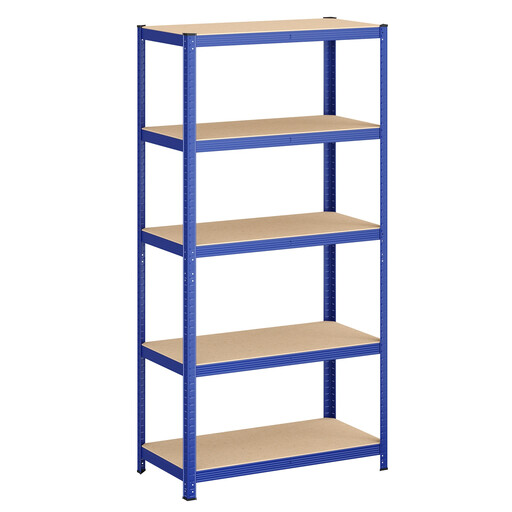
Why this product suits this profile: Measuring 50 × 100 × 200 cm, this unit has five shelves, adjustable in 5 cm increments, and requires no tools to assemble. It’s suitable for dry garages, cellars and storage rooms where you need to store boxes of different sizes.
The specifications state both 120 kg per shelf and a total load capacity of 600 kg. This makes it easier to plan loads realistically and avoids mistaking the total figure for the capacity of each shelf.
Galvanised steel frame, five MDF shelves, can be split into two units and includes an anti-tip device.
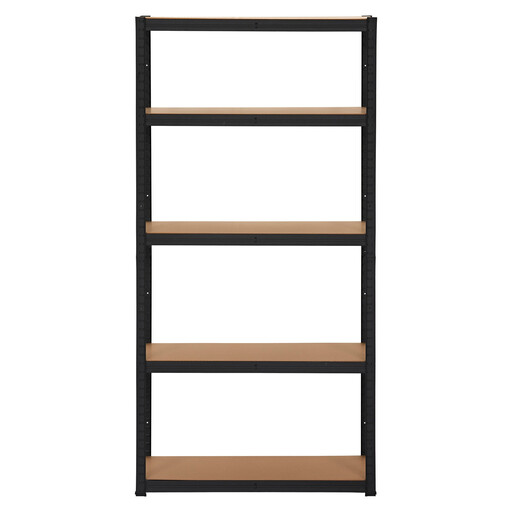
Why this product suits this profile: This heavy-duty shelving unit, made from powder-coated steel and fitted with five MDF shelves, is a good option if you need a high stated load capacity per shelf. It measures 180 × 90 × 45 cm.
The product specifications clearly state 265 kg per shelf and a total capacity of 1.325 kg. Even so, the load must be distributed evenly and the floor must be level.
Five MDF shelves, a powder-coated metal frame and a stated total load capacity of 1.325 kg.
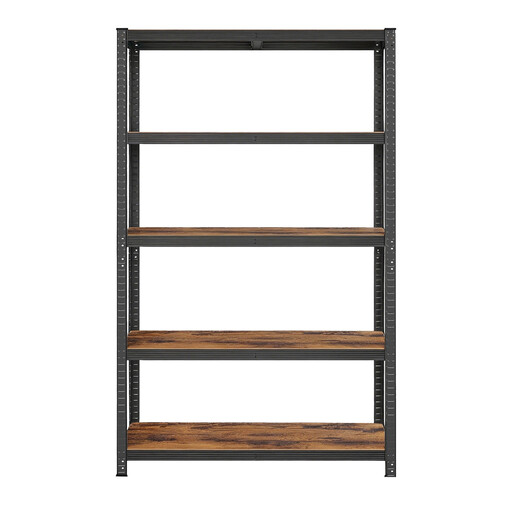
Why this product suits this profile: At 60 × 120 × 200 cm, this shelving unit offers more space for bulky tools, supplies or equipment. Each of the five shelves is rated for a static, evenly distributed load of up to 150 kg.
The load capacity per shelf and the total capacity of 750 kg are listed separately. This makes it easier to plan capacity sensibly across several areas for heavy items.
Powder-coated steel frame, MDF shelves, can be split into two units and comes with an anti-tip device.
We’ve put together a complete, regularly updated list of products that meet these strict selection criteria and fully comply with the safety regulations in force in the EU.
For a stable storage shelving unit in your garage or cellar, follow these steps:
Work gloves are a good idea during assembly, as metal edges can cause injuries. Don’t use the shelving unit as a step or ladder.
That depends on what you’re storing. A lower shelf capacity may be enough for light boxes, but you’ll need more for machinery, tyres or storage containers. Always compare the load capacity per shelf, total load capacity, dimensions and recommended load distribution.
MDF shelves may be suitable for dry cellars. However, prolonged exposure to high humidity or direct contact with water increases the risk of material damage. Place the shelving unit somewhere dry and level, with enough clearance from potential sources of moisture.
There’s no reliable one-size-fits-all answer. Its lifespan depends on factors including the load, moisture, assembly, frequency of use and care. Staying within the static load limits, storing heavy items on the lower shelves, using the anti-tip device and checking the shelving unit regularly can reduce the strain it experiences during use.