
Lieferung heute & morgen

Qualitätsgarantie

Willkommens-Angebote freischalten: KOSTENLOSE Lieferung | Bis zu 80 % RABATT | Kostenlose 30-Tage-JoyPlus-Testphase
App herunterladen
A heavy-duty shelving unit for your garage should safely hold tools, crates of drinks, tyres or seasonal items. In practice, poor purchases are often down to unclear load capacity figures, unsuitable materials or inaccurate measurements rather than price. So, if you’re looking for metal garage shelving, a heavy-duty shelving unit for your basement or workshop shelving, check a few technical details carefully before you buy.
A claim such as “600 kg load capacity” may seem clear at first. However, what matters is whether this refers to the maximum static total load or the load capacity of each individual shelf. For example, a 5-tier shelving unit with a total load capacity of 600 kg may be designed to hold 120 kg per shelf.
The stated load capacity also usually applies only when the load is evenly distributed, the unit is standing on a level surface and it has been assembled correctly. Point loads from heavy machinery or tool cases can put more strain on individual MDF shelves than evenly distributed boxes.
A steel storage rack is generally suitable for a garage, basement or workshop. However, many models have shelves made from MDF, a type of fibreboard. In damp basements, unheated garages or areas near water, this material may be more vulnerable than the steel frame.
So, check that the intended location is dry. In damp areas, don’t place the shelving unit directly on the floor. Good ventilation and protection from standing water will help extend its useful life.
A tool-free shelving unit can make assembly easier. Even so, you’ll need to check the frame connections, shelf supports and alignment carefully. For tall shelving units, securing it to the wall with the supplied anti-tip kit is also essential for safe use. Never use a shelving unit as a step or ladder.
Always compare these three figures:
A shelving unit with a total load capacity of 600 kg and five shelves is not automatically designed to hold 600 kg on each shelf. For heavy equipment, it’s best to leave a safety margin rather than regularly using the full stated load capacity.
As well as width and height, shelf depth is important. A garage shelving unit with a depth of 50 cm can accommodate larger tool cases, but takes up more room to manoeuvre. Before buying, measure:
You’ll need enough room to raise a 200 cm-high shelving unit into position. More compact dimensions are a good choice for low basement rooms.
Height-adjustable shelves make it easier to organise items of different sizes. Fixed increments, such as adjustments in 5 cm steps, are useful. Make sure all the shelves are seated correctly on their supports and aren’t skewed.
A boltless slot-together system can speed up assembly. Wear work gloves when fitting the steel parts to protect your hands from sharp edges. Once assembled, the shelving unit should stand on a level surface and be secured to the wall according to the instructions.
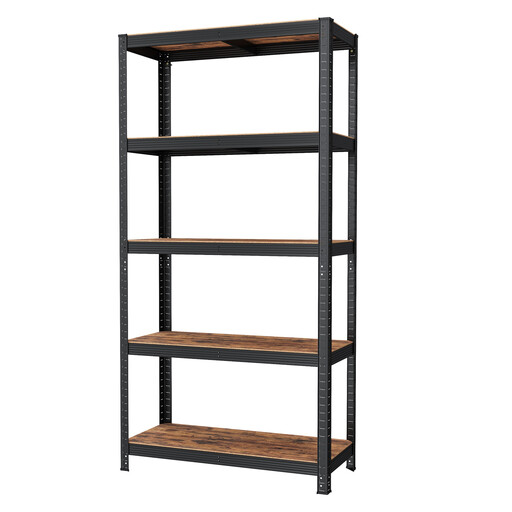
Why this product suits these needs: Measuring 60 × 120 × 200 cm, this shelving unit has five shelves, each with a static load capacity of up to 150 kg. It’s ideal for larger garages or storage rooms.
The specifications state both the total load capacity of 750 kg and the capacity of 150 kg per shelf. The anti-tip kit helps you secure the unit to the wall as intended.
Adjustable shelves, can be split into two units and assembled using a boltless slot-together system.
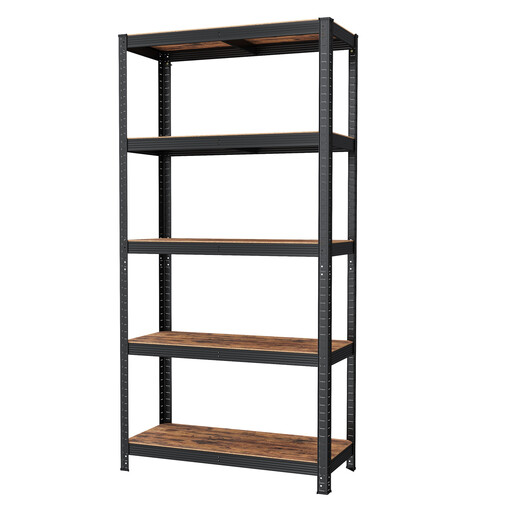
Why this product suits these needs: At 40 × 90 × 180 cm, this shelving unit also fits into many more compact spaces. Its stated static load capacity is 175 kg per shelf and 875 kg in total.
The product specifications clearly distinguish between the load capacity per shelf and the total load capacity. The instructions also explicitly mention securing the unit to the wall.
Powder-coated steel frame, five height-adjustable shelves and a split design.
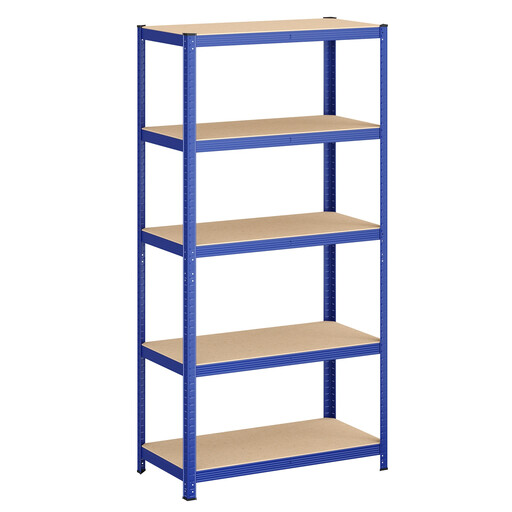
Why this product suits these needs: This shelving unit, with a load capacity of 600 kg, is designed for workshops, garages and basements. Its shelves can be adjusted in 5 cm increments to suit different items.
The load limit of 120 kg per shelf is stated separately from the total load capacity. The guidance also notes that the unit is not suitable for very damp environments.
Tool-free slot-together system, 5 cm adjustment increments, splits into two units and includes an anti-tip kit.
We’ve put together a complete, regularly updated list of products that meet these strict selection criteria and the applicable EU safety regulations.
It depends on what you’re storing. A lower load capacity per shelf is enough for light boxes and household supplies. Heavy tools, machinery or liquid containers require a higher static load capacity per shelf. The total figure isn’t the only thing that matters: check the load capacity per shelf and make sure the load is distributed evenly.
Yes, as long as the basement is dry and the floor is level. MDF shelves may be affected by persistently high humidity or direct contact with water. Also check the room height and secure a tall basement shelving unit to prevent it from tipping over.
There’s no one-size-fits-all answer. Its lifespan depends on the load, moisture, quality of assembly and maintenance. Sticking to the maximum static load capacity, distributing the load and checking regularly for damage can help reduce the risk of common wear and tear.