
Lieferung heute & morgen

Qualitätsgarantie

Willkommens-Angebote freischalten: KOSTENLOSE Lieferung | Bis zu 80 % RABATT | Kostenlose 30-Tage-JoyPlus-Testphase
App herunterladen
A garage, cellar or workshop can be kept more organised with the right heavy-duty shelving for the garage. However, a high kilogram rating on the packaging is not the only factor that matters. If you buy based solely on the maximum load capacity, you can easily overlook dimensions, load distribution, wall fixing or whether the shelves are suitable for damp rooms.
This buying guide explains which details really matter when choosing metal shelving for the garage, and which model may suit different usage situations.
A specification such as “600 kg garage shelving” or “875 kg garage shelving” often describes the maximum static total load. It does not automatically mean that a single shelf can support this load. Both values are always relevant:
For example, a unit with five shelves and a total load capacity of 600 kg may be rated for up to 120 kg per shelf. Even so, heavy toolboxes should not be placed at a single point on a small area.
A boltless shelving unit can make assembly easier. However, stability depends on whether all the push-fit connections are fully engaged, whether the floor is level and whether the unit is secured against tipping. For tall shelving or unevenly distributed loads, shelving with anti-tip protection is a sensible choice.
A wall anchor is no substitute for careful assembly. Before drilling, check the wall material, the type of wall plug required and the possible presence of cables or pipes. The shelving unit must not be used as a ladder or step.
A steel storage rack provides a sturdy frame construction. However, the shelf surfaces on many models are made from MDF or chipboard. These materials should be protected from prolonged exposure to moisture. They are often practical for a dry cellar, a garage without condensation or a workshop. In a damp shed, particular attention should be paid to corrosion protection, ventilation and the condition of the shelves.
First, make a list of what you plan to store: tool cases, tyres, paint tins, crates of drinks, spare parts or seasonal items. Add up the approximate weight for each level and leave a safety margin below the stated maximum load. Manufacturer specifications generally refer to static loads, not dynamic loads caused by pulling, pushing or climbing.
Width and height are not the only important measurements; depth matters too. A shelving unit that is 50 cm deep offers more storage space, but it also requires a greater clearance from garage doors, vehicles and work areas. Check the following before buying:
For narrow recesses, a cellar shelving unit with a shallower depth may be more suitable. A wider workshop shelving unit, on the other hand, is ideal for bulky equipment and toolboxes.
Height-adjustable shelves are practical when storing items of different sizes. Check the spacing at which the levels can be positioned and whether the shelves sit securely in the frame. Some models can also be divided into two lower units. This can be helpful for creating a workbench solution or separate storage areas in a shed.
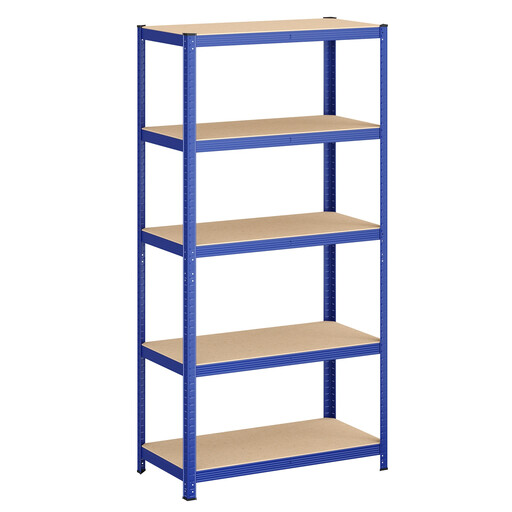
Why this product suits this profile: This model offers five adjustable levels, a stated total load capacity of 600 kg and boltless assembly. It is suitable for garages, cellars and sheds with sufficient ceiling height.
The specifications state both 120 kg per shelf and a total load of 600 kg. The included anti-tip protection highlights the need for wall fixing.
Galvanised steel frame, 5 cm spacing for shelf height and a divisible design according to the product description.
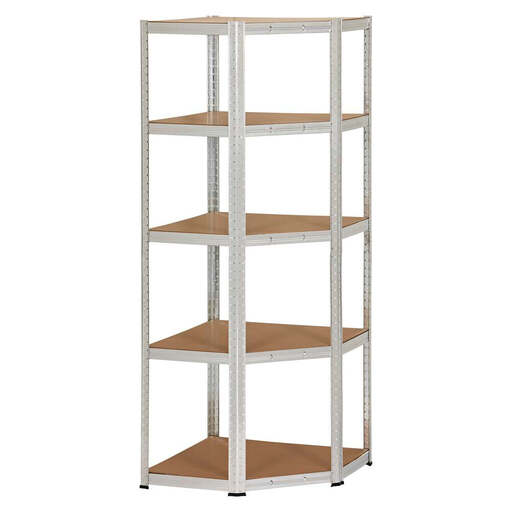
Why this product suits this profile: The corner design makes use of previously unused space in a garage, workshop or storage area. According to the product data, each shelf can hold up to 175 kg when the load is evenly distributed.
The product data clearly distinguishes the load per shelf from the total load capacity. It includes instructions on placing the unit on a level surface, distributing the load evenly and fixing it to the wall.
Galvanised steel, 70 x 40 x 180 cm and tool-free push-fit assembly according to the description. The corner shape can make efficient use of available floor space.
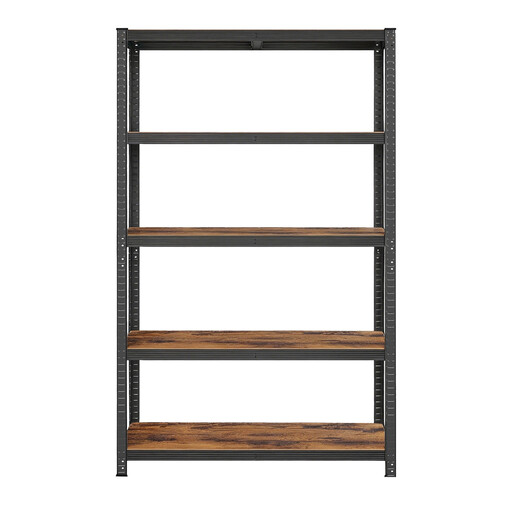
Why this product suits this profile: The greater width and depth are designed for extensive tool collections, boxes and seasonal items. The stated load capacity is 150 kg per shelf and 750 kg of static load in total.
The usable surface area and the load capacity per shelf are listed separately. Before assembly, check whether the 200 cm height and 60 cm depth are suitable for the intended location.
Adjustable levels, divisible design and powder-coated steel frame according to the product specifications.
We have put together a complete, regularly updated list of products that fully meet these strict selection criteria and the safety regulations applicable in the EU.
Place the shelving unit on a firm, level surface and check every push-fit connection. Load the shelves from the bottom upwards, keeping heavy items as low down as possible. A tall cabinet or shelving unit with an uneven load should be fixed to the wall using the supplied anti-tip protection.
Its service life depends on the load, assembly, humidity and maintenance. A powder-coated or galvanised steel frame can be used long-term in dry indoor areas. MDF shelves should be protected from moisture, standing water and prolonged condensation. Check damaged coatings and touch them up where necessary.
Such a shelving unit normally incurs no ongoing energy costs. Instead, you should consider assembly accessories, suitable wall plugs for wall fixing where necessary, and replacement or additional shelves. The overall cost therefore depends on choosing the right size and load capacity, so that poor planning does not make a second shelving unit necessary later.