
Lieferung heute & morgen

Qualitätsgarantie

Willkommens-Angebote freischalten: KOSTENLOSE Lieferung | Bis zu 80 % RABATT | Kostenlose 30-Tage-JoyPlus-Testphase
App herunterladen
A heavy-duty shelving unit for the garage should reliably store tools, tyres, boxes or supplies. In practice, unclear load capacity figures, unsuitable dimensions and neglected wall fixings often lead to the wrong purchase. The term ‘heavy-duty’ alone tells you very little. What matters is the technical specification and where you plan to use it.
This buying guide explains what homeowners, DIYers and tradespeople should look for in a metal shelving unit for the garage, a workshop shelving unit or a basement shelving unit.
A shelving unit described as having a ‘600 kg load capacity’ will not necessarily support that weight on every shelf. For a 600 kg storage shelving unit, the figure may refer to the combined capacity of all the shelves. Also bear in mind that this often means static load capacity: a load that is evenly distributed and left undisturbed.
When planning, always check:
For example, a garage shelving unit with a capacity of 120 kg per shelf is suitable for toolboxes, paint tins or smaller machines, provided the weight is evenly distributed.
A five-tier shelving unit only gives you extra storage if you take the ceiling height, doorways and lighting into account. If you’re considering a model that is 200 cm high, measure the actual ceiling height before buying. Garage doors, heating pipes and sloping ceilings can also limit where you can place it.
A tall steel shelving unit can still tip over, despite its metal frame, if heavy items are stored high up or the load is unevenly distributed. Use the supplied anti-tip kit on a suitable wall, following the instructions. Before assembly, check that the wall plugs and fixings are suitable for the wall material.
Load capacity is the key technical specification. A basic shelving unit is enough for lightweight household items. For tools, building materials or storage containers, the load capacity per shelf should be clearly stated.
With a 600 kg model that has five shelves, don’t assume you can load each shelf with 120 kg without checking the manufacturer’s guidance on load distribution. If you’re storing very heavy items, place them on the lower shelves wherever possible. This lowers the centre of gravity and makes the unit safer to use.
A steel shelving unit has a sturdy frame. Galvanised steel can be suitable for dry garages, basements and sheds. A powder-coated finish can make cleaning easier. However, a shelving unit is not automatically suitable for permanently damp rooms. The black JOYFURNOS model is specifically stated to be unsuitable for very damp environments.
The shelves on the models featured here are made from MDF boards. MDF is stable and smooth, but should be protected from prolonged exposure to moisture. Before using a shelving unit in a damp part of the basement, consider the room’s humidity, floor damp-proofing and the possibility of condensation.
Adjustable shelves make it easier to accommodate tool cases, boxes or canisters. On the JOYFURNOS shelving unit, the shelves can be positioned in 5 cm increments. This is more practical than fixed shelves if your storage needs change over time.
A boltless shelving unit can be easier to assemble. Even so, wear gloves, make sure all the joints are fully engaged and check that the unit is stable once assembled. Some models can also be split into two units. This can be useful in low spaces or if you want to combine a workbench with storage.
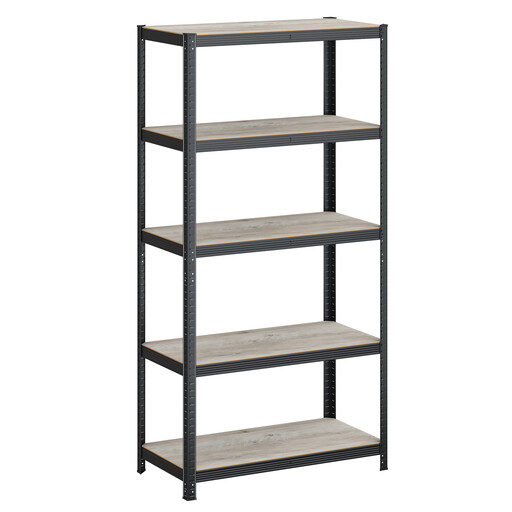
Why this product suits this profile: Measuring 50 × 100 × 200 cm, with five shelves, it offers a practical amount of storage for the garage, basement or shed. Its stated total load capacity is 600 kg, with 120 kg per shelf.
The load capacity is stated both per shelf and for the unit as a whole. An anti-tip kit is also included, so you can factor wall fixing into your assembly plans.
Galvanised steel frame, shelves adjustable in 5 cm increments and tool-free boltless assembly, according to the product description.
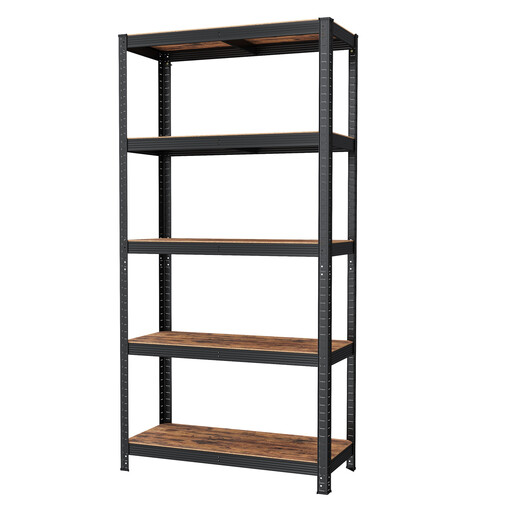
Why this product suits this profile: This model is worth considering if you need a higher stated load capacity. According to the product specifications, each shelf supports up to 175 kg, with a total load capacity of 875 kg.
The load capacity figures specify both the capacity of each shelf and the total capacity. This makes it easier to check whether the unit will suit your needs for storing heavy tools and equipment.
Powder-coated steel frame, 40 × 90 × 180 cm, can be split into two units and has adjustable shelves.
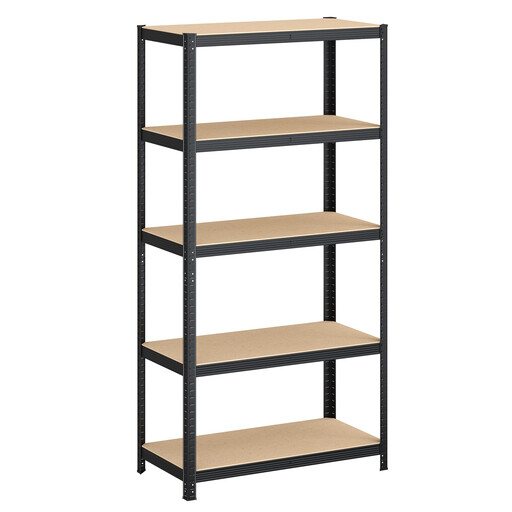
Why this product suits this profile: This black model has five shelves, stands 200 cm tall and has a maximum static total load capacity of 600 kg, making it suitable for a workshop, garage or storage room.
The product description advises fixing the shelving unit to the wall with the included anti-tip kit before use, and not using it in very damp environments.
Tool-free boltless assembly, shelves adjustable in 5 cm increments and can be split into two separate units.
We’ve put together a complete, regularly updated list of products that meet these strict selection criteria and the safety regulations in force in the EU.
It depends on what you’re storing. A capacity of 120 kg per shelf may be enough for toolboxes and supplies. For machines, building materials or heavy spare parts, look for a higher stated load capacity. It’s important to distinguish between static total load and load capacity per shelf.
Its lifespan depends on how the load is distributed, how it is assembled, moisture levels and mechanical wear. A steel frame is designed for regular use, but should be protected from prolonged exposure to moisture and overloading. Check or replace damaged shelves or bent struts before using the unit again.
The JOYFURNOS models mentioned do not require tools to fit the boltless connections. However, depending on the wall material, you may need suitable drilling and fixing tools to fit the anti-tip kit. Always follow the assembly instructions and take the condition of the wall into account.