
Lieferung heute & morgen

Qualitätsgarantie

Willkommens-Angebote freischalten: KOSTENLOSE Lieferung | Bis zu 80 % RABATT | Kostenlose 30-Tage-JoyPlus-Testphase
App herunterladen
A heavy-duty shelving unit for the garage should store tools, tyres, supplies or gardening equipment neatly without becoming a safety risk itself. In practice, however, suitability depends on more than high load-capacity figures. Dimensions, weight distribution, floor condition and the option of securing the unit to the wall are equally important.
If you are buying heavy-duty metal shelving, there are three common purchasing traps you should avoid.
Figures such as 600 kg heavy-duty shelving, 750 kg heavy-duty shelving or 875 kg heavy-duty shelving often refer to the static total load across all shelves. The maximum load per shelf is also crucial. For example, a shelving unit with a total load capacity of 600 kg and five levels may be designed to hold 120 kg per shelf.
These figures generally apply only to evenly distributed, static loads. A single heavy tool case or filled container should not be placed on a small area if the construction is not designed for concentrated loads.
A boltless shelving unit can usually be assembled quickly. However, that does not mean it should be left freestanding in every situation. Tall shelving units can tip when subjected to sideways pressure or loaded unevenly. Any supplied anti-tip kit should therefore be secured to a suitable wall in accordance with the assembly instructions.
Before buying, check whether the garage wall is suitable for securing the unit and whether suitable wall plugs can be used. In rented properties or where walls are particularly delicate, you may need to consult your landlord.
A 200 cm-tall garage storage shelving unit will not automatically fit in every room. Before buying, measure the footprint, ceiling height, passage width and the space needed to open doors and windows. Shelf depth is also important: a deeper model provides more storage space, but may narrow walkways.
Many models combine a steel frame with MDF shelves. MDF is suitable for dry indoor areas, but should not be exposed to high humidity or direct water over long periods. For damp cellars, unheated sheds or areas affected by condensation, pay particularly close attention to the manufacturer’s specifications.
Pay attention to three specifications:
A high-load-capacity shelving unit is only suitable if its shelf load matches the items you actually intend to store. A lower shelf load may be sufficient for paint tins, toolboxes and boxes. Heavy machinery, compressors or filled storage containers, on the other hand, require a greater safety margin.
A height-adjustable shelving unit makes storage easier when items vary in size. Systems that allow the shelves to be repositioned at fixed intervals, such as 5 cm, are particularly practical. This means the space between two levels can be adjusted to suit tool cases, plastic boxes or canisters.
Some boltless shelving units can also be split into two separate units. This can be useful for a workbench arrangement or two separate storage areas. Before splitting the unit, however, check that both sections will stand securely afterwards and can each be correctly secured.
A powder-coated or galvanised steel frame may be suitable for a garage, workshop or cellar. The finish alone, however, does not replace protection against constant damp. For a workshop shelving unit, wipe-clean shelves, sufficient clearance from the floor and an easy-to-organise layout are also useful.
A metal shelving unit with 5 shelves provides a clear basic structure. Heavy items should ideally be stored at the bottom. Lighter boxes and seasonal items that are rarely needed can go on the upper levels. The surface should be level and capable of supporting the load; where there are uneven areas, suitable levelling solutions are required.
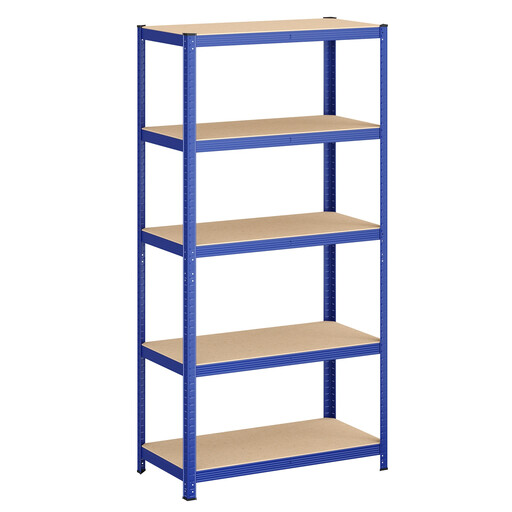
Why this product suits this profile: This shelving unit offers five adjustable levels, dimensions of 50 × 100 × 200 cm and a specified static total load of 600 kg. The tool-free boltless assembly can make set-up easier in a private storage area.
The shelf load of up to 120 kg is specified separately from the total load. An anti-tip kit is included; the unit should be secured to the wall before use.
Shelves adjustable in 5-cm increments and a split design for two separate units.
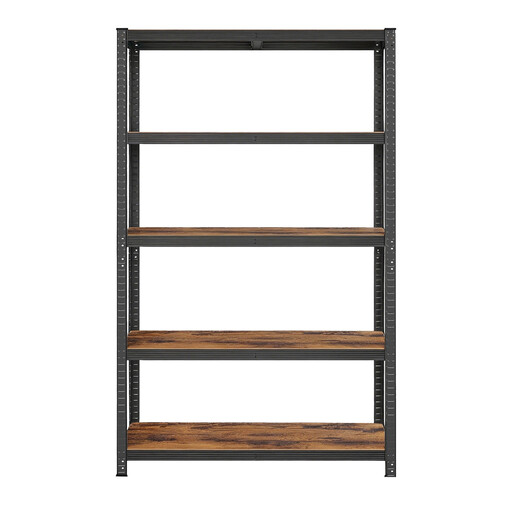
Why this product suits this profile: Measuring 60 × 120 × 200 cm, with five shelves and a static shelf load of up to 150 kg, this model is designed for larger items in the garage, workshop or storage room.
The specifications distinguish between 150 kg per shelf and a total load of 750 kg. The anti-tip kit addresses the risk of a 200 cm-tall shelving unit tipping, but it does not replace correct assembly.
Adjustable levels, a split design and a powder-coated steel frame with MDF shelves.
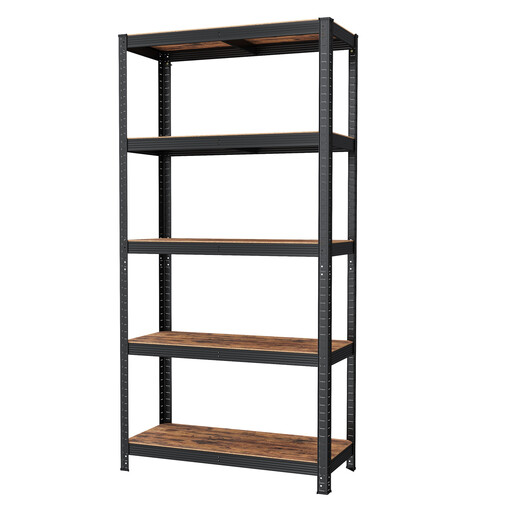
Why this product suits this profile: This model, measuring 40 × 90 × 180 cm, specifies a static shelf load of 175 kg and a total load of 875 kg. This makes it an interesting option for heavy tools, material boxes or supplies where weight is distributed carefully.
The higher load capacity is linked to specific shelf and total-load figures. The shelving unit must still stand on a level surface and be secured using the supplied anti-tip kit.
175 kg static shelf load, five levels and a split boltless design.
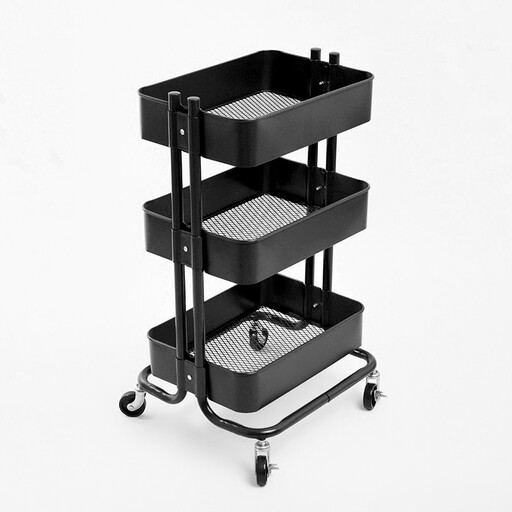
Why this product suits this profile: This mobile trolley is designed for lighter items. Three mesh shelves, four castors and two lockable wheels make it suitable for storage locations that change frequently in a utility room, workshop or cellar.
The load capacity is clearly specified as up to 7 kg per level, making it clear that this is not a conventional heavy-duty shelving unit for machinery or heavy crates.
360-degree castors, two locking brakes and open mesh baskets for quick access.
We have put together a complete, regularly updated list of products that fully meet these strict selection criteria and the safety regulations applicable in the EU.
That depends on what you intend to store. First, add up the weight of the items you plan to store and distribute it across the shelves. A model with a total load capacity of 600 kg may be sufficient for toolboxes and supplies. Heavy machinery or stocks of materials may require shelving with a total load capacity of 750 kg or 875 kg. Shelf load, even weight distribution and the manufacturer’s static-load specifications remain the decisive factors.
A boltless system can be assembled securely if all connections are correctly fitted and the shelving unit stands on a level, load-bearing surface. The intended wall fixing should be used for tall or heavily loaded units. Without anti-tip protection, a freestanding shelving unit is not suitable for every room.
There is no one-size-fits-all answer. Service life depends on the load, assembly, location and care. Dry rooms, evenly distributed loads and regular inspections can help extend its useful life. In damp garages or cellars, check for corrosion and swollen MDF shelves at an early stage.