
Lieferung heute & morgen

Qualitätsgarantie

Willkommens-Angebote freischalten: KOSTENLOSE Lieferung | Bis zu 80 % RABATT | Kostenlose 30-Tage-JoyPlus-Testphase
App herunterladen
A heavy-duty shelving unit for your garage should reliably hold tools, tyres, supplies or seasonal items. In practice, however, three common buying mistakes can lead to unnecessary expense:
So your choice shouldn’t be based on the figure on the product label alone. The key factors are static load capacity, dimensions, shelf adjustment, materials, assembly method and safety features.
A shelving unit with five shelves might have a total load capacity of 600 kg. That doesn’t automatically mean each shelf can hold 600 kg. The figure to look for is the maximum static load per shelf.
For example, a 600 kg heavy-duty shelving unit with five shelves may be designed to hold 120 kg per shelf. A model with a total load capacity of 650 kg may hold 130 kg per shelf, provided the load is evenly distributed. Try to spread the weight across the shelf as much as possible. Point loads from heavy machinery or narrow metal boxes can put more strain on the structure than evenly distributed boxes.
Also bear in mind:
Before you buy, measure the available wall space, clearance for walkways and the depth you need. A 200 cm-high workshop shelving unit offers plenty of storage, but you’ll need enough headroom. Position it so that doors, windows and lights remain unobstructed.
Height-adjustable shelves are useful for storing items of different sizes. For example, a model that adjusts in 5 cm increments makes it easier to fit in tool cases, paint tins and plastic storage boxes than a unit with fixed shelf positions.
A 5-shelf unit suits many garages and cellars. If you need to store very large items, it may be worth splitting the unit into two sections. Some designs allow you to do this, so they can also be used as two lower storage units or as a workbench with storage.
A sturdy steel shelving unit has a strong frame, but its shelves are often made from MDF or a similar engineered wood. MDF is suitable for dry indoor spaces, but should be protected from moisture, standing water and persistently high humidity. If you’re using the unit in a damp cellar or unheated shed, check the material specifications and usage guidance carefully.
An anti-tip kit improves safety, but it doesn’t replace correct installation. Secure the shelving unit to the wall as instructed. Also check that the wall and fixings are suitable. Using the unit free-standing without anchoring it can increase the risk of it tipping over, especially when it’s heavily loaded or the weight is unevenly distributed.
A tool-free, boltless shelving unit is usually assembled using interlocking joints. Make sure all the braces are fully clicked into place and the shelves sit flat. Work gloves can protect your hands from sharp edges during assembly.
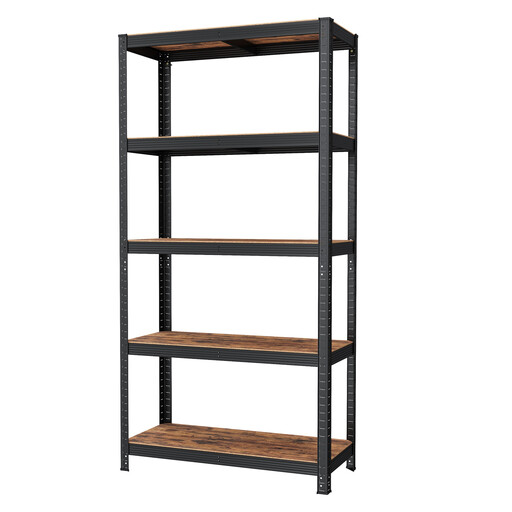
Why this product suits this profile: Measuring 30 × 75 × 150 cm, this compact metal shelving unit is ideal for tools, supplies and smaller equipment when floor space is limited.
The specifications state a static load capacity of 130 kg per shelf and 650 kg in total. An anti-tip kit is included and should be used.
Steel frame, five adjustable shelves and the option to split it into two units. The shelves are made from MDF.
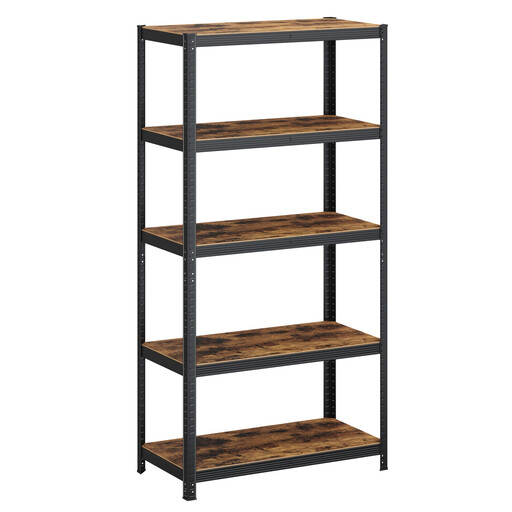
Why this product suits this profile: Measuring 50 × 100 × 200 cm, this storage shelving unit makes good use of vertical space, with five shelves for neatly organising tools, boxes and work materials.
The load capacity is stated separately: 120 kg per shelf and 600 kg total under static load. Shelf height can be adjusted in 5 cm increments.
Galvanised steel frame, tool-free assembly and an anti-tip kit. The unit can be split into two sections.
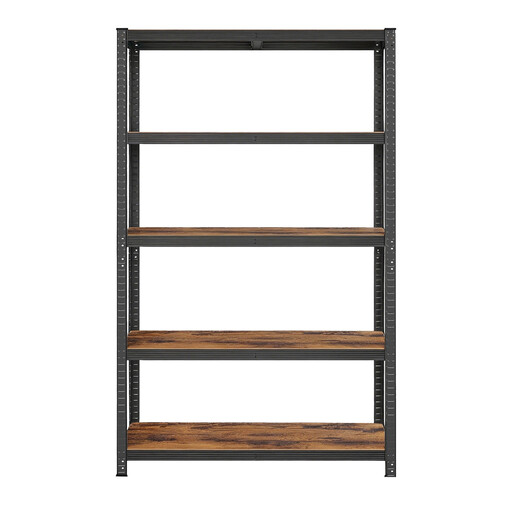
Why this product suits this profile: Measuring 60 × 120 × 200 cm, with a capacity of 150 kg per shelf, this workshop shelving unit is designed for larger spaces and heavy equipment.
The advertised total load of 750 kg is backed up by a specific static load capacity of 150 kg per shelf. The unit still needs to be secured to the wall.
Powder-coated steel frame, adjustable shelves and a split design that can be used as two storage units or work surfaces.
We’ve put together a complete, regularly updated list of products that meet these strict selection criteria and fully comply with the safety regulations in force in the EU.
This figure usually refers to the combined capacity of all the shelves under static load. For example, a five-shelf unit may be designed to hold 120 kg per shelf. Always check the specifications for the model in question, distribute the weight evenly and assemble the unit correctly.
Securing tall or heavily loaded shelving units to the wall is a sensible precaution. The models mentioned include an anti-tip kit for this purpose. Check the wall and use suitable fixings. If the instructions require anchoring, don’t use the shelving unit as a free-standing structure without securing it.
Its lifespan depends on the load, assembly, room conditions and maintenance. A steel frame can be used for a long time in dry indoor spaces. MDF shelves are more susceptible to moisture. Regularly check the joints, shelves and frame to spot wear or damage early.