
Lieferung heute & morgen

Qualitätsgarantie

Willkommens-Angebote freischalten: KOSTENLOSE Lieferung | Bis zu 80 % RABATT | Kostenlose 30-Tage-JoyPlus-Testphase
App herunterladen
By a Joybuy Product Recommendation Officer, August 29, 2026
When boxes are piling up in the basement, garage, or workshop and tools are cluttering the floor, a heavy-duty shelving unit often seems like the obvious solution. But the purchase can quickly lead to disappointment. A supposedly sturdy shelf buckles under the weight of paint cans, assembly turns into a test of patience with sharp-edged parts, or unsightly rust spots appear after the first damp winter.
To save you from such experiences, we'll highlight the most common pitfalls and show you which technical details really matter.
Many shelving units look similar at first glance, but the differences lie in the details. These three points frequently lead to buyer's remorse:
To make an informed decision, you should closely examine three core parameters. These will determine the stability, longevity, and practical value of your new shelving unit.
The most critical metric is the load capacity per shelf. This specifies how much weight a single shelf can support when the load is evenly distributed. The total load capacity is the sum of all individual shelf capacities and serves more as a general guideline.
Always be sure to place the heaviest items on the bottom shelves to increase the unit's stability.
The frame of a heavy-duty shelving unit is almost always made of steel. The crucial factor, however, is its surface finish, which protects it from corrosion:
The shelves themselves are often made from MDF (medium-density fibreboard). They are sturdy and cost-effective but are susceptible to direct moisture. In very damp basements, the boards should not be exposed to persistent moisture.
Modern heavy-duty shelving units almost exclusively use a boltless system for quick, tool-free assembly. Quality is revealed in the precision of the connections. Well-manufactured systems lock firmly into place with minimal force (a rubber mallet is helpful), forming a rigid, torsion-resistant structure. Another sign of a well-thought-out design is the option to assemble the unit as two separate parts—for instance, creating two half-height workbenches instead of one tall shelving unit.
Based on these criteria, we have identified several models that offer a compelling solution for specific needs.
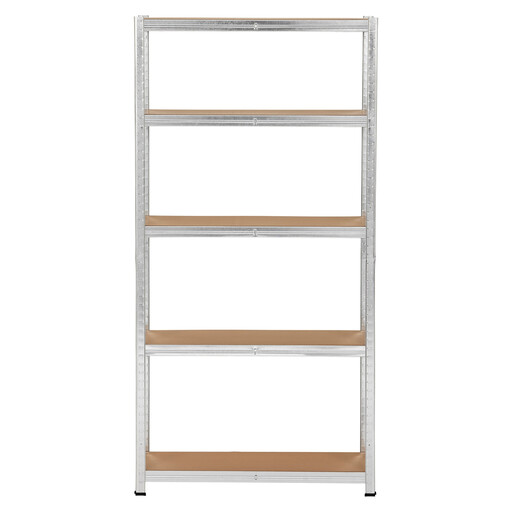
Why this model is a good fit: Ideal for anyone seeking a reliable and straightforward storage solution for the basement or garage. It provides a solid foundation for typical household loads like beverage crates, toolboxes, or seasonal decorations.
The load capacity is clearly specified at 175 kg per shelf. The galvanised steel frame offers basic protection against corrosion in moderately damp basements, thus avoiding the trap of inferior surface finishes.
Offers high load-bearing capacity for standard applications at an excellent price-performance ratio. The standard dimensions (180x90x40 cm) fit into most basements and garages.
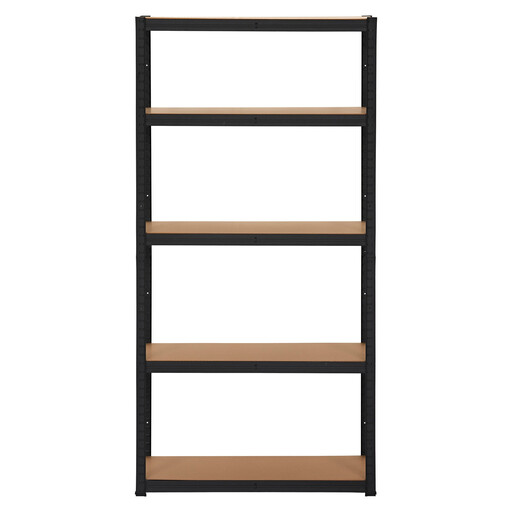
Why this model is a good fit: Designed for the workshop or warehouse where heavy equipment, material stock, or large tool collections need to be stored securely. The matte black finish is also more visually appealing than that of basic galvanised units.
With a specified load capacity of 265 kg per shelf, it is one of the most robust models in its class. The powder coating provides superior protection against scratches and corrosion compared to simple paint.
Extremely high load capacity (1325 kg total) for professional-level demands. The durable powder coating ensures longevity and a high-quality appearance.
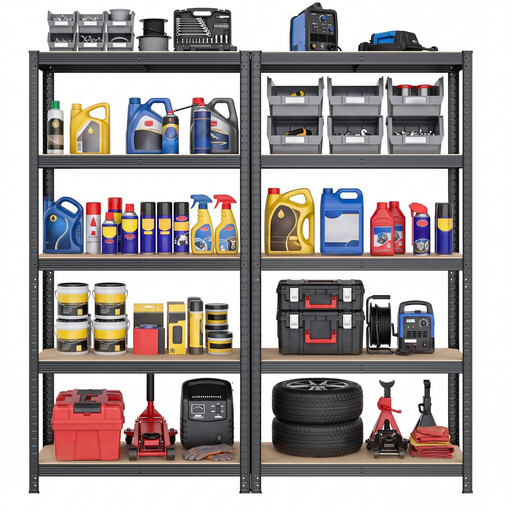
Why this model is a good fit: Perfect for those who need more than just a simple shelf. The ability to convert the units into two half-height workbenches offers maximum flexibility for workshops, garages, or even large pantries.
This model avoids the trap of rigid, inflexible systems. The explicitly advertised split-design is a functional feature that significantly increases its utility and allows it to adapt to changing spatial needs.
The convertible design allows for use as two separate, lower shelving units or workbenches. Being sold as a two-pack also offers an attractive value proposition.
We have compiled a complete, up-to-date list of products that fully meet these strict selection criteria and safety standards.
Always wear work gloves during assembly to protect yourself from sharp edges. Use a rubber mallet to tap the connections together firmly without causing damage. Build the unit on a level surface from the bottom up, ensuring all components are securely locked in place before inserting the shelves.
The most important measure is to anchor it to the wall. Most heavy-duty shelving units come with an anti-tip kit, which you should always use, especially if there are children in the household. Distribute the weight evenly and always store the heaviest items on the bottom shelves.
Yes, especially if the protective coating is damaged. A garage shelving unit with a galvanised or powder-coated steel frame offers good basic protection. Avoid scratching the metal and wipe up any spills immediately to protect the MDF boards. In environments with persistently high humidity, good ventilation is advisable.