
Lieferung heute & morgen

Qualitätsgarantie

Willkommens-Angebote freischalten: KOSTENLOSE Lieferung | Bis zu 80 % RABATT | Kostenlose 30-Tage-JoyPlus-Testphase
App herunterladen
By the Joybuy Product Recommendation Officer, 28 August 2026
Clutter in the garage, cellar, or workshop can quickly get out of hand. A heavy-duty shelf promises a simple solution for storing tools, car tyres, or heavy storage boxes safely and neatly. But the market is flooded with options whose marketing claims don't always hold up in practice. Before you make a decision, it's crucial to understand the common pitfalls that can lead to a poor purchase.
Many buyers focus on a single, heavily advertised number, overlooking critical design details that determine durability and safety. This guide will help you separate the wheat from the chaff.
The 3 Most Common Pitfalls When Buying Heavy-Duty Shelving:
To make an informed decision, you should focus on the technical specifications that are relevant for daily use.
Ignore the total load capacity and instead check the maximum static load capacity per shelf. This value indicates how much weight a single shelf can safely support with an evenly distributed load. For storing paint cans, smaller machines, or full toolboxes, a load capacity of at least 100 kg per shelf is a good benchmark. For very heavy items like engine parts or large quantities of stock, a metal shelf with a high load capacity of 175 kg per shelf or more should be considered.
The longevity of a shelving unit depends heavily on the frame material and its protection against corrosion.
Modern heavy-duty shelving units typically use a boltless metal interlocking system. This allows for quick assembly, often without special tools. The precision of the parts' fit is key here. A good system can be assembled with light taps from a rubber mallet.
An indispensable safety feature is the anti-tip kit. This consists of brackets and screws used to securely anchor the unit to the wall. This is absolutely essential for preventing accidents, especially with tall, narrow shelving units or on uneven floors.
Instead of making a one-size-fits-all recommendation, we have selected models that fit specific use cases.
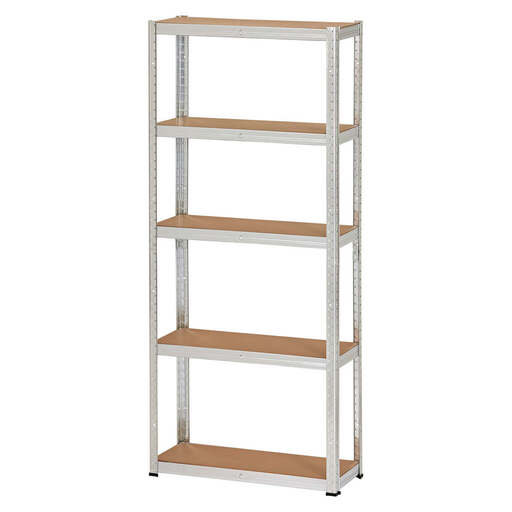
Why it's a good fit: Perfect for anyone looking for a reliable, space-saving solution for the pantry or a smaller cellar. It's designed to organise canned goods, drink crates, or lighter tools without taking up much space.
This unit relies on a clear and honest specification for its load capacity per shelf (75 kg). It avoids the trap of an exaggerated total load capacity and provides a solid foundation for light to medium-weight items.
Compact Dimensions: At 75 cm wide, it fits into narrower alcoves. Corrosion Protection: The galvanised steel frame protects against rust in cellar environments.
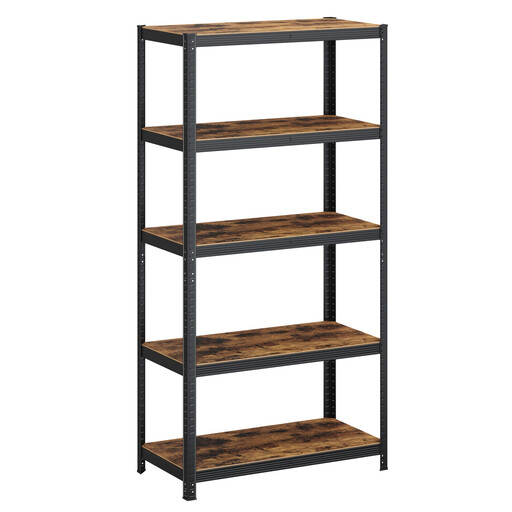
Why it's a good fit: A versatile all-rounder for DIY enthusiasts who need a flexible solution for their garage shelving or workshop shelving. It offers enough capacity for heavy tools and can be adapted to different room layouts.
With a solid load capacity of 120 kg per shelf, this unit offers reliable real-world capacity. The construction is designed for stability, and an anti-tip kit is included for secure wall mounting.
Convertible Design: The unit can be reconfigured into two separate, half-height shelves or workbenches. Tool-Free Assembly: The interlocking system allows for straightforward setup.
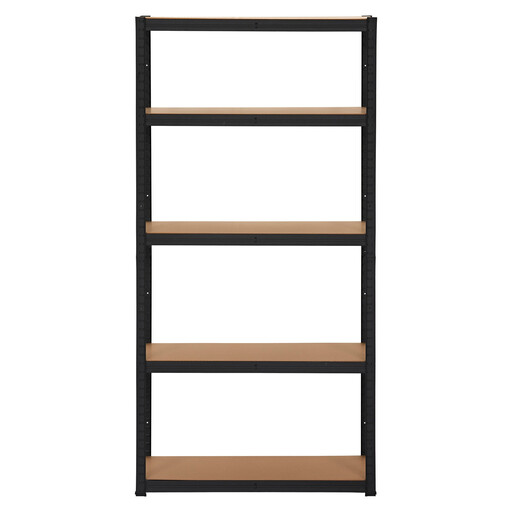
Why it's a good fit: Designed for users who make no compromises on load capacity. Perfect as storage shelving for small business owners or for storing the heaviest equipment and materials in a professional workshop.
This model counters the pitfalls of instability and weak capacity with an extremely robust construction and an impressive 265 kg load capacity per shelf. The focus here is on maximum, reliable performance.
Extreme Load Capacity: With 265 kg per shelf, it is suitable for the most demanding storage tasks. Durable Powder Coating: The matte black finish is both resilient and visually appealing.
We have compiled a complete, up-to-date list of products that fully meet these strict selection criteria and rigorous safety standards.
Yes, wall mounting is strongly recommended and is essential for safety. Tall, loaded shelving units can tip over, especially on uneven floors. Most quality units come with an anti-tip kit. Mounting it to a solid wall prevents accidents and significantly increases the overall stability of the structure.
The specified maximum load capacity per shelf only applies when the weight is spread out over the entire surface of the board. For example, if you place a single, very heavy 30x30 cm box in the middle of a 90 cm wide shelf, the entire load is concentrated on one small point. This can cause the shelf to bow or even break, even if the weight is below the maximum load capacity. Therefore, distribute heavy items as evenly as possible across the full width and depth of the shelf.
MDF boards are susceptible to moisture. In persistently damp cellars, they can swell, grow mould, and lose their stability. If you are setting up a shelving unit in such an environment, ensure there is good ventilation. Do not place the unit directly against a cold external wall, and avoid storing wet items on it. For very damp environments, shelving units with metal or plastic shelves are a better, though often more expensive, alternative.