
Lieferung heute & morgen

Qualitätsgarantie

Willkommens-Angebote freischalten: KOSTENLOSE Lieferung | Bis zu 80 % RABATT | Kostenlose 30-Tage-JoyPlus-Testphase
App herunterladen
A disorganized basement, a cluttered garage, or a workshop with tools and materials piled on the floor—these situations are not only impractical but can also pose safety risks. A heavy-duty shelving unit promises a solution, but the selection is vast, and not every model delivers on its promise. As your Joybuy Product Recommendation Officer, I'll help you identify the critical features and avoid common purchasing pitfalls.
Many buyers focus on impressively high total load capacities or supposed bargains, only to later find that the shelves buckle under the weight of paint cans or a set of car tires. Others struggle with complicated assembly instructions or get frustrated by rust on a basement shelf that is unsuitable for damp environments. This guide will show you what really matters.
Before you make a decision, you should be aware of the three most common pitfalls that can lead to a bad purchase.
To make an informed decision, focus on the following three core aspects. These determine the durability, safety, and functionality of your new shelving system.
First, ignore the total load capacity and check the maximum static load capacity per shelf. Think about what you want to store. For heavy toolboxes, machines, or filled crates, a high-capacity shelf should support at least 120 kg to 175 kg per level. This value ensures that the shelves won't give way, even under concentrated loads.
The choice of material is crucial for longevity, especially in basements or garages.
A modern shelving system for the garage or workshop should be flexible and easy to handle.
Based on the criteria above, we have identified several models that represent a considered choice for different needs and applications.
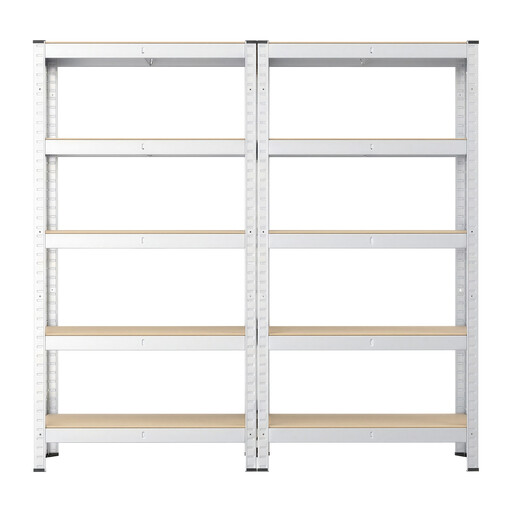
Why this model fits: This set offers excellent value for money for anyone looking to outfit an entire basement room or a garage wall. The shallower depth of 30 cm is ideal for narrower spaces.
The clear specification of a 130 kg load capacity per shelf prevents overloading and ensures safe storage for household items and tools.
Two shelves in the set allow for a flexible arrangement along a wall or as separate units. The ability to split them also allows for use as workbenches.
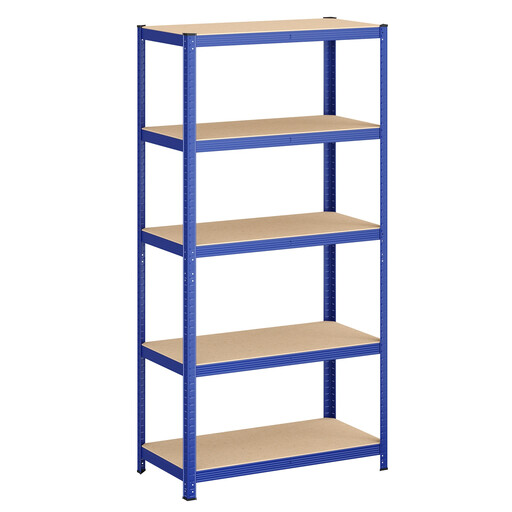
Why this model fits: With standard dimensions and a balanced load capacity of 120 kg per shelf, this unit is the ideal solution for most household applications, from car tires to beverage crates.
The tool-free boltless system and clear instructions prevent frustration during assembly. The galvanized steel frame is designed for use in a basement or garage.
The ability to split the shelf into two half-height units creates a flexible solution that adapts to the available space or can serve as a workbench.
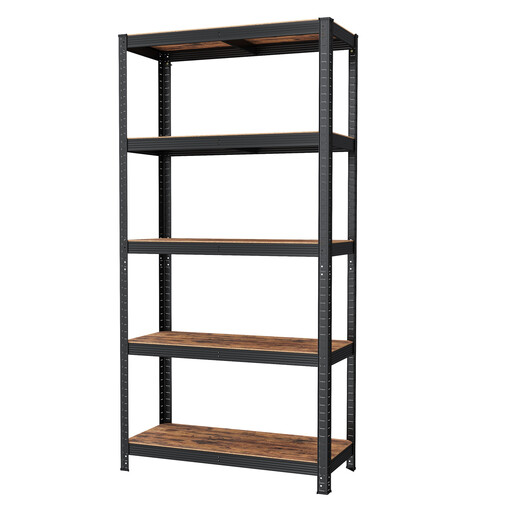
Why this model fits: For DIY enthusiasts and small business owners who need to store heavy equipment, spare parts, or large quantities of materials. The high load capacity per shelf offers maximum safety and stability.
With a load capacity of 175 kg per shelf, this unit directly addresses the weakness of many competing products and is designed for true heavy-duty applications.
The robust steel construction, combined with the included anti-tip kit, ensures exceptionally high stability, even when fully loaded.
We have compiled a complete, up-to-date list of products that fully meet these strict selection criteria and rigorous safety standards.
Ensure the unit stands on a level surface. For boltless systems, use a rubber mallet to securely lock the connections. The most important step is to use the included anti-tip kit to firmly anchor the shelf to the wall. This is essential, especially for tall shelves and in households with children. Always wear work gloves during assembly to protect yourself from sharp edges.
Yes, this is a risk if the material is not suitable. Look for a frame made of galvanized or powder-coated steel, as these surfaces provide good corrosion protection. The standard MDF shelves are susceptible to moisture. If your basement is very damp, you should either place a plastic sheet under the bottom level or consider a model with steel shelves. Good ventilation in the room also helps to extend the life of the shelves.
A boltless metal shelving unit, as the name suggests, is assembled by interlocking its components. This is usually tool-free and significantly faster than assembling a bolted shelf. Bolted shelves require screwing every single connection, which is more time-consuming. While bolted shelves were traditionally considered very stable, modern, high-quality boltless systems offer comparable stability with much easier handling.