
Lieferung heute & morgen

Qualitätsgarantie

Willkommens-Angebote freischalten: KOSTENLOSE Lieferung | Bis zu 80 % RABATT | Kostenlose 30-Tage-JoyPlus-Testphase
App herunterladen
A sturdy heavy-duty shelving unit is the foundation for an organized basement, garage, or workshop. But the market can be overwhelming, and not every shelf that looks robust delivers on its promises. Before you make a decision, it's crucial to understand the common pitfalls that often only become apparent after your purchase.
As your Joybuy Product Recommendation Officer, I'm here to help you cut through the noise. We'll focus on the facts so you can make an informed choice for your garage shelving or workshop shelving.
Many buyers are swayed by marketing claims that disappoint in practice. Pay attention to these three points to avoid a bad investment:
To find the right storage rack, you should focus on verifiable technical data. These three criteria are crucial for durability and safety.
Ignore the total unit capacity and focus on the maximum load capacity per shelf. This value tells you how much weight a single shelf can hold when the load is evenly distributed. For storing car tires, machinery, or full boxes, a capacity of at least 175 kg per shelf is recommended. For lighter items on pantry shelving or in an archive, lower capacities may suffice.
A good heavy-duty shelving unit is built with a solid steel frame. There are two common surface treatments:
The shelves are typically made of MDF (Medium-Density Fiberboard). Ensure the boards have sufficient thickness (at least 5 mm) and are suitable for use in mildly damp rooms. For environments with constant moisture, shelves with steel decks are the better choice.
Modern heavy-duty shelves almost exclusively use interlocking systems. A high-quality boltless shelf features precisely stamped connections that fit together securely with light taps from a rubber mallet. Additional crossbars under the shelves and the option for wall anchoring (anti-tip hardware) are important features for a safe freestanding unit. Many models can also be flexibly assembled as two half-height units or workbenches.
Here are some recommendations tailored to different use cases that meet the quality criteria mentioned above.
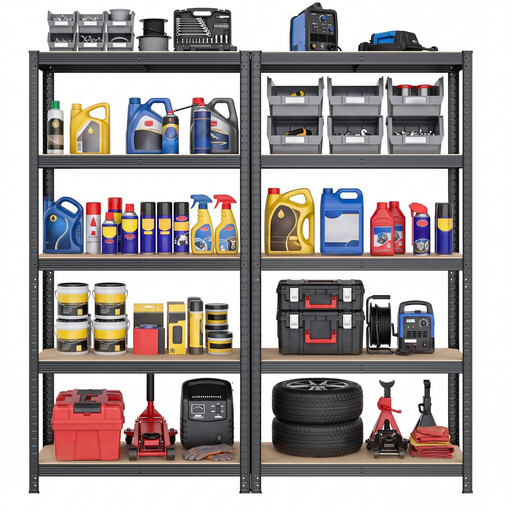
Why It's a Match: Ideal for users who need an adaptable shelving system. This set of two units can be configured as one tall storage rack or as two separate, half-height workbenches, offering maximum flexibility for your workshop or garage.
The variable configuration solves the problem of rigid, inflexible shelving. You adapt the setup to your space, not the other way around.
Solid load capacity of 175 kg per shelf. Reinforced crossbars provide extra stability for the MDF boards.
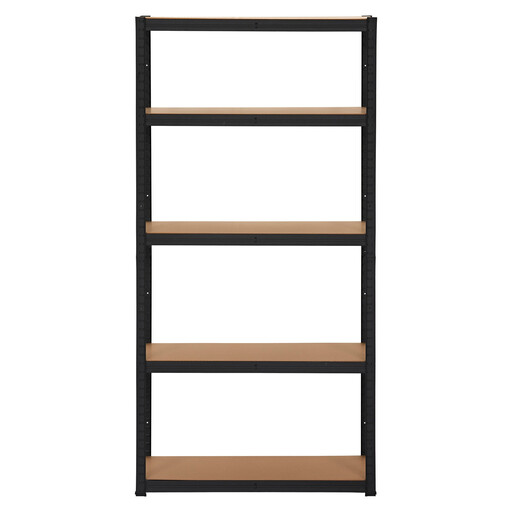
Why It's a Match: For DIY enthusiasts and small business owners who store heavy equipment, engine parts, or large quantities of materials. This workshop shelf is designed for heavy point loads and offers maximum safety.
With a clearly specified load capacity of 265 kg per shelf, this unit sidesteps the pitfall of misleading total capacity claims. You know exactly what each shelf can handle.
The matte powder coating offers superior protection against scratches and corrosion. At 45 cm deep, it provides more storage surface than standard shelves.
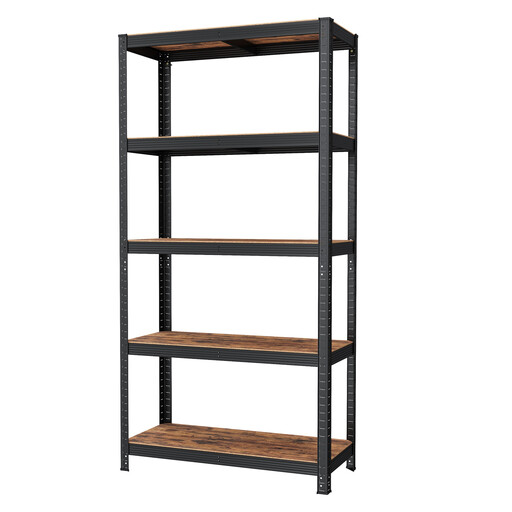
Why It's a Match: An excellent choice for general-purpose organization in a basement or utility room. It offers reliable capacity for household items, tools, and supplies at an attractive price-performance ratio.
This unit avoids the pitfall of subpar materials with a solid steel frame and a specified load capacity of 130 kg per shelf, which is well above what basic household shelves offer.
Can also be split into two half-height units. An included anti-tip kit provides additional safety.
We've compiled a complete, up-to-date list of products that fully meet these strict selection criteria and safety standards.
Wall anchoring isn't always mandatory, but it is highly recommended, especially for tall units or with uneven loads. Most manufacturers include an anti-tip kit to securely fasten the unit to the wall. This significantly increases stability and is a critical safety measure, particularly in households with children.
This specification means the weight should be spread across the entire shelf surface, not concentrated in one spot. For example, if you are storing a heavy engine block (a point load), you should place a sturdy board underneath it to distribute the weight and prevent the MDF shelf from sagging or breaking.
Standard MDF boards are susceptible to moisture. In a permanently damp or wet basement, they can swell and lose their load-bearing capacity. For such environments, you should either choose shelves with galvanized steel decks or treat the MDF boards with a water-resistant sealant or paint. Additionally, avoid placing the unit directly on a damp floor.