
Lieferung heute & morgen

Qualitätsgarantie

Willkommens-Angebote freischalten: KOSTENLOSE Lieferung | Bis zu 80 % RABATT | Kostenlose 30-Tage-JoyPlus-Testphase
App herunterladen
A disorganised basement, a cluttered garage, or a chaotic warehouse—these problems demand a stable and reliable solution. A heavy-duty shelf seems like the obvious answer. However, the market is flooded with options whose promises don't always hold up in practice. Incorrect load capacity claims or unstable constructions can quickly lead to frustration and, in the worst case, safety risks.
This guide will help you identify the crucial features and avoid common purchasing pitfalls. We'll show you what truly matters when selecting a durable and functional shelving system, enabling you to make an informed decision that meets your needs.
Before you invest, you should be aware of the typical weaknesses that often only become apparent after the purchase:
To avoid a bad investment, focus on three objective parameters. These determine the durability, safety, and functionality of your new shelving system.
The most important metric is the load capacity per shelf. Pay attention to this value, not just the total load capacity of the unit. For a typical basement shelf or garage shelf used to store car tyres, tools, or beverage crates, a load capacity of at least 150 kg per shelf is a good benchmark. For a workshop shelf or warehouse shelf intended to hold heavy machine parts or material supplies, models with a high load capacity of 250 kg per shelf or more are recommended. Always check if the manufacturer specifies the condition of an "evenly distributed load."
Most heavy-duty shelves are made of steel. The difference lies in the surface treatment, which determines the level of corrosion protection:
The shelves themselves are usually made of MDF or particleboard. Pay attention to the thickness of the boards (at least 5-7 mm), as this significantly contributes to stability.
The type of assembly affects both the setup effort and flexibility:
For most home users and small business owners, a well-designed boltless system offers the best compromise between stability and ease of use.
Instead of making a one-size-fits-all recommendation, we have selected products for specific use cases.
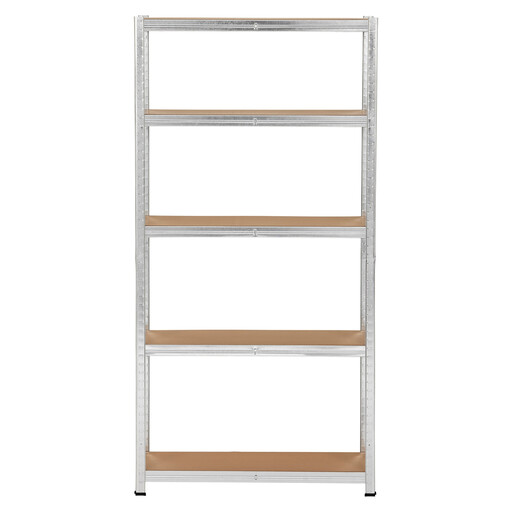
Why This Fits Their Persona: Ideal for homeowners seeking a reliable and cost-effective solution for typical basement or garage clutter. It offers sufficient capacity for household items, toolboxes, and supplies.
This shelf bypasses the trap of misleading load capacities with a clearly defined capacity of 175 kg per shelf. The boltless system is designed for easy assembly without sacrificing stability.
Solid total load capacity of 875 kg. The galvanised steel frame provides good corrosion protection for use in basements.
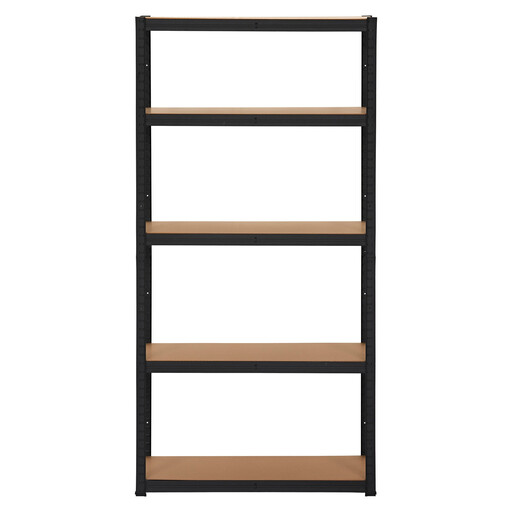
Why This Fits Their Persona: Designed for DIY enthusiasts and small business owners who need to store heavy tools, engine parts, or large quantities of materials. The high load capacity provides the necessary safety margin for a professional environment.
With a specified load capacity of 265 kg per shelf, this unit directly addresses the need for maximum stability. It avoids the pitfall of wobbly constructions with a robust frame and thick MDF boards.
Very high total load capacity of 1325 kg. The matte black powder coating offers excellent protection against scratches and rust.
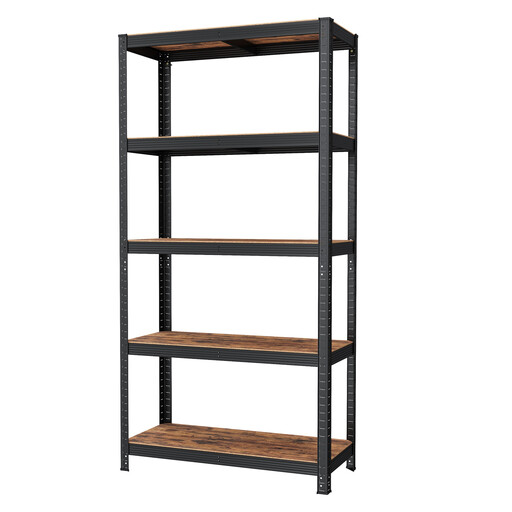
Why This Fits Their Persona: Perfect for anyone who needs more than just a simple storage rack. The ability to split it into two half-height workbenches makes it ideal for multifunctional spaces like hobby rooms or garage workshops.
This model escapes the "one-size-fits-all" trap. Instead of a rigid structure, it offers a divisible design that can be adapted to different room heights and usage requirements.
Can be assembled as one tall shelf or two separate workbenches. The shelf heights are flexibly adjustable to accommodate even bulky items.
We have compiled a complete, up-to-date list of products that fully meet these strict selection criteria and German safety regulations.
Ensure the shelf stands on a level and solid surface. When assembling a boltless shelf, use a rubber mallet to join the connections firmly and flush. Load the heaviest items onto the bottom shelves first to keep the centre of gravity low. To increase safety, it is recommended to anchor the shelf to a solid wall with suitable brackets and screws to prevent it from tipping over. Anti-tip hardware is included with many models.
This specification means that the weight must be spread across the entire surface of the shelf to reach the stated maximum load. A point load, for example, from the small feet of a heavy device in the middle of the shelf, can locally exceed the load limit and cause it to bow. Therefore, distribute heavy individual items over a larger area, for instance, by placing an additional board underneath.
The lifespan heavily depends on the surface treatment and environmental conditions. A galvanised metal shelf provides reliable protection against rust for many years in a normally dry basement or garage. In more humid rooms or where frequent temperature fluctuations can lead to condensation, a powder-coated shelf is the more durable choice, as the coating is more resistant to moisture and mechanical damage. Regular inspection and dry storage will further extend its lifespan.