
Lieferung heute & morgen

Qualitätsgarantie

Willkommens-Angebote freischalten: KOSTENLOSE Lieferung | Bis zu 80 % RABATT | Kostenlose 30-Tage-JoyPlus-Testphase
App herunterladen
By Joy, your Joybuy Product Recommendation Officer
A cluttered basement, an overflowing garage, or a chaotic workshop—many homeowners and DIY enthusiasts know these problems all too well. Tools, boxes, and supplies pile up, making it impossible to find what you need. A sturdy heavy-duty shelving unit is often the most direct solution for creating lasting order and structure.
However, the market offers an overwhelming selection. The purpose of this guide is to provide you with clear, objective orientation. Instead of bombarding you with marketing promises, we focus on the facts: material, load capacity, and construction. This will enable you to make an informed decision that perfectly matches your requirements.
Before you decide on a model, you should consider three key criteria. These will help you objectively evaluate the functionality and durability of a shelving unit.
The maximum load capacity is one of the most important specifications. It is usually stated in kilograms per shelf, assuming the weight is evenly distributed.
The frame material is just as crucial. A galvanized steel shelf offers excellent protection against corrosion, making it particularly suitable for use in damp environments like basements or garages. The shelves themselves are often made of MDF (medium-density fibreboard) panels, which provide a smooth and stable surface.
Assembly should be quick and straightforward. Here, boltless shelving has become the standard. Unlike bolted systems, the individual components are simply slotted together and secured with a rubber mallet. This not only allows for rapid assembly without special tools but also enables flexible adjustment of the shelf heights. Such a system is ideal for a garage shelf or workshop shelf that may need to be reconfigured quickly.
Measure your available space carefully before buying a storage shelf. The standard heavy-duty shelf size of 180x90x40 cm (Height x Width x Depth) is widely available and fits in most spaces.
For maximum space utilisation, a heavy-duty corner shelf can be a highly efficient solution. It fills unused corners and can be seamlessly combined with straight shelves from the same series to create a continuous wall of shelving.
Based on the criteria mentioned above, we have compiled a selection of shelving units that stand out for their functional features.
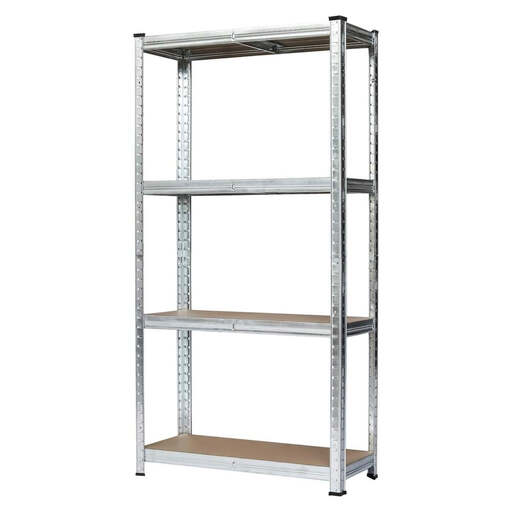
What sets it apart This model is a solid, entry-level solution for general storage purposes. With a load capacity of 125 kg per shelf and a galvanized steel frame, it provides a reliable structure for organising your basement, storage room, or garage. The boltless system ensures easy assembly.
Advantages:
Who is it for? For homeowners looking for a cost-effective and stable solution for storing household items, drink crates, or lighter tools.
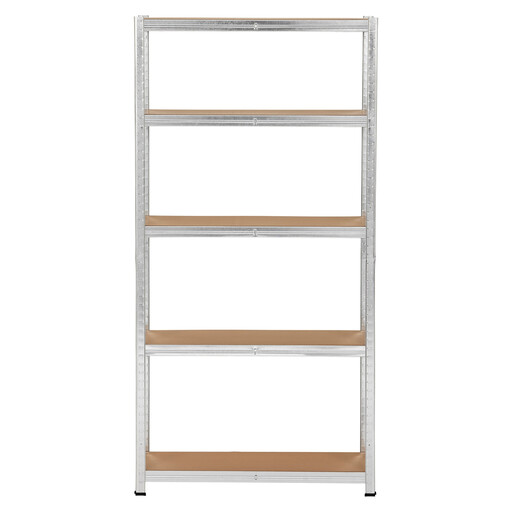
What sets it apart This heavy-duty shelving unit is designed for heavier loads. With a capacity of 175 kg per shelf, it is perfectly suited for demanding use in a workshop or small business. The construction is engineered for the safe storage of heavy equipment and materials.
Advantages:
Who is it for? For DIY enthusiasts, tradespeople, and small business owners who need a high-capacity storage solution for heavy tools, machine parts, or inventory.
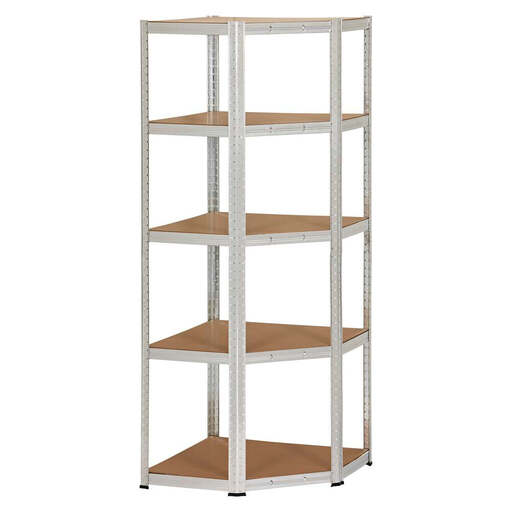
What sets it apart This heavy-duty corner shelf is designed to make optimal use of unused space. It offers the same high load capacity of 175 kg per shelf as the standard model and can be perfectly combined with other shelves in the series to create a complete storage solution.
Advantages:
Who is it for? For anyone looking to maximise storage space in their garage, workshop, or warehouse without compromising on load capacity.
The models presented here cover common use cases. However, if you require different dimensions, materials, or designs, you may find a suitable alternative in our wider selection.
? Discover more standing shelves on Joybuy.de here
1. How do you correctly assemble a boltless heavy-duty shelving unit? Assembling a boltless unit is straightforward. Start on a level surface. Use a rubber mallet to gently but firmly tap the connections together. Ensure that all tabs are correctly seated in the slots. To increase stability, heavier items should be placed on the lower shelves. For maximum safety, it is recommended to anchor the unit to a solid wall with suitable brackets to prevent tipping.
2. What is the difference between a galvanized and a painted steel shelf? A galvanized steel shelf has a protective zinc coating, which makes it highly resistant to rust. This is particularly advantageous in basements or garages where humidity can be higher. A painted shelf also offers corrosion protection, but if the paint layer is scratched, the underlying metal can rust. Galvanization generally provides more durable protection.
3. How do you load a heavy-duty shelving unit correctly? To achieve the specified load capacity and ensure stability, the weight must be distributed evenly across the entire surface of the shelf. Avoid point loads. Start by loading the bottom shelves and work your way up. Always place the heaviest items at the very bottom. Never exceed the manufacturer's specified maximum load capacity per shelf or the total load capacity of the unit.