
Lieferung heute & morgen

Qualitätsgarantie

Willkommens-Angebote freischalten: KOSTENLOSE Lieferung | Bis zu 80 % RABATT | Kostenlose 30-Tage-JoyPlus-Testphase
App herunterladen
By Joybuy Product Recommendation Officer, July 28, 2026
A cluttered basement, an overflowing garage, or a chaotic workshop—it's a familiar problem for many. A heavy-duty shelving unit promises to create order quickly and efficiently. However, the market is flooded with options whose promises don't always hold up in practice. Before you make a decision, it's crucial to understand the typical pitfalls that often lead to disappointment and unnecessary expense.
Many buyers focus on an impressively high total load capacity, only to find that the individual shelves sag or the entire structure wobbles. Others are drawn in by ads for "tool-free assembly" and then struggle with sharp-edged, ill-fitting parts. This guide will help you navigate these issues and find a shelving system that meets your standards for stability and durability.
To make an informed decision, you should focus on a few critical technical features. These determine whether a basement shelving or garage shelving unit will reliably serve its purpose for years to come.
First, ignore the total load capacity and check the specification for the maximum static load capacity per shelf. This value indicates how much weight a single shelf can safely support without deforming. For storing toolboxes, beverage crates, or file binders, a value of at least 100 kg per shelf is a good benchmark. A true high-capacity shelving unit is defined by the high load-bearing capability of each individual shelf.
The longevity of a metal shelving unit depends on its frame and shelves.
Modern shelving systems offer more than just rigid storage. A high-quality workshop shelving unit can often be adjusted in height or even converted into two separate, half-height shelves or workbenches. This modularity is particularly useful for making optimal use of available space or creating a combined work and storage area. A boltless shelving system typically allows for quicker and more flexible adjustments than a screwed system.
Instead of making a one-size-fits-all recommendation, we have identified products tailored to specific user profiles.
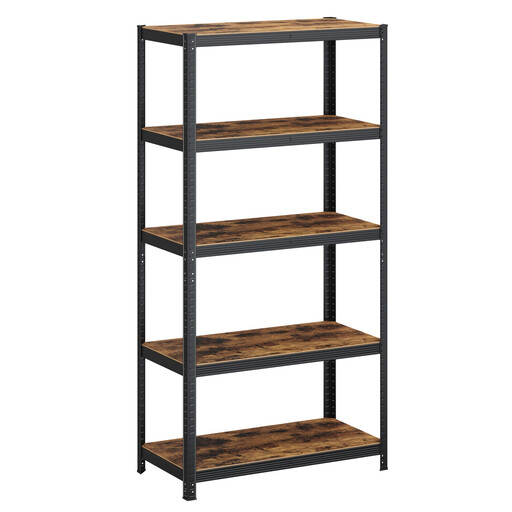
Why it's a good fit: Ideal for basic organization in the basement or garage. It offers solid capacity for typical household items like toolboxes, car tires, or supplies without breaking the bank.
The product description clearly states a load capacity of 120 kg per shelf, which allows for a realistic assessment of its strength and avoids the trap of a misleading total load capacity.
The tool-free assembly and adjustable shelves offer great flexibility. The included anti-tip kit provides the necessary safety.
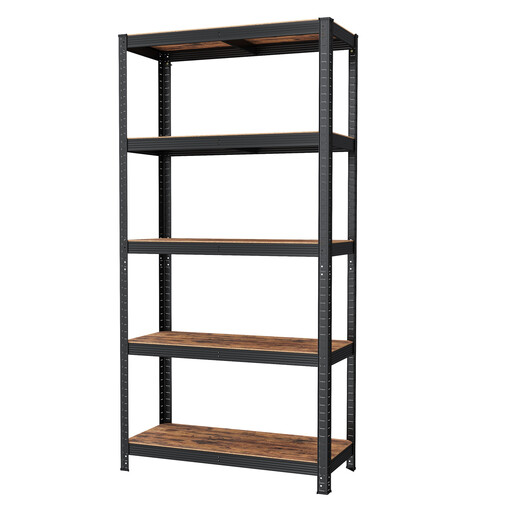
Why it's a good fit: Perfect for the workshop where heavy machinery, stacks of materials, and tools need to be stored securely. The ability to split it into two workbenches creates a flexible work environment.
With a specified load capacity of 175 kg per shelf, this unit directly addresses the need for storing heavy individual items, sidestepping the criticism of weak shelves on a high-capacity frame.
The high flexibility from its splittable structure and the exceptionally high load capacity per shelf make it a versatile solution for demanding tasks.
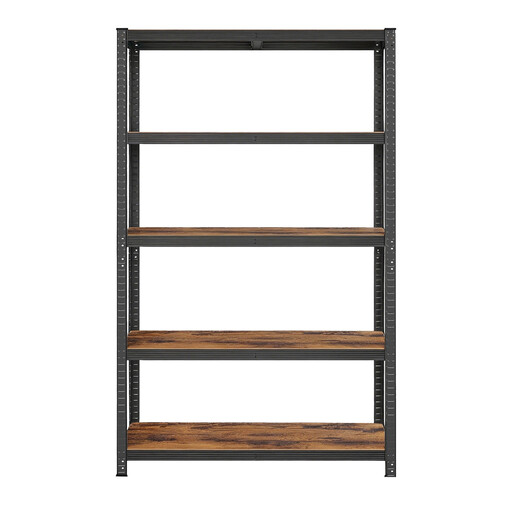
Why it's a good fit: At 120 cm wide and 200 cm high, this shelving unit maximizes storage space. It's ideal for small business owners storing inventory or for collectors who need ample room for bulky items.
It combines a large storage area with a solid load capacity of 150 kg per shelf, providing a stable platform for both volume and weight, rather than prioritizing just one.
The generous dimensions (120 cm width) are optimal for storing large boxes or equipment that won't fit on standard-sized shelves.
We have compiled a complete, up-to-date list of products that fully meet these strict selection criteria and UK safety regulations.
Stability depends on three factors: a level surface, correct assembly, and securing the unit. Ensure the shelving stands on flat ground. When assembling a boltless system, use a rubber mallet to ensure all connections are tight and secure. Most importantly, use the included anti-tip kit to fasten the unit to the wall. This is the crucial step for ensuring safety, especially with tall shelving units.
That depends on the material. A powder-coated steel frame offers good basic protection against corrosion in normally dry to slightly damp rooms. For permanently high humidity, a galvanized steel frame is more resistant. A greater weak point is often the MDF shelves, as they can swell with direct contact with water or prolonged moisture. Ensure adequate ventilation in the basement.
Although they are advertised as "tool-free," two aids are highly recommended: work gloves to protect against sharp edges and a rubber mallet. The mallet helps to join the interlocking connections firmly and flush, which is often difficult and unsafe to do with bare hands. The gloves are a simple but effective measure to prevent cuts during assembly.