
Lieferung heute & morgen

Qualitätsgarantie

Willkommens-Angebote freischalten: KOSTENLOSE Lieferung | Bis zu 80 % RABATT | Kostenlose 30-Tage-JoyPlus-Testphase
App herunterladen
A cluttered basement, a disorganized garage, or a workshop where tools and materials are constantly in the way—these problems demand a robust and reliable solution. A heavy-duty shelf promises to create order and safely store heavy items. However, the market is flooded with options whose promises don't always hold up in practice. The wrong choice of material or an unstable design can lead not only to financial loss but also to safety hazards.
This guide will help you identify the crucial features and avoid common purchasing pitfalls. This way, you can ensure that your new basement shelf or garage shelf will serve its purpose reliably for years to come.
Before you make a decision, you should be aware of the typical weaknesses that often only become apparent after the purchase.
To avoid a bad purchase, focus on three verifiable quality features. These define the durability and safety of your shelving system.
Ignore the total load capacity and check the maximum static load capacity per shelf. This value indicates how much weight a single shelf can support when the load is evenly distributed. For storing car tires, tool cases, or filled canning jars on a pantry shelf, this value should be at least 100 kg. For a workshop shelf that needs to hold heavy machinery or stacks of materials, 150 kg per shelf or more is a sensible benchmark. A high-capacity metal shelf is distinguished by this specific value.
The choice of material determines the shelf's lifespan, especially in less-than-ideally-dry environments.
A stable shelf stands or falls with its construction.
Based on the criteria mentioned, we have identified a few models that are well-suited for specific use cases.
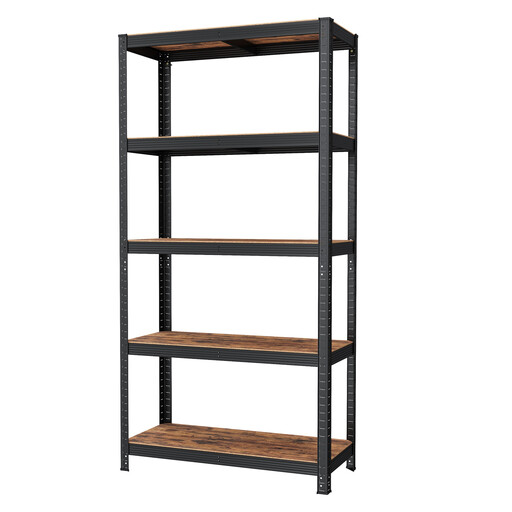
Why This Fits Their Persona: Ideal for general storage in the basement or as a pantry shelf. It offers solid foundational stability and sufficient load capacity for household items, food supplies, or seasonal decorations without breaking the bank.
With a clearly stated load capacity of 130 kg per shelf, it sidesteps the trap of misleading total capacity claims. The included anti-tip kit also addresses the problem of insufficient stability.
Excellent value for money. Can be flexibly split into two half-height shelves or workbenches, increasing its versatility.
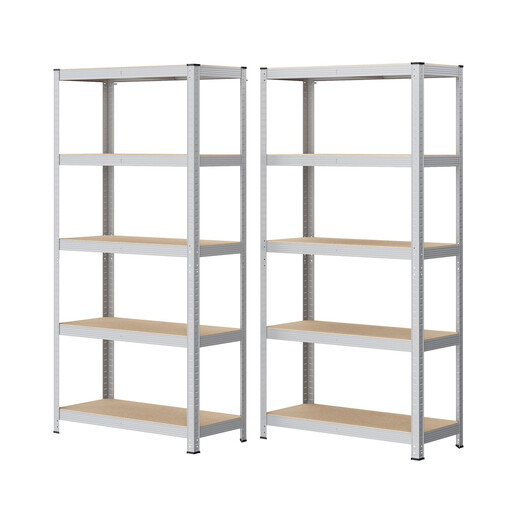
Why This Fits Their Persona: Perfect for the garage or workshop. The high load capacity per shelf is designed for heavy tools, machinery, or materials. The set of 2 offers maximum flexibility for setting up a complete work and storage area.
The high load capacity of 175 kg per shelf is a clear performance promise. The powder-coated steel frame is robust and resistant to the typical stresses of a workshop environment.
Very high load capacity per shelf. The set of two shelves allows for a flexible configuration as tall racks or as four workbenches.
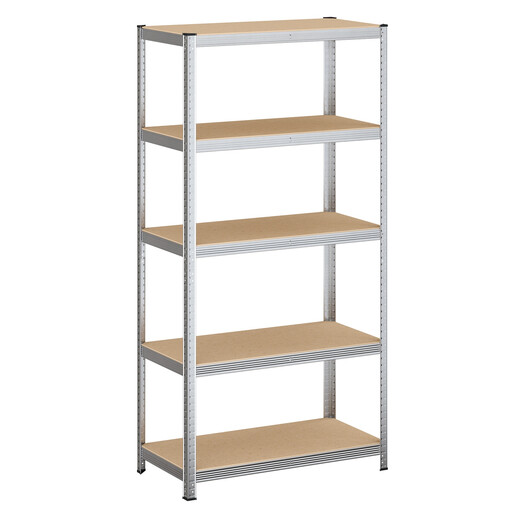
Why This Fits Their Persona: For anyone who needs to maximize their available space. At 200 cm high, 100 cm wide, and 50 cm deep, this shelf offers enormous storage volume, ideal for small business owners, archives, or large collections.
The galvanized steel frame is specifically designed for durability, even in less-than-ideal environments like basements. The solid load capacity of 120 kg per shelf is more than sufficient for most stored goods.
Generous dimensions (50 cm depth) for bulky items. The tool-free assembly via the interlocking system significantly speeds up setup.
We've compiled a complete, up-to-date list of products that fully meet these strict selection criteria and safety regulations.
1. Does a heavy-duty shelf need to be anchored to the wall? Wall anchoring is strongly recommended, especially for tall shelves (over 1.80 m) or if there are children in the household. Most quality kits include an anti-tip device. This simple measure significantly increases stability and safety and is a crucial feature for responsible assembly.
2. What's the difference between powder-coated and galvanized steel? Galvanized steel is protected from rust by a layer of zinc, making it particularly suitable for potentially damp environments like a basement. Powder-coated steel gets its protective layer from a melted powder paint. This surface is very scratch-resistant and visually uniform, making it a popular choice for garages, workshops, and dry storage rooms.
3. Can the MDF boards in a heavy-duty shelf be replaced? Yes, in most interlocking shelves, the MDF boards rest loosely on the metal frame. If they become damaged by moisture or heavy loads, they can be easily removed and replaced. Custom-cut panels of MDF, plywood, or OSB can be purchased at a hardware store and used as replacements.