
Lieferung heute & morgen

Qualitätsgarantie
App herunterladen
Kategorien
Optimizing storage space in basements, garages, and workshops requires solutions that are both durable and versatile. A heavy-duty shelving unit is engineered for this purpose, defined by its high load capacity and sturdy design. This article analyzes the key technical specifications to consider when choosing the right shelving system and presents specific models based on their performance metrics.
Selecting the right shelving system should be based on an analysis of objective criteria. The following technical aspects are crucial for functionality and long-term durability.
Load capacity is the primary specification of a heavy-duty shelving unit. A distinction is made between two values:
For safe operation, it is essential not to exceed the manufacturer's specified maximum static load capacity and to distribute the weight evenly.
The frame material is a key determinant of the unit's stability and corrosion resistance. Common materials include:
The shelves are often made of MDF (Medium-Density Fiberboard), which provides a smooth and durable surface.
Modern heavy-duty shelving units are often designed as boltless shelving. In this system, the crossbeams and uprights are connected using interlocking tabs and slots. The main advantage is the tool-free or minimal-tool assembly, which significantly speeds up the setup process. Compared to bolted systems, a boltless unit is also easier to disassemble or reconfigure.
A functional storage rack should be adaptable to various needs. Important features include:
To ensure stability, especially when fully loaded, an anti-tip device is essential. Reputable manufacturers include an anti-tip kit, which allows the workshop shelving to be securely anchored to the wall. This prevents the unit from tipping over due to uneven loads or external impacts.
The following product recommendations are based on an analysis of technical specifications and practical utility.
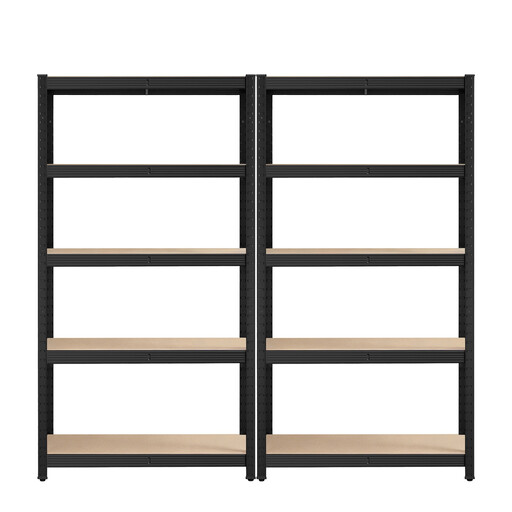
Why We Recommend This Product: This shelving unit set of 2 offers an exceptionally high total load capacity of 875 kg per unit, making it ideal for storing particularly heavy tools and materials. The ability to convert each unit into two separate workbenches provides maximum flexibility for workshop and garage environments.
Advantages:
Best Suited For: Users who need a maximum-capacity solution for their garage shelving or workshop shelving to safely store heavy equipment and large quantities of supplies.
Product Specifications:
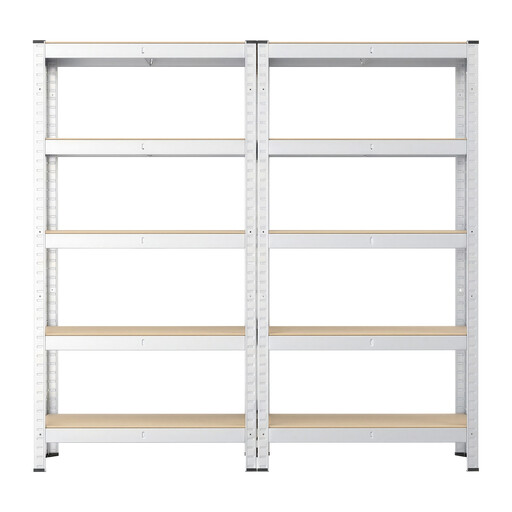
Why We Recommend This Product: At 75 cm wide, this model is more compact, making it well-suited for narrower alcoves or smaller rooms. Despite its reduced dimensions, it offers a substantial high load capacity of 130 kg per shelf. The set of two units allows for uniform and scalable organization.
Advantages:
Best Suited For: Homeowners and DIY enthusiasts looking for a robust storage solution for limited space in a basement, pantry, or smaller garage.
Product Specifications:
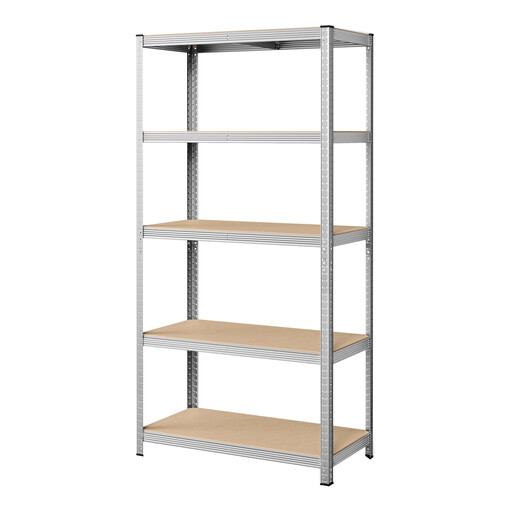
Why We Recommend This Product: The galvanized steel frame gives this shelving unit enhanced resistance to corrosion, making it an excellent choice for more humid environments like basements. At 200 cm high and 100 cm wide, it efficiently utilizes available space both vertically and horizontally.
Advantages:
Best Suited For: Users who need a durable basement shelving or storage rack for potentially damp rooms and want to maximize vertical storage space.
Product Specifications:
If the featured models do not precisely meet your requirements for dimensions or load capacity, you can find a wider selection of configurations and sizes in our Household Shelving & Storage category. There, you will find additional solutions for various storage needs.
1. How much weight can a heavy-duty shelving unit hold? The load capacity varies by model. It is specified as capacity per shelf and total capacity. The models presented here offer a per-shelf capacity of 120 kg to 175 kg and a total capacity of 600 kg to 875 kg. It is crucial to follow the manufacturer's specifications and distribute the weight evenly.
2. What is the difference between a boltless and a bolted shelving unit? A boltless shelving unit is assembled by interlocking its components, which is typically fast and requires no tools. A bolted unit requires screws to connect the parts, which is more time-consuming. Boltless systems also have the advantage of being easier to disassemble for reconfiguration.
3. How do you safely assemble a heavy-duty shelving unit? For a safe assembly, the unit should be placed on a level, solid surface. Wearing work gloves during setup is recommended to prevent injuries from sharp edges. The most critical safety step is to use the included anti-tip kit to securely anchor the unit to a sturdy wall.