
Lieferung heute & morgen

Qualitätsgarantie

Willkommens-Angebote freischalten: KOSTENLOSE Lieferung | Bis zu 80 % RABATT | Kostenlose 30-Tage-JoyPlus-Testphase
App herunterladen
A shelving unit should create order, not become a problem itself. When choosing shelving systems and heavy-duty shelving, it is therefore not just the colour and price that matter. Dimensions, load capacity, material, stability and the actual assembly effort are all decisive factors.
A specification such as 600 kg shelving load capacity or 650 kg shelving load capacity initially sounds clear-cut. However, it often refers to the maximum static total load under specific conditions. In addition, an individual shelf may have its own load limit.
It is therefore important to distinguish between:
Toolboxes, crates of drinks or machinery should not be assessed solely on the total figure shown in the product image.
Slot-in and click systems can make assembly easier. Even so, shelves must be inserted correctly, connecting elements fully secured and the instructions for wall mounting followed. Tall shelving units can topple if loaded unevenly or placed on an uneven floor.
A freestanding shelving unit for living spaces therefore requires different safety checks from a storage rack in the garage. For tall models, a supplied anti-tip kit is a practically important feature.
Wood-based materials such as chipboard or MDF are suitable for dry rooms and decorative use. In damp cellars, unheated garages or workshops, surfaces and frames are exposed to particular conditions. Water, condensation and direct moisture can warp wood-based materials or damage their coatings.
A metal shelving unit, or a heavy-duty model with a steel frame, is more suitable for many storage purposes. Even so, the specific area of use should still be checked. A galvanised or powder-coated surface is not a licence for permanent exposure to moisture.
Do not just measure the available wall width. Also take doors, radiators, sockets and walkways into account. The external dimensions of a shelving unit do not always correspond to the usable shelf width. Books generally require less depth than tool cases or storage boxes.
A bookshelf for the living room, an office shelving unit and a shelving unit for the cellar and workshop therefore differ mainly in shelf height, depth and load requirements.
A shelving unit with adjustable shelves can be adapted more easily to folders, boxes, bottles or tools. Check the adjustment intervals and whether every shelf can actually be positioned individually.
A shelving unit with several compartments provides a clear layout, but may be less flexible for large items. A fixed or half-height layout is often sufficient for decorations and books. Variable shelves are generally more practical in a storage rack.
For heavy-duty shelving, check whether the load capacity is specified as a static value and whether it applies to evenly distributed loads. The following points are also relevant:
For a kitchen shelf, corner shelving unit or living-room shelving unit, the compact design is often the main priority. Even there, wall or floor anchoring should not be overlooked.
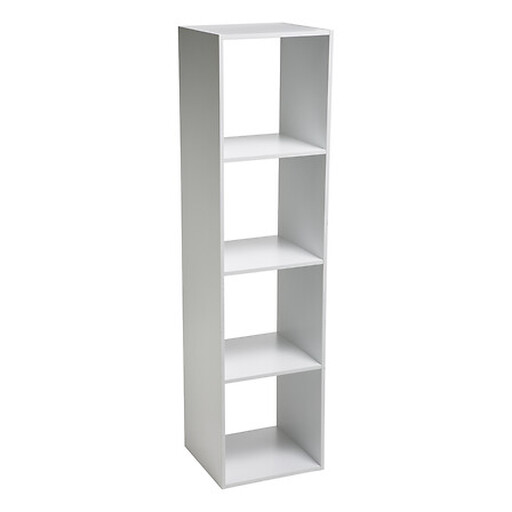
Why this product suits this profile: Four open compartments are suitable for books, decorations, boxes and everyday items in the living room, bedroom or office. The light-coloured surface can be cleaned with a soft, slightly damp cloth.
The compartment layout is clearly visible and assembly is carried out according to the enclosed instructions. It is not designated as heavy-duty shelving for heavy loads or damp rooms.
Four spacious compartments, a modern white finish and an open design suitable for living areas.
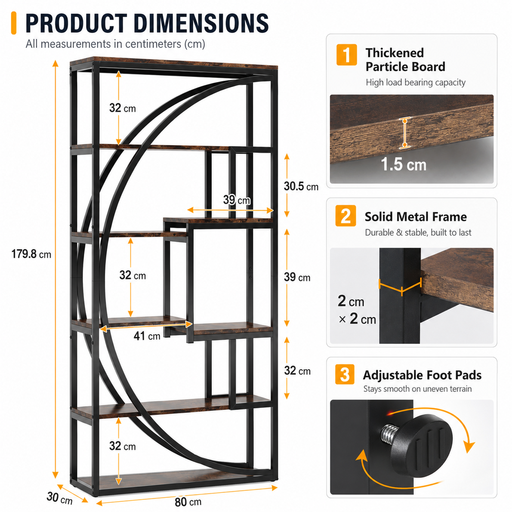
Why this product suits this profile: This 180 cm-high shelving unit combines a black metal frame with a vintage brown chipboard finish. Eight open storage areas provide space for books and decorations in the living room or home office.
The dimensions of 80 × 179,8 × 30 cm and the number of storage surfaces are clearly specified. The chipboard should be protected from excessive moisture and direct sunlight.
Five levels, eight open compartments and a space-saving vertical design.
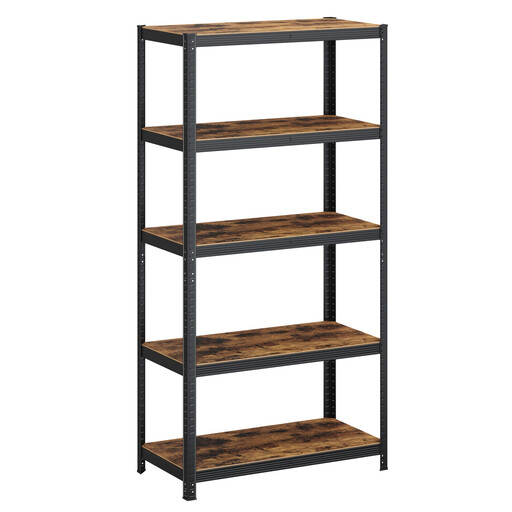
Why this product suits this profile: Measuring 50 × 100 × 200 cm and featuring five levels and a steel frame, this heavy-duty shelving unit is suited to garages, cellars, workshops or storage areas. The shelves can be adjusted in 5-cm increments.
The specifications state 120 kg per level and a total load capacity of 600 kg. The supplied anti-tip kit should be used for wall mounting in accordance with the instructions.
Tool-free slot-in assembly, adjustable shelves and a divisible design that can create two units or a workbench.
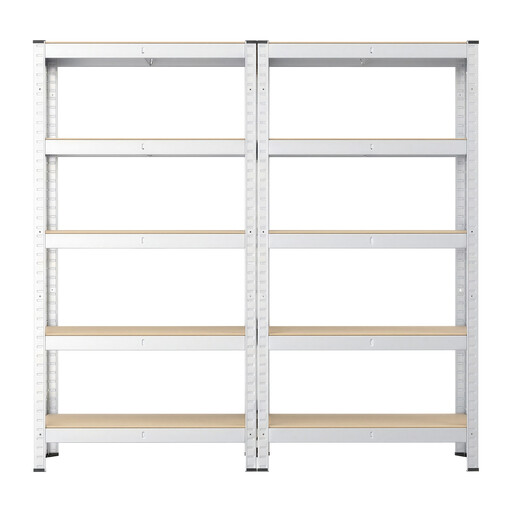
Why this product suits this profile: The set includes two shelving units, each measuring 30 × 75 × 150 cm. It is an appealing option for garages, cellars and utility rooms when several separate storage areas are needed.
The product data specifies 130 kg per level and a total load capacity of 650 kg per unit. The load should be distributed evenly and the anti-tip safety feature fitted.
Two separate units, adjustable levels and a construction without traditional screw connections.
We have put together a complete, regularly updated list of products that fully meet these strict selection criteria and the safety regulations applicable in the EU.
The shelving unit should stand on a level, stable surface. Follow the assembly instructions, place heavy items on the lower levels wherever possible and use the designated wall fixing. Work gloves may be useful during assembly.
There is no single standard lifespan. It depends, among other things, on the load, room conditions, assembly, material care and corrosion. Regular visual checks for bent braces, damaged shelves or loose connections can help you identify changes at an early stage.
A shelving unit does not require energy during use. Ongoing costs may arise only from cleaning, occasional replacement of damaged parts or additional securing. When choosing a product, the key factors are therefore the purchase price, material, load capacity and adjustability.