
Lieferung heute & morgen

Qualitätsgarantie

Willkommens-Angebote freischalten: KOSTENLOSE Lieferung | Bis zu 80 % RABATT | Kostenlose 30-Tage-JoyPlus-Testphase
App herunterladen
A heavy-duty shelving unit creates extra storage space in your garage, cellar, workshop, shed or storeroom. But the stated weight capacity alone tells you little about whether a particular model suits your space and needs. Common buying mistakes include choosing dimensions that are too tight, misunderstanding load capacity figures or finding that the unit cannot be assembled in the space available.
A figure such as ‘heavy-duty shelving unit, 600 kg’ usually refers to the maximum static load capacity of the entire unit. You should also check the capacity of each shelf. According to the product details, the JOYFURNOS model with a total load capacity of 600 kg can hold up to 120 kg per shelf. If you store heavy items on just one shelf, you cannot automatically use the total load capacity figure.
A shelving unit that is 200 cm high may fit on paper in a room with a ceiling height of 205 cm, but you might not be able to stand it upright there. So be sure to check:
For a narrow cellar, a cellar shelving unit with a depth of 30 cm may be more suitable than a deep storage shelving unit. In a garage, you can opt for a deeper unit, provided you can still safely access vehicles, bicycles or workbenches.
A boltless shelving unit can be assembled using interlocking parts. This can make assembly easier, but it does not guarantee that the unit will be safely positioned. For tall units, unevenly distributed loads or use around children and pets, fit the supplied anti-tip kit as instructed.
Check the difference between static load capacity and dynamic loading. The static figure applies to a stationary load that is evenly distributed. Rolling, knocking, pulling or placing heavy equipment on a small area can put different stresses on the structure.
For a high-capacity shelving unit, you should:
Descriptions such as 600 kg heavy-duty shelving unit, 750 kg heavy-duty shelving unit or 875 kg heavy-duty shelving unit are only meaningful if the load capacity per shelf is also stated.
A metal shelving unit or steel shelving unit with MDF shelves combines a sturdy frame with a relatively solid storage surface. Powder-coated or galvanised steel parts may be suitable for dry indoor spaces. However, MDF is sensitive to prolonged exposure to moisture. If you plan to use the unit in a damp, unheated cellar or an open shed, check the manufacturer’s guidance on suitable conditions.
Height-adjustable shelves are useful when you need to store boxes, tool cases and containers of different heights. Some boltless systems let you reposition the shelves at fixed intervals. This is more practical than a workshop shelving unit with a fixed layout if your needs change over time.
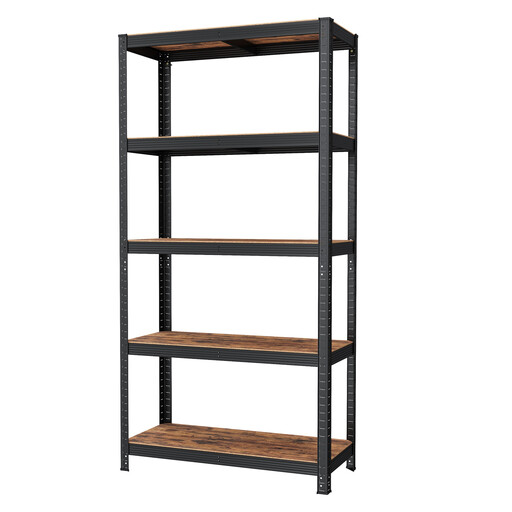
Why this product suits your needs: Measuring 30 × 75 × 150 cm, it’s a good fit for smaller cellars, utility rooms or workshops with limited headroom.
The product details state both a total load capacity of 650 kg and a capacity of 130 kg per shelf. This makes it easier to plan how to distribute your load.
Five shelves, adjustable shelf heights, a boltless assembly system and an anti-tip kit included; according to the product description, the unit can be split into two separate sections.
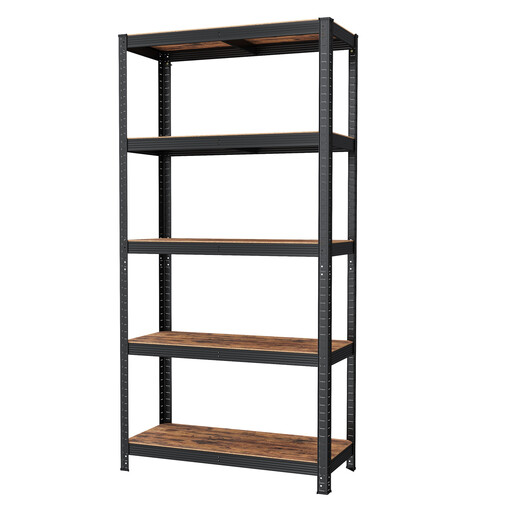
Why this product suits your needs: For a workshop, garage or storeroom where high static load capacity is regularly needed, this model clearly states its load capacity per shelf.
The stated capacity of 175 kg per shelf makes clear that the total load capacity of 875 kg must not be applied to a single shelf.
Measures 40 × 90 × 180 cm, with five adjustable shelves, a powder-coated steel frame and boltless assembly.
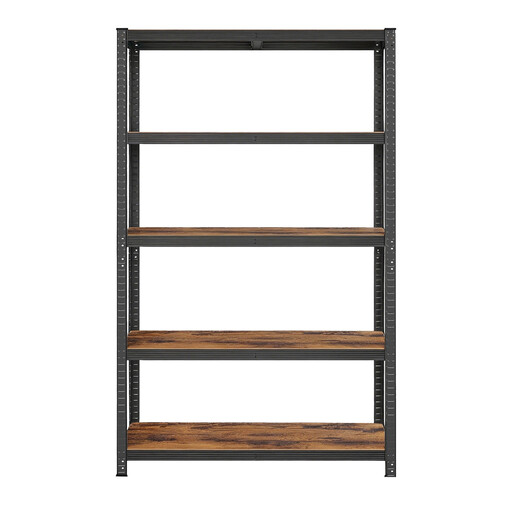
Why this product suits your needs: At 120 cm wide and 60 cm deep, it offers plenty of storage space for toolboxes, supplies or seasonal items in a spacious garage.
The product description states a static load capacity of 150 kg per shelf. This makes it easier to choose suitable containers and distribute the weight evenly.
Total load capacity of 750 kg, height-adjustable shelves, a split design, an anti-tip kit and boltless assembly.
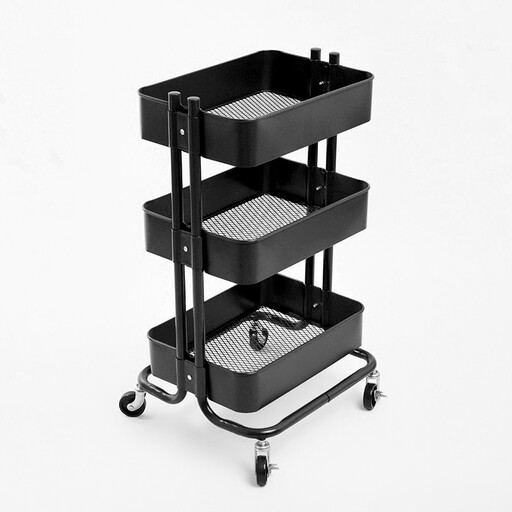
Why this product suits your needs: If you often move between work areas in the kitchen, utility room, bathroom or hobby space, a mobile trolley is more practical than a fixed storage shelving unit.
The product details state a maximum load of 7 kg per shelf. This sets a clear limit, helping to prevent overloading with heavy tools or equipment.
Three wire shelves, four 360-degree swivel castors and two locking castors; ideal for lightweight, mobile storage.
We’ve put together a complete, regularly updated list of products that meet these strict selection criteria and fully comply with the safety regulations in force in the EU.
Read the instructions before assembly and wear suitable work gloves when handling metal parts. Place the shelving unit on a level floor and check all the interlocking joints once assembly is complete. If the unit is tall or heavily loaded, secure the anti-tip kit to a suitable wall. Before drilling, check for pipes, cables and underfloor heating.
In cellars and garages, MDF shelves should also be protected from standing water. Check the shelving unit regularly for loose joints, deformations and rust. A specified load limit is no substitute for checking that the room and floor are suitable.
Always follow the figures provided by the manufacturer for the specific model: total load capacity and maximum load per shelf. A model with a total capacity of 600 kg and a capacity of 120 kg per shelf cannot automatically hold 600 kg on a single shelf. The weight should be distributed evenly.
Wall-fixing is a good idea for tall or heavily loaded shelving units, and is specifically recommended for some models. Use the supplied anti-tip kit and check that the wall plugs and screws are suitable for your type of wall.
Its lifespan depends on load capacity, assembly, humidity and regular checks. A steel shelving unit kept in a dry place and loaded evenly with a static load may remain in use for longer than one that is overloaded or kept in damp conditions. For safety, do not continue to load damaged MDF shelves or a deformed frame.