
Lieferung heute & morgen

Qualitätsgarantie

Willkommens-Angebote freischalten: KOSTENLOSE Lieferung | Bis zu 80 % RABATT | Kostenlose 30-Tage-JoyPlus-Testphase
App herunterladen
A sturdy heavy-duty shelving unit is the foundation for an organized basement, garage, or workshop. But the market is crowded, and not every metal rack that promises a high load capacity actually delivers in everyday use. Before you make a decision, it's important to know the common weak points that often only become apparent after your purchase.
As your Joybuy Product Recommendation Officer, I'll help you identify the essential features and make an informed choice that meets your needs for a durable storage rack or workshop shelving.
Many buyers focus solely on the advertised load capacity and price. In doing so, they often overlook critical design details that determine stability and longevity.
To avoid the problems mentioned above, you should pay attention to three key aspects when making your selection. These define the quality and functionality of a shelving unit for heavy loads.
Don't just look at the maximum load capacity per shelf (e.g., heavy-duty shelf 175 kg), but also at the total load capacity of the unit. More important, however, is the construction:
The material of the frame and shelves is crucial for longevity, especially in damp environments like a basement or garage.
A good boltless shelving unit is not only easy but also safe to assemble.
Based on these objective criteria, we have identified a few models that are suitable for specific user profiles.
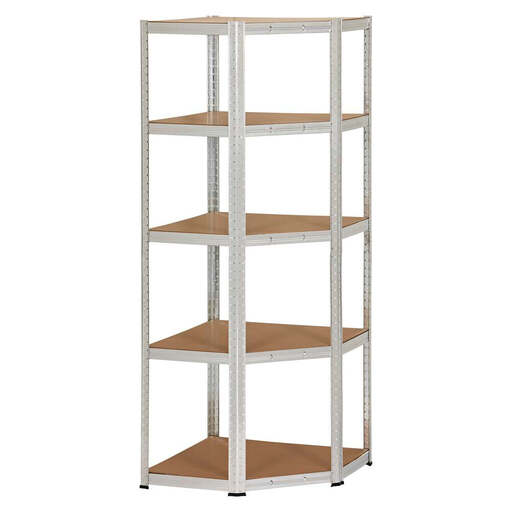
Why This Fits Their Persona: Ideal for anyone looking to make the most of unused corners in a garage or basement. This unit transforms lost space into valuable, high-capacity storage.
The design is specifically engineered for corner installation, ensuring high stability. The galvanized steel frame resists moisture and effectively prevents rust.
High Load Capacity: 175 kg per shelf with a total capacity of 875 kg.
Efficient Use of Space: Perfect fit for 90-degree corners.
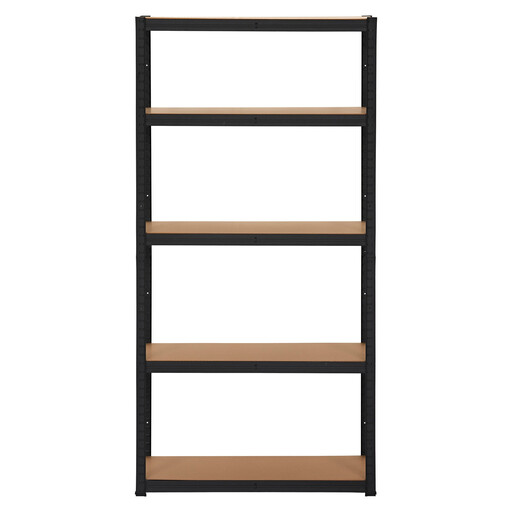
Why This Fits Their Persona: For the workshop where heavy equipment, tool chests, and materials are stored. This unit offers maximum stability and load capacity for demanding tasks.
The extremely high load capacity of 265 kg per shelf isn't just a claim; it's backed by a reinforced frame and solid shelves. The powder coating provides reliable protection against scratches and rust.
Extreme Load Capacity: 265 kg per shelf and a 1325 kg total capacity.
Robust Finish: The matte black powder coating is durable and visually appealing.
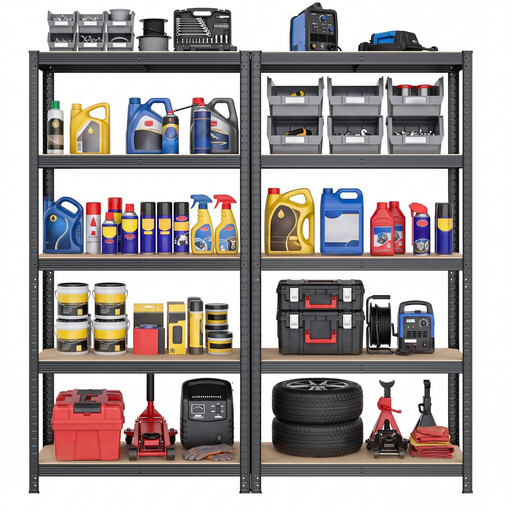
Why This Fits Their Persona: Perfect for users seeking an adaptable solution. This set of two units can be combined, set up individually, or converted into two workbenches.
The interlocking system is designed for both stability and flexibility. Reinforced cross braces under each shelf ensure reliable load distribution and prevent the MDF boards from sagging.
High Flexibility: Can be used as two separate shelving units or workbenches.
Strong Performance: Each unit offers a load capacity of 175 kg per shelf (875 kg total).
We've compiled a complete, up-to-date list of products that fully meet these strict selection criteria and safety requirements.
Yes, wall anchoring is strongly recommended and is essential for safety. It prevents the unit from tipping over, especially with tall shelves or uneven loads. Many models come with a suitable anti-tip hardware kit, which should always be installed.
MDF (Medium-Density Fiberboard) is a wood composite material and is therefore sensitive to moisture. In permanently damp basements, the boards can swell over time and lose their stability. For such environments, shelving units with metal shelves are a more robust alternative. Alternatively, good ventilation can help, or the MDF boards can be treated with a moisture-resistant varnish before installation.
For a stable and secure assembly, you should follow these steps: