
Lieferung heute & morgen

Qualitätsgarantie

Willkommens-Angebote freischalten: KOSTENLOSE Lieferung | Bis zu 80 % RABATT | Kostenlose 30-Tage-JoyPlus-Testphase
App herunterladen
A cluttered basement, a disorganized garage, or a workshop where tools and materials are constantly in the way—these problems demand a robust and reliable storage solution. Heavy-duty shelving seems like the obvious answer. Yet, the market is flooded with options whose marketing claims often promise more than the construction can deliver. Before you invest, it's crucial to understand the common pitfalls that lead to bent shelves and unstable frames.
This guide will help you identify the critical features and choose a model that truly meets your standards for stability and durability. We'll focus on the three most common flaws that buyers often only discover after assembly:
boltless shelving unit can complicate assembly and compromise the stability of the entire structure.basement or garage shelving setup. They swell on contact with moisture and lose their structural integrity.To make an informed decision, don't be swayed by marketing buzzwords; focus on verifiable technical specifications. Three parameters are decisive for the performance and safety of a heavy-duty shelving unit.
The most important metric is the maximum static load capacity per shelf. This value indicates how much weight a single shelf can hold when evenly distributed. A high load capacity per shelf (e.g., 175 kg or more) is an indicator of a sturdy frame and high-quality materials. The total load capacity is merely the sum of individual shelf capacities and says little about stability in everyday use. For workshop shelving intended to hold heavy machinery or tool chests, this value is critical.
A stable metal shelving unit forms the backbone of any durable storage solution. Look for the following features:
boltless system allows for a tool-free yet sturdy assembly. Look for additional reinforcements or crossbeams under the shelves, as these significantly reduce sagging under load.Storage needs change over time. A good storage rack should therefore be flexible. Check if the shelves are height-adjustable to accommodate items of different sizes. Many models also offer the option to be assembled as two half-height racks or workbenches. This modularity maximizes utility and allows for adaptation to different room heights and applications.
Based on these objective criteria, we have identified several models that represent a smart choice for specific user profiles.
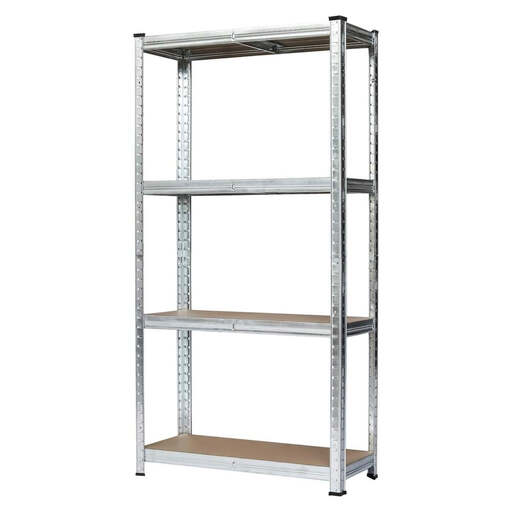
Why This Fits Their Persona: Ideal for homeowners seeking a reliable solution for general storage in the basement or pantry. It offers solid foundational stability for household items, boxes, and lighter tools without breaking the bank.
With a clearly stated load capacity of 125 kg per shelf, this unit sidesteps the trap of misleading total capacity claims and offers a reliable capacity for everyday use.
The galvanized steel frame provides basic corrosion protection. The tool-free interlocking system facilitates quick assembly.
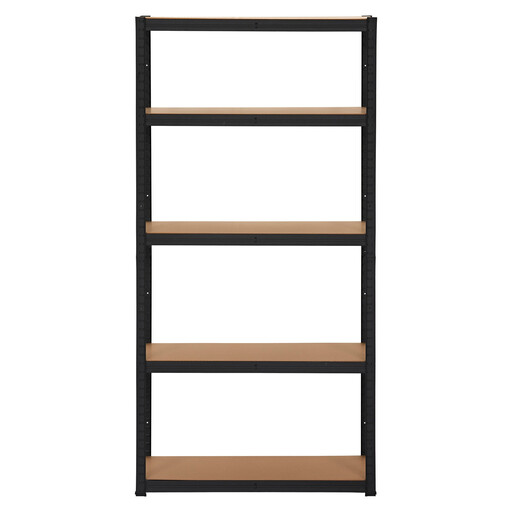
Why This Fits Their Persona: Perfect for the workshop or garage where heavy power tools, spare parts, and materials are stored. The very high load capacity and robust construction provide the necessary security for demanding applications.
This model relies on a sturdy steel construction and an exceptionally high load capacity of 265 kg per shelf. This actively counteracts the problem of unstable frames and sagging shelves.
The powder-coated finish is more durable than a simple paint job. The 45 cm depth provides more storage space for bulkier items.
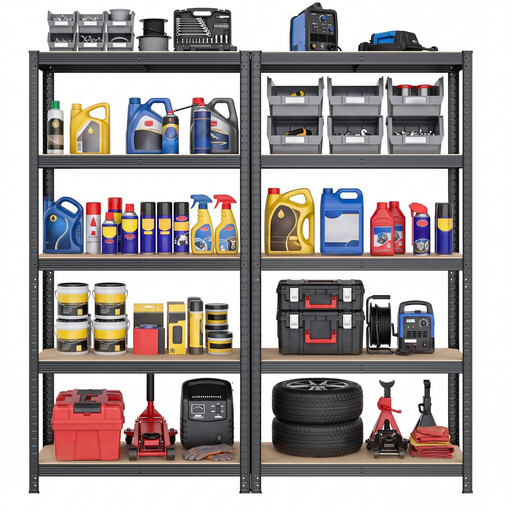
Why This Fits Their Persona: This set of 2 is designed for users who need to organize a larger area or require maximum flexibility. It can be configured as two tall shelving units or four workbenches to adapt to various room layouts and storage needs.
The design, featuring reinforced crossbeams under each shelf, ensures reliable load distribution and prevents the MDF boards from sagging—a common issue with cheaper models.
The ability to split the units into two separate racks offers outstanding versatility. The load capacity of 175 kg per shelf is more than sufficient for most applications.
We have curated a comprehensive, up-to-date list of products that fully meet these strict selection criteria and safety requirements.
Yes, wall anchoring is highly recommended, especially for tall units or when heavy items are stored on the upper shelves. It prevents the unit from tipping over and significantly increases safety. Many models come with an anti-tip kit that should be used for installation.
Ensure the unit stands on a level and solid surface. For assembling an interlocking system, using a rubber mallet is recommended to gently but firmly tap the metal components into their designated slots. Always wear work gloves during assembly to protect yourself from sharp edges.
Standard MDF (Medium-Density Fiberboard) panels are not designed for high-humidity environments, as they can absorb moisture, swell, and lose their load-bearing capacity. For a persistently damp basement, you should consider shelves with metal boards or specially treated, moisture-resistant wood, or ensure the space is well-ventilated and dry.