
Lieferung heute & morgen

Qualitätsgarantie

Willkommens-Angebote freischalten: KOSTENLOSE Lieferung | Bis zu 80 % RABATT | Kostenlose 30-Tage-JoyPlus-Testphase
App herunterladen
A heavy-duty shelving unit keeps things organised when toolboxes, paint tins, supplies or seasonal items should no longer be left on the floor. However, the stated kilogram rating is not the only factor to consider when buying. What matters is whether the load capacity, shelving dimensions, material and fixing method are suitable for where you intend to use it.
A specification such as “600 kg heavy-duty shelving unit” often refers to the total static load capacity of the shelving unit. It does not automatically mean that each shelf can hold 600 kg. For example, a model with five shelves and a total load capacity of 600 kg may be designed for 120 kg per shelf.
You should therefore check both values:
Heavy items should preferably be placed on the lower levels. Point loads, dynamic forces and climbing on the shelving unit should not be equated with the stated static load.
A storage shelving unit measuring 200 cm in height requires sufficient ceiling clearance and a level surface. For a cellar with a low ceiling, a 150 cm-high cellar shelving unit may be more suitable. Before buying, also check:
MDF shelves may be more sensitive to prolonged exposure to moisture than metal shelves. For damp rooms, you should therefore ensure suitable surroundings, dry storage conditions and regular checks.
Tool-free assembly can make putting the shelving unit together easier, but it does not replace carefully checking all connections. Push-fit or connecting systems must be fully engaged. Tall shelving units should also be secured to the wall using the supplied anti-tip protection, or installed in accordance with the product instructions.
Wear work gloves when assembling the unit, and only stand it upright once all shelves have been fitted correctly and the structure has been levelled on a stable surface.
Tools, machine accessories or crates of drinks require a higher shelf load capacity than lightweight boxes. A 650 kg heavy-duty shelving unit may, for example, be specified as holding 130 kg per shelf across five levels. The total figure alone is not decisive; what matters is the combination of:
The load capacity stated on the product page should not be exceeded. An additional safety margin is also recommended for delicate or heavy items.
Height-adjustable shelves are particularly practical when boxes, tool cases and containers come in different sizes. Check the increments in which the levels can be adjusted. The JOYFURNOS model with a total load capacity of 600 kg is specified as adjustable in 5 cm increments.
A shelving unit with 5 shelves makes good use of the available room height. However, if you are storing bulky equipment, a unit with fewer levels or larger gaps between shelves may be more practical.
A steel frame provides a robust basic structure. Powder coating or galvanisation can protect the surface against everyday wear, but does not replace a dry storage environment. For MDF shelves, remove any spills immediately and observe the permitted load capacity.
Depth and accessibility are also important for a workshop shelving unit. A unit that is too deep can make items in the back row difficult to reach. A narrow garage shelving unit saves space, but provides less room for large boxes.
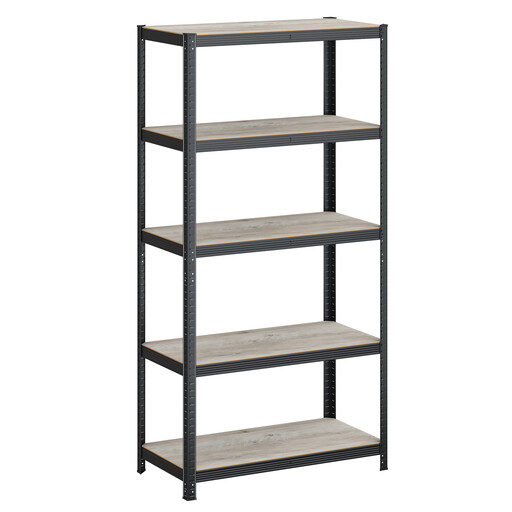
Why this product suits this profile: Measuring 200 cm in height, this metal shelving unit offers five levels, a total load capacity of 600 kg and adjustable shelves for garages, cellars or utility rooms.
The shelf load of 120 kg and the total load of 600 kg are stated separately. An anti-tip kit is also provided and should be secured to the wall.
50 × 100 × 200 cm, galvanised steel frame, tool-free push-fit assembly and a design that can be divided into two units.
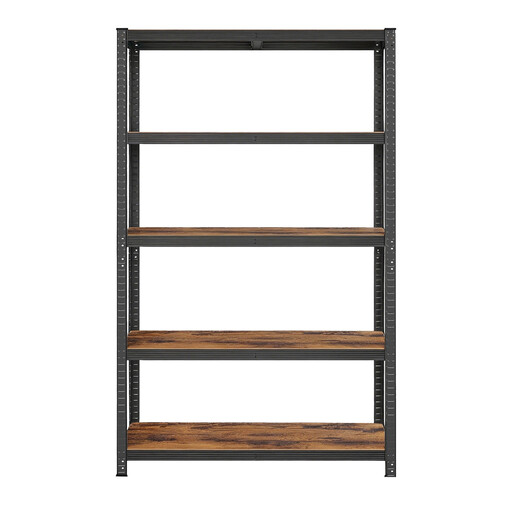
Why this product suits this profile: With a static shelf load of 150 kg per level and a total load capacity of 750 kg, this heavy-duty shelving unit is designed for extensive tool and storage requirements.
The product data specifies both the load per shelf and the total load. The dimensions of 60 × 120 × 200 cm make it easier to check the required floor space in advance.
Powder-coated steel frame, height-adjustable shelves, tool-free assembly and a divisible design.
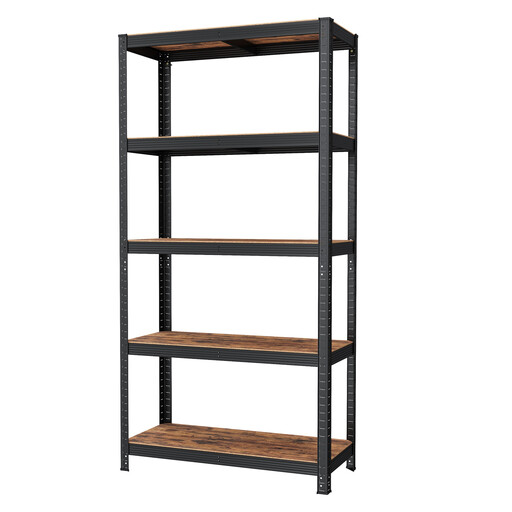
Why this product suits this profile: The more compact dimensions of 30 × 75 × 150 cm make this unit suitable for smaller cellars, workshops, storage rooms or garages with limited height.
The lower height reduces the risk of underestimating the room height. The stated shelf load of 130 kg and the anti-tip kit support predictable use.
Five adjustable levels, a static load of 130 kg per shelf, a divisible design and a screw-free connecting system.
We have put together a complete, regularly updated list of products that fully meet these strict selection criteria and the safety regulations applicable in the EU.
A shelving unit should not be used as a step or ladder. If there is visible damage or the unit is unstable, stop using it.
This depends on the model, shelf load, total load and correct assembly. For example, a shelving unit described as a 600 kg heavy-duty shelving unit may be designed to hold 120 kg per shelf across five shelves. The manufacturer’s specifications for each level and for the shelving unit as a whole are decisive.
Many models are designed for garages, cellars, sheds or workshops. Before buying, however, you should check the room height, condition of the floor and moisture levels. MDF shelves require a dry environment and must not be exposed to dampness for prolonged periods.
It is not possible to give a generalised service life. Among other factors, it depends on the load, moisture, assembly, condition of the surface and regular inspections. Evenly distributed loads, dry storage and compliance with the shelf load capacity can help ensure use within the intended limits.