
Lieferung heute & morgen

Qualitätsgarantie

Willkommens-Angebote freischalten: KOSTENLOSE Lieferung | Bis zu 80 % RABATT | Kostenlose 30-Tage-JoyPlus-Testphase
App herunterladen
A heavy-duty shelving unit should safely hold tools, supplies, equipment or seasonal items. But in a garage, cellar, workshop, shed or storage area, a high weight rating alone doesn’t determine whether it’s suitable. Unclear load limits, unsuitable dimensions or missing accessories can all lead to the wrong purchase.
A rating such as heavy-duty shelving unit 750 kg or heavy-duty shelving unit 875 kg often refers to the combined capacity of all the shelves. It doesn’t automatically mean that a single shelf can hold that much. Always check:
The JOYFURNOS shelving unit with five shelves has a stated static load capacity of 150 kg per shelf and 750 kg in total. The set of two shelving units is listed at 175 kg per shelf and 875 kg in total per unit. These figures apply to a static load distributed evenly; they shouldn’t be taken to mean the unit can handle dynamic forces caused by pulling, impact or jumping.
A heavy-duty metal shelving unit can have different frame thicknesses, joining systems and shelf materials. Look for a clear description of the materials. The models featured here have a frame made from powder-coated steel and MDF shelves.
The powder coating can help protect the metal surface from everyday wear during normal use. For damp cellars, unheated sheds or areas exposed to direct contact with water, also consider the surroundings and care instructions. MDF shelves aren’t the same as waterproof plastic or stainless-steel shelves.
An adjustable-shelf unit can be configured to fit boxes, tool cases and storage containers of different heights. Even so, measure the available space before you buy:
A workshop shelving unit with a depth of 60 cm offers different storage options from one that’s 40 cm deep. Depth matters for paint, machinery or larger boxes; a more compact size may be more practical for narrow storage areas.
Where possible, store heavy equipment on the lower shelves. This lowers the centre of gravity and makes items easier to reach. Don’t exceed the stated load capacity. Take extra care with the load on individual areas if items aren’t evenly distributed.
A stable storage shelving unit needs a sturdy frame and a secure, stable position. Both JOYFURNOS models come with an anti-tip kit. Secure the units to the wall according to the assembly instructions. This is particularly important in homes with children, with tall shelving units and when heavier items are stored on the upper shelves.
Wall fixings don’t replace correct load distribution. The floor must be level and able to support the unit. Wearing work gloves during assembly is sensible, as metal edges or joining components can cause injuries.
A push-fit or interlocking system can make assembly easier, but only if the parts fit together correctly. The JOYFURNOS system is designed without conventional screw connections and can be split into two separate units. Before assembly, consider whether one continuous unit or two smaller storage areas would work better in your garage or workshop.
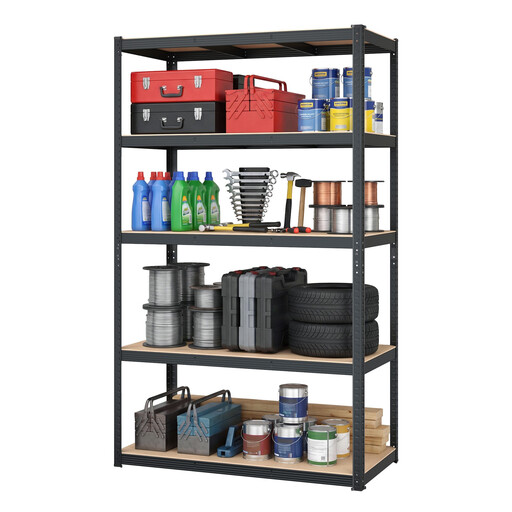
Why this product suits this profile: Measuring 200 × 120 × 60 cm, it offers five shelves for larger tools, boxes and seasonal items in the garage, cellar or shed.
The rating distinguishes between 150 kg per shelf and a total load of 750 kg. An anti-tip kit is listed as included.
Powder-coated steel frame, height-adjustable shelves and a design that can be split into separate units.
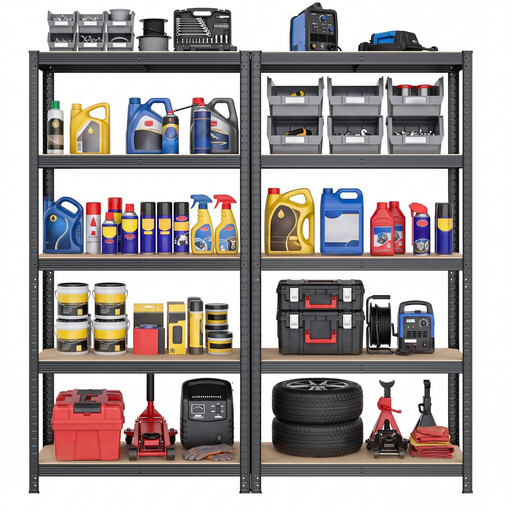
Why this product suits this profile: The two narrower units, each measuring 90 × 40 × 180 cm, can be used separately or together to create an organised storage solution for a workshop, pantry or garage.
Each shelf is rated for 175 kg, with a total capacity of 875 kg per unit. The product description says two anti-tip kits are included.
Two separate shelving units, five adjustable shelves per unit and a steel frame with MDF shelves.
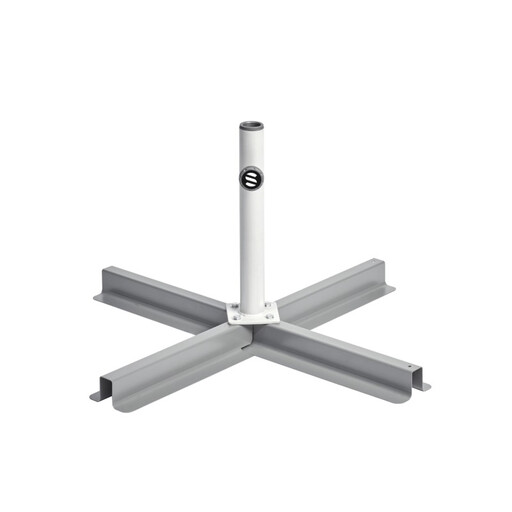
Why this product suits this profile: This parasol base accessory is designed for owners of compatible Suncomfort by Glatz models who need a crossbar for four slabs.
Compatibility is limited to parasol poles with a diameter of 32–39 mm and compatible models. Four 40 × 40 cm slabs are also required and aren’t included.
Powder-coated metal frame, square design measuring 40 × 40 cm and a stand tube for four slabs.
We’ve put together a complete, regularly updated list of products that meet these strict selection criteria and fully comply with the safety regulations in force in the EU.
For a garage and workshop shelving unit, we recommend the following:
For parasol base accessories, place the base on a hard, level surface. The compatible slabs must be supplied separately. Take the parasol down in strong winds and follow the manufacturer’s guidance on the minimum weight required.
It depends on the model and its construction. The key figures are the load capacity per shelf and the total load capacity. A unit with a total capacity of 750 kg can’t automatically hold 750 kg on a single shelf. The load should be static and evenly distributed.
The floor should be level and able to support the unit. Tall or heavily loaded shelving units should be secured to the wall with a suitable anti-tip kit. Distributing the load evenly and placing heavier items on the lower shelves will improve stability.
There’s no reliable one-size-fits-all answer. Lifespan depends on the load, moisture, assembly, impact and care. Regularly checking the shelves, connections and coating can help you spot changes early. Always follow the permitted load capacity and the relevant instructions for use.