
Lieferung heute & morgen

Qualitätsgarantie

Willkommens-Angebote freischalten: KOSTENLOSE Lieferung | Bis zu 80 % RABATT | Kostenlose 30-Tage-JoyPlus-Testphase
App herunterladen
An industrial-style bookshelf is more than just a storage unit; it's a statement piece that underscores a room's urban and functional character. The combination of warm wood tones and cool metal creates a timeless aesthetic. However, the vast selection on the market also has its pitfalls. Before you decide on a model, it's crucial to know the common weaknesses that can quickly turn a supposed bargain into a disappointment.
As your Joybuy Product Recommendation Officer, I'll help you identify the essential quality features and make an informed decision.
The 3 most common pitfalls when buying industrial shelves:
To find a durable and functional industrial design shelf, you should focus on three key technical aspects.
The foundation of any good wood and metal standing shelf is the materials used.
An open standing shelf must be secure, even when fully loaded. Therefore, always check the maximum load capacity per shelf. For a library, you should plan for at least 15 kg per shelf. Additional structural elements like X-bracing on the back prevent lateral swaying and significantly increase overall stability. Adjustable feet are another important detail for levelling the shelf without wobbling, even on uneven floors.
Carefully measure the intended space. A tall bookshelf is an excellent solution for making optimal use of vertical space in a shelf for a home office or smaller apartments. For a large living room bookshelf, a wider model can also function as a stylish room divider. Also, consider the depth of the shelves: you'll need more space for large coffee-table books or binders than for paperbacks.
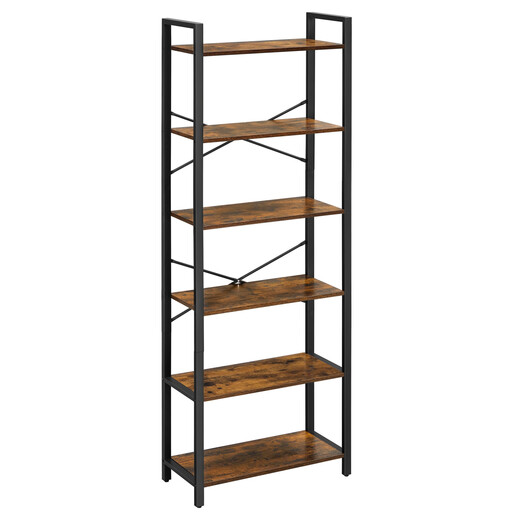
Why it's a great fit: With its slim design (66 cm width) and considerable height (186 cm), this shelf makes optimal use of vertical space. It's an ideal solution for smaller apartments or home offices where every square centimetre counts.
The design, featuring X-bracing and an included anti-tip kit, directly addresses the problems of instability and lack of safety in tall shelves.
Maximum space utilisation on a small footprint with 6 tiers; adjustable feet ensure stability on uneven floors.
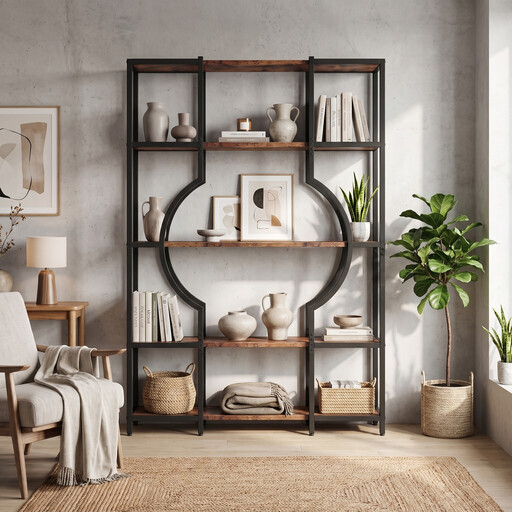
Why it's a great fit: For anyone looking for a piece of furniture with character. The curved silhouette and 12 asymmetrically arranged compartments make this shelf an eye-catcher and offer creative freedom for decoration.
The construction from a solid metal frame and high-quality MDF boards provides the necessary stability that is often neglected in design-oriented furniture. The total load capacity is 113 kg, according to the manufacturer.
Unique design with high visual impact; versatile compartment layout for books, plants, and decorative objects.
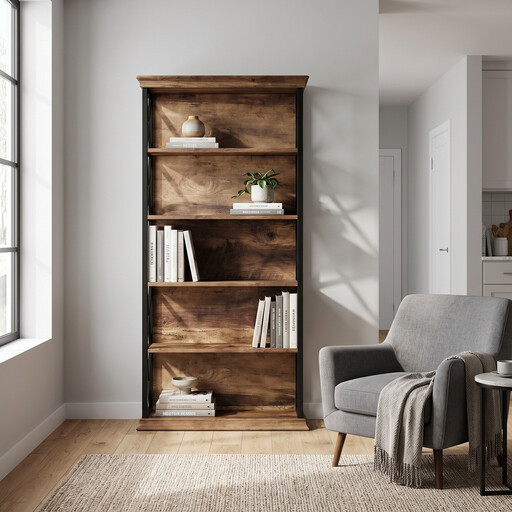
Why it's a great fit: This shelf is designed for heavy loads. Anyone needing to store an extensive book collection, heavy coffee-table books, or binders requires high load capacity and a stable base.
The use of E0-grade MDF and a high-quality metal frame with thick steel tubes bypasses the pitfall of inferior materials. The specified load capacity of 34 kg per shelf is a clear indicator of a robust construction.
Very high load capacity, qualifying the shelf for demanding use. Includes an anti-tip device for maximum safety.
We've compiled a complete, up-to-date list of products that meet these strict selection criteria and safety requirements.
1. How do I securely attach a tall bookshelf to the wall? A high-quality shelf will come with an anti-tip kit. This kit usually consists of one or two brackets or straps, screws, and wall anchors. Attach one part of the bracket to the top edge of the shelf and the other part firmly into the wall. Use the appropriate wall anchors for your wall type (e.g., concrete, drywall). This prevents the shelf from tipping forward.
2. What is the difference between MDF and particleboard in shelves?MDF (Medium-Density Fibreboard) is made by pressing the finest wood fibres together under high pressure and heat. This creates a very dense, homogeneous, and stable board with smooth surfaces that are easy to coat. Particleboard consists of coarser wood chips, is less dense, and has lower bending strength. For shelves that need to bear weight, MDF is the more stable and durable choice.
3. How do I care for an industrial-design shelf with wood and metal surfaces? Care is generally straightforward. Wipe the surfaces regularly with a soft, dry, or slightly damp cloth. Avoid aggressive cleaning agents or abrasive sponges, as they can damage the powder coating on the metal or the melamine finish on the wood shelves. If you spill any liquids, wipe them up immediately to prevent them from seeping into the edges.