
Lieferung heute & morgen

Qualitätsgarantie

Willkommens-Angebote freischalten: KOSTENLOSE Lieferung | Bis zu 80 % RABATT | Kostenlose 30-Tage-JoyPlus-Testphase
App herunterladen
A heavy-duty storage rack should safely hold tools, supplies, equipment or boxes without taking up more space than necessary. Whether it is for a garage, cellar, workshop, utility room or storage area, a high kilogram rating is not the only factor that matters. The actual dimensions, construction, floor conditions and anti-tip protection are equally important.
Many poor purchases result from three common marketing traps:
For a high-capacity storage rack, two figures are relevant: the maximum static load capacity per shelf and the total load capacity of the rack. The total figure is often calculated by adding together the capacity of several shelves. However, it does not automatically mean that every shelf can bear the same load under all conditions.
Also check whether the stated capacity applies to an evenly distributed load. Concentrated loads, such as heavy machine feet or individual tool cases, can put greater strain on a shelf. Whenever possible, place heavy items on the lower levels. The individual manufacturer's specifications should not be exceeded.
A heavy-duty storage rack for the garage needs sufficient clearance from garage doors, vehicles, doors and installations. Before buying, check the following:
Models measuring 150 cm high are often suitable for cellars or rooms with lower ceilings. A 200 cm-high metal rack makes better use of the available room height, but requires careful checks of the ceiling and wall conditions.
A steel frame can provide a sturdy basic structure when properly designed. For racks with MDF shelves, check the maximum load per shelf and the level of protection against moisture. Material specifications are particularly important for damp cellars, unheated garages or areas where condensation may occur.
A rack with adjustable shelves can be adapted more effectively to different items. Check the intervals at which the levels can be adjusted and whether the shelf supports can be inserted fully and securely into the frame.
An included anti-tip kit makes it possible to secure the rack to the wall. It does not replace correct assembly: the rack must be aligned straight, placed on a stable floor and secured in accordance with the instructions. Wall fixing requires particular care for tall, narrow or heavily loaded racks.
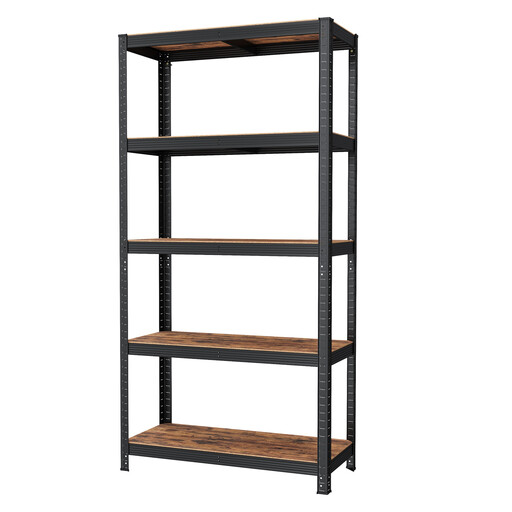
Why this product suits this profile: This rack offers five levels, a relatively compact width of 75 cm and a stated total static load capacity of 650 kg. It is therefore suitable for private garages, cellars and utility rooms with a moderate amount of available space.
The product specifications state both 130 kg per shelf and 650 kg in total. The included anti-tip kit indicates that additional wall fixing is intended.
Steel frame, five height-adjustable shelves and a divisible construction that can create two separate units or work surfaces.
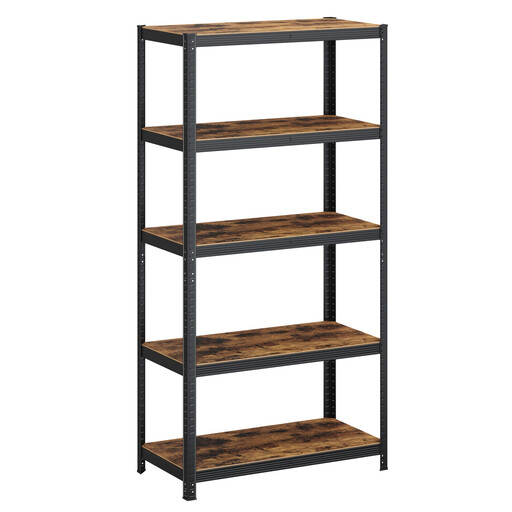
Why this product suits this profile: With a width of 100 cm and a height of 200 cm, this storage rack makes good use of the available wall space in a garage, workshop or cellar. According to the product specifications, the shelves can be adjusted in 5 cm increments.
The specifications distinguish between 120 kg per shelf and a total load of 600 kg. An anti-tip kit is also included; the MDF shelves should be protected from moisture.
Adjustment in 5 cm increments, tool-free slot-together assembly and the option to divide the rack into two units.
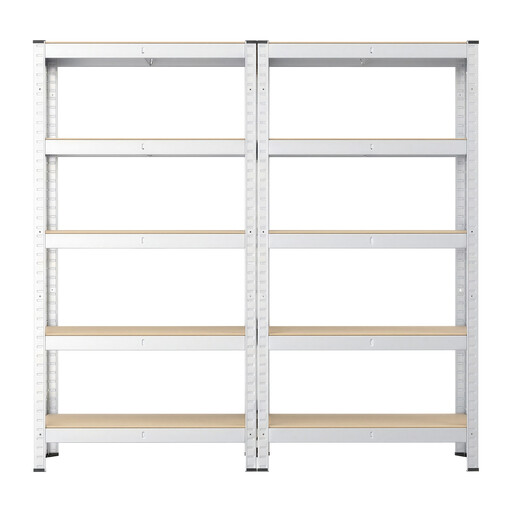
Why this product suits this profile: Two separate racks offer flexibility for a workshop, storage room or larger garage. According to the product description, each rack has five adjustable shelves and a maximum total static load capacity of 650 kg.
The load capacity is specified per unit. This makes it possible to plan the distribution of the load separately, rather than adding together the total figures for two racks without clarity.
Two units, each with a load capacity of 130 kg per shelf, adjustable levels and an anti-tip kit for the intended wall fixing.
Before assembly, the floor should be free from uneven surfaces, oil and loose materials. With a slot-together rack, fully insert the frame sections and connectors before placing the shelves on top. Then check the following:
Wear suitable protective gloves during assembly and do not use any damaged parts. A tool storage rack should be positioned so that frequently used equipment is easy to reach. Heavy boxes, paint tins and machinery should go on the lower levels; light household items can be stored on the upper shelves.
For shoes, small boxes or narrow hallways, however, a traditional heavy-duty storage rack is often oversized. A narrow shoe rack or a space-saving rack with limited depth may be a more suitable solution.
We have put together a complete, regularly updated list of products that fully meet these strict selection criteria and the safety regulations applicable in the EU.
This depends on the model and how the load is distributed. The key figures are the load capacity per shelf and the total load capacity. These values often apply to static, evenly distributed loads. Concentrated loads and incorrect assembly can affect the rack's actual safety.
For tall or narrow racks, wall fixing is advisable and may be recommended by the manufacturer. Use the supplied anti-tip kit where available, and check that the wall, wall plugs and fixings are suitable for the surface. The rack should also always stand on a level surface.
It is not possible to give a reliable fixed lifespan without information about its use, surroundings and load. Keeping the rack in a dry location, distributing weight evenly, observing the load capacity and regularly checking the connectors and shelves all help maintain its serviceability. In damp rooms, MDF components should be given particular protection against water and prolonged exposure to moisture.