
Lieferung heute & morgen

Qualitätsgarantie

Willkommens-Angebote freischalten: KOSTENLOSE Lieferung | Bis zu 80 % RABATT | Kostenlose 30-Tage-JoyPlus-Testphase
App herunterladen
Heavy-duty garage shelving creates space for tools, tyres, paint tins, garden equipment and supplies. But a high load-capacity rating alone doesn’t mean a shelving unit is right for your needs. What matters is its construction, how the load is distributed, the space it takes up and protection against tipping.
A rating such as “600 kg load capacity” usually refers to the combined capacity of all the shelves under a static, evenly distributed load. It doesn’t mean that a single shelf can hold 600 kg. For example, a shelving unit with five tiers and a total load capacity of 600 kg may be designed to hold up to 120 kg per shelf.
Heavy items shouldn’t be stored exclusively on the top shelf either. Uneven loading can affect stability and put more strain on the connectors.
A tool-free boltless shelving unit is generally quicker to assemble than a model that needs to be screwed together. Even so, all the braces and shelves must be fitted correctly. Depending on the room and the load, you may also need to secure it to the wall.
A heavy-duty shelving unit with anti-tip protection should be placed on a level surface and secured using the fixing kit provided before use. Anti-tip protection is no substitute for careful assembly and evenly distributed loads.
Many models combine a steel frame with MDF boards. This material provides a solid shelf surface, but should be protected from prolonged exposure to moisture. If your garage is unheated and damp, or your cellar is prone to condensation, check the manufacturer’s instructions.
In damp environments, it’s important to choose a suitable location, ensure adequate ventilation and keep the shelving away from wet walls. A garage shelving unit with MDF shelves is primarily intended for dry indoor spaces, unless the product details specify otherwise.
Look for three details:
A shelving unit with a 600 kg load capacity may be suitable for toolboxes, boxes or smaller machines, provided the weight is distributed sensibly. For particularly heavy workshop equipment, compare the capacity of each shelf with the actual weight of the items.
Compare the shelving unit’s width, depth and height with the space available. In a garage, keep doors, vehicles, windows, sockets and walkways clear. For smaller spaces, a narrow metal garage shelving unit may be more practical than a particularly deep model.
A heavy-duty cellar shelving unit should also fit through stairwells, doorways and narrow hallways. For tall shelving, take the room height into account, including any ceiling pipes or cables.
A sturdy steel shelving unit with adjustable shelves can be adapted to fit items of different sizes. Check how far apart the shelves can be positioned and whether the unit can be split into two separate sections.
A 5-tier storage shelving unit offers a straightforward layout. For tools, boxes and canisters, adjustable shelves are often more practical than fixed ones. With a workshop shelving unit, easy-to-reach shelves and a sturdy bottom shelf for heavy items are also important.
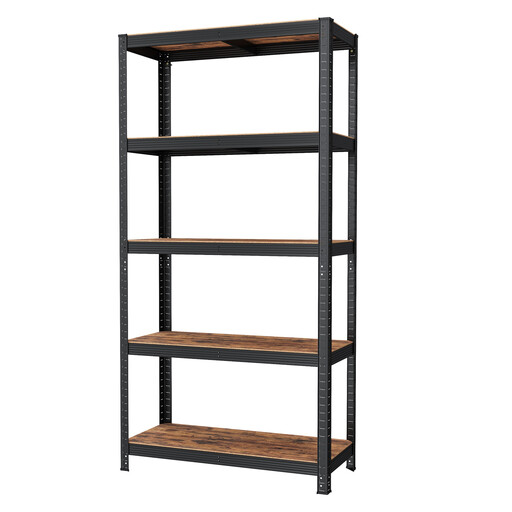
Why it suits this use: Measuring 30 × 75 × 150 cm, this unit is a good fit for smaller garages, utility rooms or dry cellars. Five tiers and a stated total static load capacity of 650 kg provide a clear, practical layout for boxes and tools.
The stated capacity of 130 kg per shelf makes it easier to understand how the load should be distributed than a total load rating on its own. The anti-tip kit included also highlights the need to secure the unit to the wall.
Steel frame, five adjustable shelves and a design that can be split into two sections. The shelves are made from MDF and intended for dry indoor spaces.
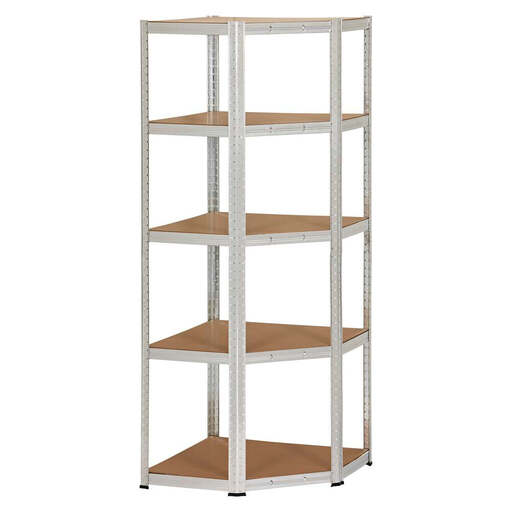
Why it suits this use: Measuring 70 × 40 × 180 cm, this corner unit makes use of space that often goes unused in garages, cellars or workshops. According to the product details, each shelf can hold up to 175 kg when the load is evenly distributed.
The load ratings for each shelf and for the unit as a whole are listed separately. Assembling it on a level surface and securing it to the wall as recommended helps prevent common stability problems.
Galvanised steel frame, five MDF shelves and tool-free assembly using a boltless design. The corner unit can be combined with other shelving from the same range.
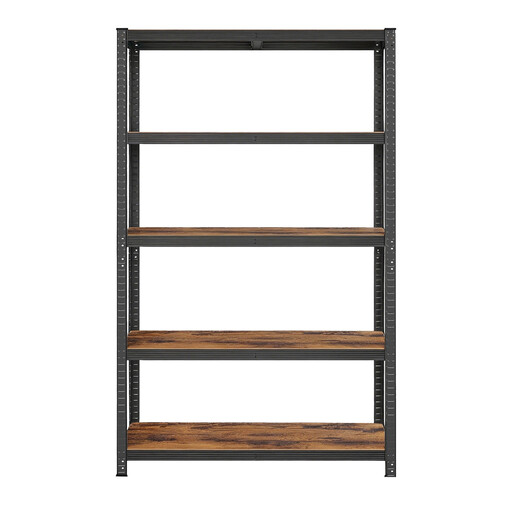
Why it suits this use: At 60 × 120 × 200 cm, this unit offers more shelf space for a larger tool collection, boxes or seasonal equipment. Its stated capacity is 150 kg per shelf and 750 kg in total.
The greater depth is clearly stated, so check it against your garage layout before buying. The anti-tip kit helps you secure the unit to the wall as intended.
Five adjustable MDF shelves, a powder-coated steel frame and a design that can be split into two sections. The shelf heights can be adjusted to suit items of different sizes.
We’ve put together a complete, regularly updated list of products that meet these strict selection criteria and fully comply with the safety regulations in force in the EU.
That depends on what you plan to store. Add up the weight of the items and allow for some extra capacity. The total load rating isn’t the only thing to consider; the maximum capacity per shelf is especially important. For the models mentioned, the manufacturer’s ratings apply to static, evenly distributed loads.
A boltless shelving unit can be stable when all the connections are fitted correctly. It must be placed on a level surface. For tall or unevenly loaded units, securing them to the wall is advisable or required according to the product details. Stability also depends on distributing the load evenly and staying within the stated capacity.
There’s no single answer. Its lifespan depends on the load, assembly, moisture levels and how often it’s moved. Steel frames are designed to store heavy items, while MDF shelves should be kept dry and checked regularly for damage.