
Lieferung heute & morgen

Qualitätsgarantie

Willkommens-Angebote freischalten: KOSTENLOSE Lieferung | Bis zu 80 % RABATT | Kostenlose 30-Tage-JoyPlus-Testphase
App herunterladen
A well-maintained hedge serves as a privacy screen, defines property lines, and is a key design element in any garden. But without the right tool, regular trimming can quickly become a strenuous chore. Given the variety of models available—from manual garden shears to powerful gas-powered hedge trimmers—the selection can often feel overwhelming.
This guide serves as a practical reference. We'll introduce different types of trimmers and explain which features are most relevant to your specific gardening needs. Our goal is to provide you with an informed basis for your decision, so you can find the perfect cutting tool for your hedges and shrubs.
The right choice depends on several factors, including the size of your hedge, the thickness of its branches, and your personal preferences for handling and performance.
The power source is one of the most fundamental decisions, affecting performance, mobility, and maintenance.
Two technical specifications are crucial for efficiency:
Ergonomics and reach play a vital role, especially for tall hedges or long work sessions.
Based on the criteria mentioned, we have compiled a selection of tools that cover different applications—from fine trimming to maintaining large hedges.
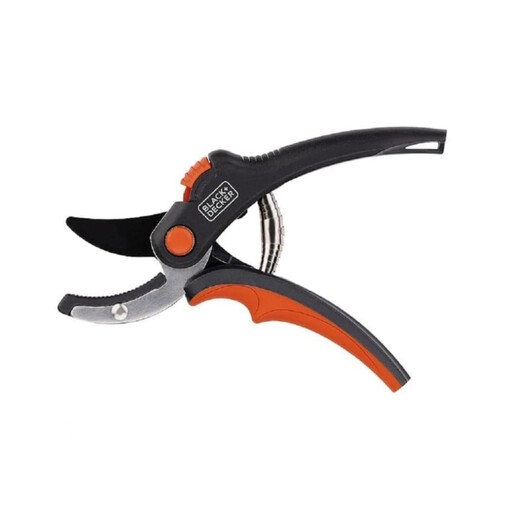
BLACK+DECKER Garden Shears – 14 ? Cutting Performance – Hardened Steel Blade
Why It's a Great Choice These manual garden shears are a fundamental tool for every garden owner. Their hardened carbon steel blade ensures clean cuts and long-lasting durability. Thanks to their low weight and ergonomic handle, they fit comfortably in the hand and allow for precise work without much effort.
Advantages
Who It's For This tool is an excellent choice for gardening enthusiasts who need a reliable and handy device for maintaining flower beds, ornamental shrubs, and for precise touch-ups on hedges.
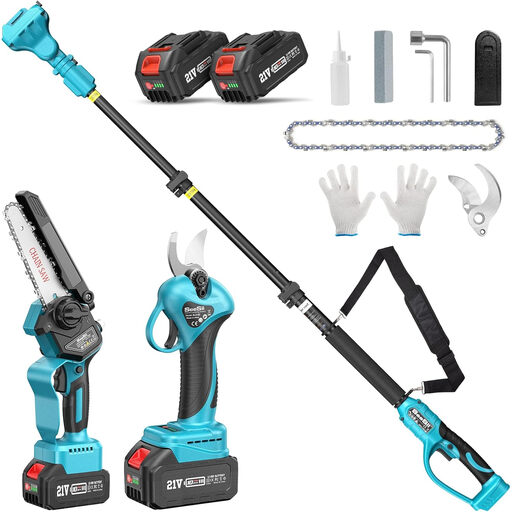
SeeSii 4-in-1 Multi-Tool Pruning Set (6" Mini Chainsaw + Pole Saw + Lopper), Battery-Powered
Why It's a Great Choice This hedge trimmer set is a flexible solution for gardens with diverse needs. It combines a mini chainsaw and a power lopper into one system, which can be extended with a telescopic pole to become a pole saw. The battery-powered design ensures cordless freedom for all tasks.
Advantages
Who It's For Ideal for homeowners and gardeners looking for a versatile tool for various tasks—from trimming low shrubs to pruning high tree branches. Anyone who appreciates the flexibility of a cordless system will find this to be a comprehensive solution.

WALDMANN HT262 Hedge Trimmer, 25.4cc Engine, 0.7 kW Rated Power
Why It's a Great Choice This gas-powered hedge trimmer is designed for demanding tasks. With a powerful 0.7 kW engine and a 570 mm cutting width, it handles thick branches and large hedge areas with ease. The thoughtful ergonomics, including an adjustable handle and vibration control, allow for extended work sessions. This model can be considered a professional-grade hedge trimmer for semi-professional use.
Advantages
Who It's For This model is aimed at owners of large properties, semi-professional users, and anyone who regularly needs to maintain dense and extensive hedges without access to a power source.
The products featured here cover a broad spectrum, but every garden is unique. If you're looking for a different solution or more specialized tools, you can find other options in our assortment.
Browse our Garden Corner to find a wider selection of tools for your individual needs.
A hedge trimmer is designed with a long blade to cut many small shoots and thin branches at once, creating a smooth surface (e.g., on a hedge). A lopper, whether manual or an electric lopper, is designed to cut through individual, thicker branches, applying more force to a smaller cutting area.
The frequency depends on the plant species and the desired appearance. Most deciduous hedges (like hornbeam or privet) benefit from one or two trims per year—once in early summer around late June, and a second time in late summer if needed. It's important to check local regulations regarding bird nesting seasons. In many regions, major trimming or cutting back is prohibited during spring and early summer to protect nesting birds. Light maintenance and shaping trims are usually permitted.
As a rule of thumb: