
Lieferung heute & morgen

Qualitätsgarantie
App herunterladen
Kategorien
Optimising living space requires furniture that serves more than one purpose. A height-adjustable coffee table is one such multifunctional piece, transforming from a low-profile surface into a workspace or dining table. This height-adjustment capability, often combined with extra storage, directly addresses the needs of modern, often compact, living situations. This article analyses the key technical criteria and presents a selection of models with different functional specialisations.
Choosing the right model is based on an analysis of its mechanical, material, and dimensional properties.
The type of lifting mechanism determines the table's ease of use and durability.
The choice of material affects the table's stability, weight, and maintenance.
The dimensions in both closed and open positions are essential for space planning.
The following models were selected for their specific functional features and design details.
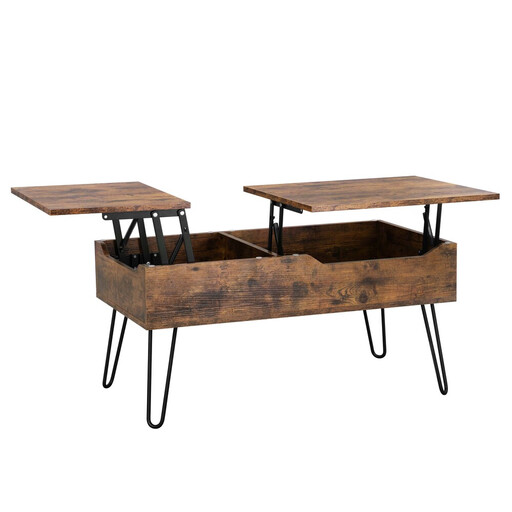
Why We Recommend This Product The Woltu model stands out with its split tabletop, whose sections can be lifted independently. This design allows for simultaneous use for different purposes—for example, a work surface for a laptop and a separate, lower-level surface. A spring-assisted mechanism handles the height adjustment.
Pros
Who It's For This model is designed for individuals who need a flexible work and surface area and often perform multiple tasks at their coffee table simultaneously. It is suitable for couples or individuals in studios or small apartments.
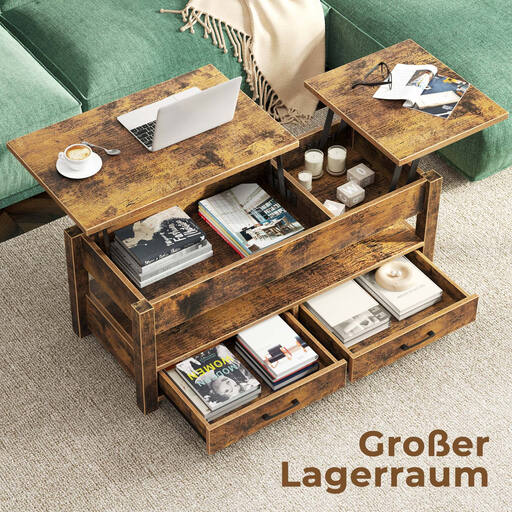
Why We Recommend This Product The Rolanstar Lift-Top Coffee Table uses a high-quality gas lift mechanism that allows for an exceptionally smooth and stable tabletop lift. The design is engineered for high load capacity and quiet operation. A key feature is its versatile storage offering, which includes two drawers, an open shelf, and a large hidden compartment.
Pros
Who It's For This model is aimed at users seeking an exceptionally stable functional living room table for regular work or as a dining table substitute. The thoughtful storage concept is ideal for families or individuals with high organisational needs in small to medium-sized apartments.
The models presented focus on multifunctionality and specific lifting mechanisms. However, living room furniture design is characterised by a wide variety of styles, materials, and forms. If you are looking for alternative designs or specialised pieces that meet different aesthetic or functional requirements, you can find a broader selection in our Designer Living Room Furniture category.
1. How does a coffee table with a lift-top function work? A coffee table with a lift function uses a mechanical understructure to raise and move the tabletop forward. This is usually achieved with spring-assisted hinges or gas lifts. The mechanism is activated manually by lifting the top and either locks into a fixed height or allows for stepless adjustment.
2. What is the optimal height for a height-adjustable coffee table? The optimal height depends on its intended use. In the closed position, the height is typically between 45 and 50 cm, matching the seat height of most sofas. When raised, the tabletop should reach a height of approximately 70 to 75 cm to allow for an ergonomic posture while eating or working on a laptop. This corresponds to the standard height of dining and writing desks.
3. Is a coffee table with a lift-top function stable enough for working? Stability depends on the quality of the lifting mechanism and the overall construction of the table. Models with a wide, solid base and a gas lift mechanism generally offer high stability, which is sufficient for working on a laptop, writing, or light meals. However, it is recommended not to exceed the manufacturer's specified maximum load capacity for the raised tabletop.