
Lieferung heute & morgen

Qualitätsgarantie

Willkommens-Angebote freischalten: KOSTENLOSE Lieferung | Bis zu 80 % RABATT | Kostenlose 30-Tage-JoyPlus-Testphase
App herunterladen
A flexible workspace is crucial for productive and health-conscious work in a home office. A height-adjustable desk, often called a sit-stand desk, allows for an easy transition between sitting and standing. However, the market is crowded, and not every model delivers on its promises. Before you make a decision, it's important to understand the common weaknesses that often only become apparent after a few months of use.
This guide will help you identify the essential features and avoid typical purchasing traps.
Many models advertise attractive features, but their longevity and practicality depend on the construction. Pay close attention to these three points to avoid buyer's remorse.
To avoid the problems mentioned above, you should check three core technical parameters before buying. These are crucial in determining the stability, durability, and functionality of your new workspace.
The frame is the foundation of a solid standing desk. Look for the following features:
An electric height-adjustable desk is only as good as its drive system.
The desktop is your actual workspace. The 120x60 cm desk size is a popular standard for the home office desk, as it provides enough space for a monitor and a laptop without taking up too much room. For the material, a melamine-coated MDF board is a low-maintenance and robust choice. It is scratch-resistant and easy to clean.
Based on the criteria mentioned, we have compiled a few models for different user profiles.
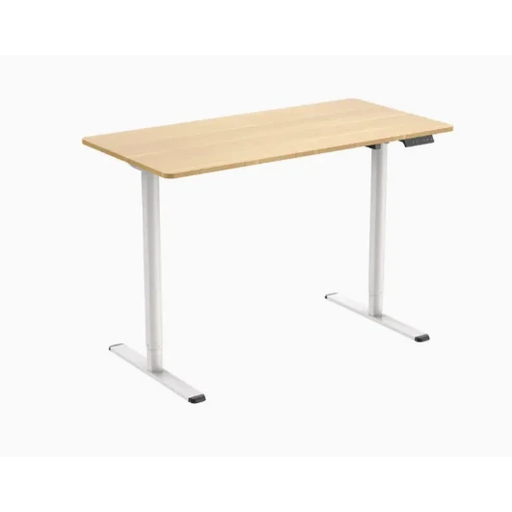
Why this model is a great fit: For users who switch between sitting and standing multiple times a day, the memory function with four presets is ideal. The height settings can be recalled with a single click, which doesn't interrupt the workflow. The oak finish gives the workspace a professional look.
The frame is designed for a load capacity of up to 60 kg, which is sufficient for a typical setup with a monitor and laptop. The electric height adjustment is built for regular use, and the memory function eliminates the manual search for the correct height.
Four programmable memory presets for a quick and convenient height change.
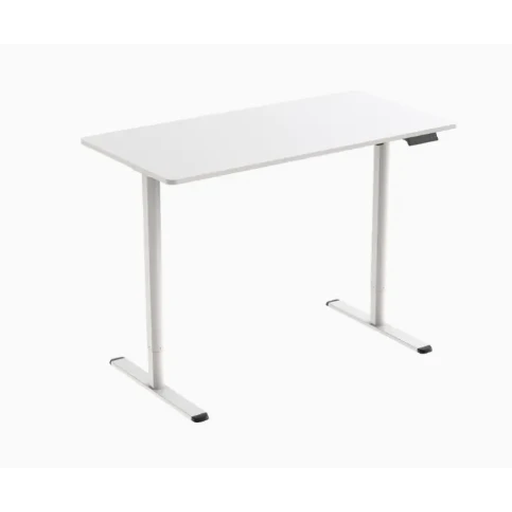
Why this model is a great fit: With its minimalist white design, this desk blends seamlessly into modern living and working environments. The 120x60 cm size is a great compromise between workspace and footprint, ideal for a first ergonomic home office setup.
The construction with inverted lifting columns (the thicker segment is at the bottom) contributes to its stability. As an integrated system from Loctek, a manufacturer focused on ergonomics, the frame and motor are perfectly matched.
Clean, modern design and simple logistics, as all components are delivered in a single package.
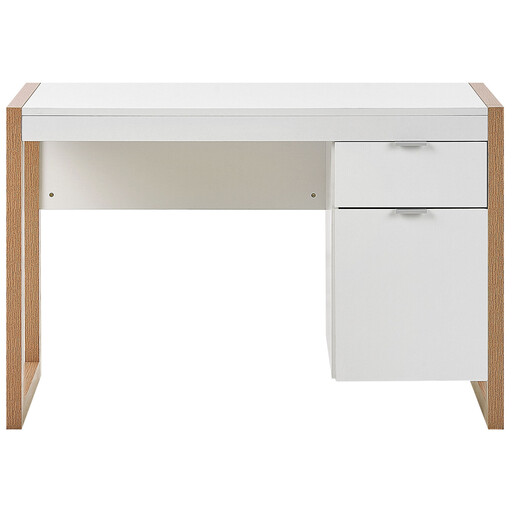
Why this model is a great fit: For users who prioritize tidiness and integrated storage, a fixed-height desk with built-in organizational elements is a practical solution. This model offers a drawer and a cabinet to store documents and office supplies right where you need them.
By forgoing a moving mechanism, potential points of failure like motor burnouts or instability at full height are eliminated from the start. It's a robust and low-maintenance solution for a fixed workspace.
Integrated storage for a consistently tidy workspace. Can be supplemented with a mobile pedestal like the Woltu Mobile Filing Cabinet for even more flexibility.
A well-organized workspace goes beyond just the desk. Discover matching solutions that meet the criteria for stability and functionality mentioned above.
For a standard home office setup with one or two monitors, a laptop, and accessories, a dynamic load capacity of at least 50-60 kg is recommended. Check the manufacturer's specifications and add up the weight of all your equipment, including any monitor arms. Plan for a buffer of about 20% to avoid constantly running the motor at its load limit.
The noise level depends on the quality of the motor. High-quality models operate very quietly, often under 50 decibels, which is quieter than a normal conversation. Cheaper models can be louder. Look for manufacturer specifications on noise levels (given in dB) if available. Quiet operation is especially important in shared offices or quiet home office environments.
The ergonomically correct height for a standing desk is achieved when your forearms rest on the desktop at an approximately 90-degree angle with your shoulders relaxed. Your wrists should be straight. The top edge of your monitor should be at or slightly below eye level. Since this is highly individual, a wide adjustment range for the desk is advantageous.