
Lieferung heute & morgen

Qualitätsgarantie

Willkommens-Angebote freischalten: KOSTENLOSE Lieferung | Bis zu 80 % RABATT | Kostenlose 30-Tage-JoyPlus-Testphase
App herunterladen
A height-adjustable rolling stool is more than just a seat; it's a tool for efficiency and flexibility. Whether in a beauty salon, a medical practice, a workshop, or a home office, a mobile work stool adapts to dynamic workflows. But the market is flooded with models whose weaknesses often only become apparent after a few weeks of use. A wobbly frame, a failing gas lift, or casters that scratch the floor are common frustrations.
This guide focuses on the critical technical features that distinguish a durable stool from a short-lived one. We'll show you what to look for to make an informed decision and avoid common purchasing pitfalls.
Before making a choice, it's important to understand the hidden flaws often found in cheap or poorly designed models.
To avoid the problems mentioned above, you should carefully examine three technical aspects. These are crucial in determining the durability, safety, and comfort of your stool.
The foundation of any swivel stool with wheels is its base. Look for a diameter of at least 45 cm to ensure high stability and resistance to tipping. Materials like chrome-plated steel or robust metal are preferable to plastic, especially if the stool will be used as a workshop stool or in a busy clinic setting.
The casters are just as critical. Nylon or rubberised smooth-gliding casters are the better choice for hard floors like parquet, laminate, or tile, as they roll quietly and protect the surface. For carpeted floors, harder dual-wheel casters are suitable as they won't sink into the pile. A stool with casters that swivel 360° offers maximum freedom of movement.
The quality of the gas lift is crucial for functionality. Pay attention to the maximum static weight capacity, which should ideally be at least 120 kg. This is a good indicator of the robustness of the entire mechanism.
The seat's height adjustment range must suit your application. A salon stool often requires a different seat height than an office stool for a standard desk. Measure the height of your work surface and ensure the stool offers a suitable adjustment range. A typical range is between approximately 45 cm and 60 cm.
The seat surface determines comfort during extended use.
A simple armless swivel chair can be very space-efficient, while models with a small, ergonomically shaped backrest provide additional support for the lumbar region during prolonged sitting.
Here are some models that represent a considered choice for specific user profiles based on their objective features.
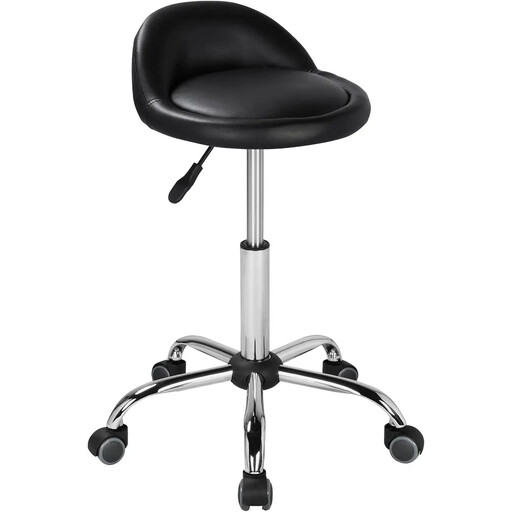
Why This Fits Their Persona: Ideal for the home office, hobby rooms, or as a flexible extra seat. This model focuses on core functionality without costly extras, offering solid value for occasional use.
The sturdy metal frame and a gas lift with a capacity of up to 120 kg counteract the pitfall of an unstable, wobbly stool common in many budget models.
The low-maintenance PU seat cover is durable and easy to clean. Assembly is straightforward and can be completed in minutes.
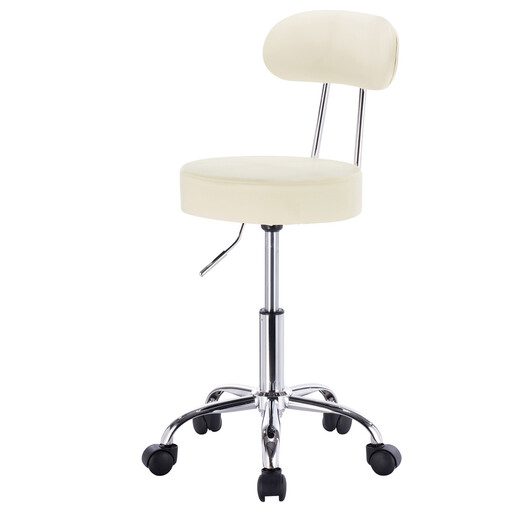
Why This Fits Their Persona: Designed for individuals who sit for several hours daily, such as cosmetologists, dental assistants, or lab technicians. The backrest provides additional lumbar support and reduces fatigue.
The ergonomically curved backrest addresses the lack of support found in simple round stools. The high-density foam padding prevents the cushion from quickly flattening.
Offers a combination of mobility and ergonomic comfort. The nylon casters are floor-friendly and quiet, ideal for calm clinic or office environments.
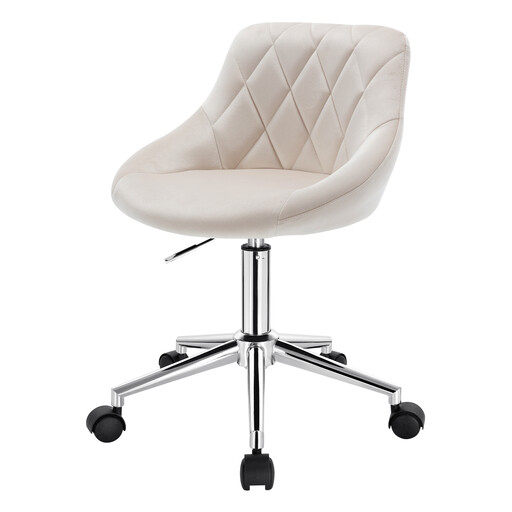
Why This Fits Their Persona: Perfect for users seeking a functional stool that blends seamlessly into a modern home environment, such as at a vanity, in the kitchen, or in a stylish home office.
This model avoids the trap of purely functional but unattractive designs. It combines the necessary stability and height adjustment with an appealing aesthetic that doesn't look like a mere piece of equipment.
The soft velvet cover offers a luxurious feel and a distinctive look. At the same time, the sturdy metal frame ensures the necessary durability and functionality.
We have compiled a complete, up-to-date list of products that fully meet these strict selection criteria and safety standards.
1. Which casters are suitable for which type of flooring? For hard floors like parquet, laminate, vinyl, or tile, softer, rubberised, or nylon casters are ideal. They prevent scratches and roll quietly. For soft carpeted floors, harder dual-wheel casters are more suitable as they offer less resistance and don't sink into the carpet pile.
2. How do I properly care for a rolling stool with a faux leather cover? Caring for faux leather (PU) is straightforward. Regularly wipe the surface with a slightly damp, soft cloth to remove dust and light dirt. For more stubborn stains, a mild soap solution can be used. Avoid aggressive chemical cleaners or abrasive agents, as they can damage the material.
3. What should the maximum weight capacity be for a professional work stool? For professional use in clinics, salons, or workshops, a maximum static weight capacity of at least 120 kg is recommended. This value is an indicator of a robust frame, a durable gas lift, and an overall stable construction that can withstand daily, intensive use.