
Lieferung heute & morgen

Qualitätsgarantie

Willkommens-Angebote freischalten: KOSTENLOSE Lieferung | Bis zu 80 % RABATT | Kostenlose 30-Tage-JoyPlus-Testphase
App herunterladen
A height-adjustable rolling stool can make everyday tasks easier in the office, kitchen, hobby room or salon. However, not every model is suitable for every setting. The key factors are less about eye-catching design features and more about seat height, weight capacity, castors and the actual construction.
If you focus only on a low price or the word “ergonomic”, you can easily overlook important details. This buying guide explains which specifications you should check before buying and which models may suit different user profiles.
Stool listings sometimes confuse the overall height, seat height and possible height adjustment range. For everyday usability, however, the seat height is the most important factor. It needs to suit your work surface, desk or treatment table.
A model with a seat height of around 44.5 to 59 cm is suitable for different working positions than a stool that starts at approximately 55 cm. Always check whether the seller specifies the seat height or only the overall height.
A stated maximum weight capacity does not mean that a rolling stool is suitable for use as a step or standing aid. The castors may move unexpectedly when the user stands up, kneels or puts sideways pressure on the stool.
Look for a clear specification in kilograms and also take clothing, work materials and dynamic movements into account. The manufacturer’s stated weight limit should not be exceeded.
A work stool with castors usually moves more easily on smooth floors than on deep-pile carpets. Hard castors can leave marks on delicate parquet or laminate flooring. A floor protection mat may be a sensible choice for your workspace.
Five castors are a common design. Even so, check that all castors have been fitted correctly and can rotate freely. Hair, dust and threads can affect how smoothly they move.
First, measure the height of the surface you will be working at. There should be enough legroom between the seat and the tabletop. For tasks that vary, a height-adjustable stool with a gas lift is practical, provided the lever is easy to reach.
An office chair without armrests or a low swivel stool can be pushed closer to the table. This is useful in small rooms, at a kitchen worktop or at a reception desk.
A padded seat can be more comfortable during longer tasks. PU leather or imitation leather can generally be cleaned with a soft, slightly damp cloth. Abrasive cleaners and harsh solvents may damage the surface.
A 360° swivel stool makes it easier to change your viewing direction. A swivel stool with backrest can provide additional support, but it takes up more space and is not automatically suitable for every posture. For shorter tasks, a compact salon stool, massage stool or beauty stool without a backrest may be more practical.
Check the following before buying:
Standards such as DIN EN 1335 apply to certain office chairs and cannot automatically be applied to every stool. A standard should therefore only be mentioned if it is expressly specified for the particular product.
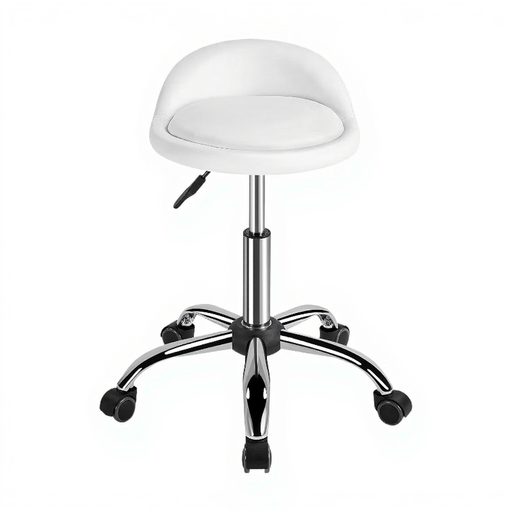
Why this product suits this profile: This compact rolling stool is designed for offices, kitchens, dining areas, bars or salons. Its armless design means it takes up comparatively little space.
The product specifications state a specific adjustment range and a maximum weight capacity of 120 kg. Before ordering, compare the seat height shown on the product page with the height of your work surface.
Five 360° swivel castors, a low backrest, metal construction and a stated weight capacity of up to 120 kg.
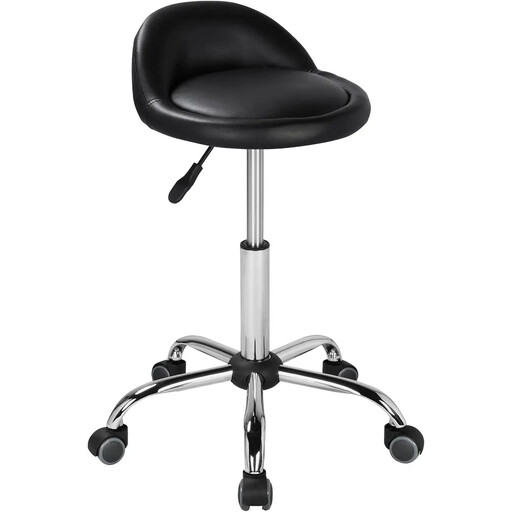
Why this product suits this profile: The combination of a PU seat, height adjustment and 360° swivel function suits users looking for a versatile seat for the office, hobby room, salon or practice.
The manufacturer specifies a height range of 55.5 to 70 cm, five castors and a weight capacity of 120 kg. This makes it possible to compare the most important buying criteria in advance.
PU leather seat, 360° rotation of the seat and castors, gas lift and a stated weight capacity of up to 120 kg.
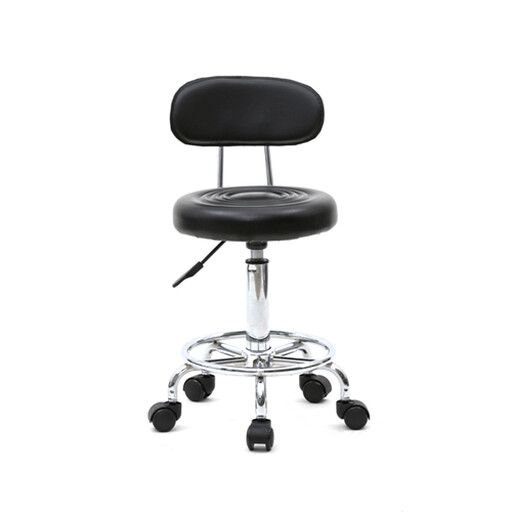
Why this product suits this profile: The round design with backrest is intended for workspaces where additional support and a swivelling seating position are desirable.
The product name explicitly highlights the backrest and 360° swivel function. Before buying, you should also check the seat height, weight capacity and castor specifications in the product description.
Round seat, backrest and stated 360° swivel function.
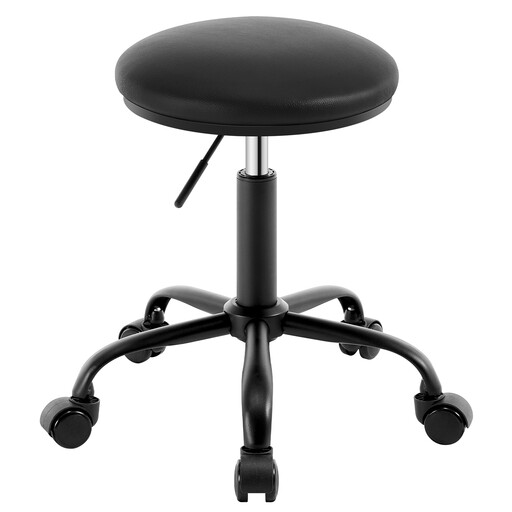
Why this product suits this profile: The stated height range of 45.5 to 57.5 cm and compact design make it an interesting option for tasks at lower work surfaces.
The product name specifies height adjustment, castors and PU material. This allows you to compare the relevant features directly with your workspace.
Stated height range of 45.5 to 57.5 cm, PU material and 360° swivel function.
We have put together a complete, regularly updated list of products that fully meet these strict selection criteria and the safety regulations applicable in the EU.
Place the stool on a level surface and secure all components before using it for the first time. During assembly, insert all screws fully first, then tighten them evenly. After a few days, check again for any loosened connections.
Do not use the stool as a stepladder and do not stand on the seat. On a delicate floor, a suitable mat can help protect the surface. Clean PU leather with a soft, damp cloth, then wipe it dry.
The right seat height depends on the work surface and your height. Measure the distance from the floor to the underside of the tabletop or treatment table. Then choose an adjustment range that covers this position while leaving a little flexibility for an upright sitting posture.
Five castors are a commonly used design and can allow flexible movement. However, the quality of the assembly, a level surface and the stated weight limit remain decisive. Castors do not automatically make a stool stable against tipping when subjected to sideways pressure.
Its service life depends on the load, flooring, care and assembly. Regularly check the castors, screws, seat attachment and gas lift. If you notice unusual movement, cracks or stiff height adjustment, stop using the stool until the cause has been clarified.