
Lieferung heute & morgen

Qualitätsgarantie

Willkommens-Angebote freischalten: KOSTENLOSE Lieferung | Bis zu 80 % RABATT | Kostenlose 30-Tage-JoyPlus-Testphase
App herunterladen
A height-adjustable stool is a versatile, small-footprint seating solution, proven in kitchens, offices, clinics, and salons. Its flexibility to adapt the seat height to various tables and users makes it a highly practical piece of furniture. However, the vast selection on the market also has its pitfalls. Many buyers discover only after a short time that their new stool has serious defects.
Before you make a decision, you should be aware of the three most common weaknesses, which often only become apparent with daily use and can lead to a bad buy:
To find a durable and functional stool that meets your needs, you should carefully examine a few technical parameters. These objective criteria will help you assess a model's quality, independent of marketing promises.
The maximum static load capacity, specified in kilograms (kg), is a crucial indicator of the entire frame's stability and robustness. It is recommended to choose a model with a load capacity significantly higher than your own body weight to ensure an adequate safety margin. A high-quality gas lift is essential for consistently reliable and smooth height adjustment. It is the heart of every height-adjustable stool.
The choice between a mobile rolling stool and a stationary model depends on its intended use.
A stool's comfort and longevity are largely determined by the material and shape of the seat.
Based on the quality criteria mentioned, we have identified several models suitable for different user profiles.

Why This Fits Their Persona: Ideal for users in home offices, salons, or clinics who need a mobile and robust seating option. The 360° swivel function and smooth-rolling casters allow for maximum freedom of movement at the workspace.
The five-star base made of galvanized metal provides a stable foundation and avoids the risk of tipping. The scratch- and water-resistant faux leather seat cover is easy to clean and resistant to wear.
High static load capacity of up to 150 kg according to the manufacturer. The height adjustment range of 46 to 58 cm covers a wide array of applications.
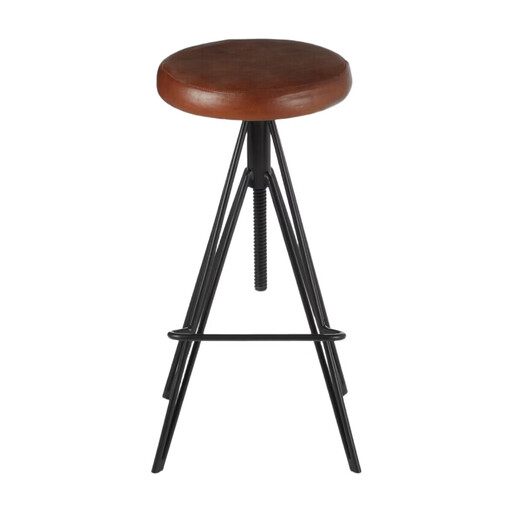
Why This Fits Their Persona: Perfect for users who value high-quality materials and an appealing design. This stool is a stylish addition to a kitchen counter or home bar.
The genuine leather seat and iron frame bypass the trap of quickly wearing plastics. The stable four-legged construction offers a secure footing without wobbling.
The combination of genuine leather and metal ensures high durability and a timeless aesthetic. Height adjustment is mechanical via a screw thread, which is a robust alternative to a gas lift.

Why This Fits Their Persona: Suitable for users who sit for extended periods at a kitchen counter, bar, or high desk and don't want to sacrifice comfort. The backrest and armrests support a relaxed posture.
The high-density foam padding prevents sagging over time. The large pedestal base ensures high stability even at the maximum seat height of 87 cm.
The combination of a backrest, armrests, and footrest offers a high degree of ergonomic comfort. The wide seat height adjustment range (65–87 cm) makes the stool highly adaptable.
We have compiled a complete, up-to-date list of products that fully meet these strict selection criteria and comply with German safety standards.
1. How do I choose the right seat height for my height-adjustable stool? Measure the height of your table or countertop. The ideal seat height is approximately 25-30 cm below the top of the surface. This allows for a comfortable posture with enough legroom. Make sure the stool's adjustment range covers this height.
2. Are rolling stools suitable for parquet floors? Yes, as long as they are equipped with the right casters. For hard floors like parquet, laminate, or tile, you need special hard-floor casters. These have a softer, often rubber-like coating that protects the floor from scratches and allows for quiet rolling. Check the product description for information on caster suitability.
3. How do I properly care for a stool with a faux leather cover? A PU faux leather cover is very low-maintenance. Usually, it's enough to regularly wipe the surface with a soft, slightly damp cloth. For more stubborn dirt, a mild soap solution can be used. Avoid aggressive chemical cleaners or abrasive agents, as they can damage the material.