
Lieferung heute & morgen

Qualitätsgarantie

Willkommens-Angebote freischalten: KOSTENLOSE Lieferung | Bis zu 80 % RABATT | Kostenlose 30-Tage-JoyPlus-Testphase
App herunterladen
A new adult bicycle helmet is on your shopping list, but the sheer number of options is overwhelming. Many models advertise features whose practical benefits are unclear. This often results in helmets that become uncomfortable after a short time, offer inadequate protection, or have expensive extra features that go unused. This guide will help you identify the crucial criteria and find a helmet that truly fits your needs.
Two common pitfalls when buying a helmet are:
To avoid a bad purchase, you should base your decision on objective criteria. The following three points are crucial for selecting the right model.
The correct fit is the most important criterion. A helmet should sit securely without causing pressure. Measure the circumference of your head at its widest point, about one centimetre above your eyebrows, to determine the right size.
Look for an adjustable fit system. Modern helmets feature a dial at the back of the head that allows the inner ring to be precisely adjusted to your head's circumference. An adjustable bicycle helmet, both at the chin strap and the inner ring, ensures that the helmet stays in position during an impact. Some models also offer interchangeable pads of different thicknesses for further fine-tuning.
In Europe, every bicycle helmet sold must meet the EN 1078 standard. This certification confirms that the helmet has passed basic tests for shock absorption and strap system durability.
Beyond this, there are more advanced protection systems. A MIPS helmet (Multi-directional Impact Protection System) is one example. This system consists of a low-friction layer inside the helmet. According to the manufacturer, MIPS, it is designed to reduce the harmful rotational forces transmitted to the head during an angled impact.
Not every helmet is equally suited for every activity. The design is tailored to specific requirements:
Some models offer additional functional features like a helmet with a visor, which protects the eyes from wind, insects, and UV radiation.
Here are some recommendations tailored to specific user profiles that help avoid the pitfalls mentioned earlier.
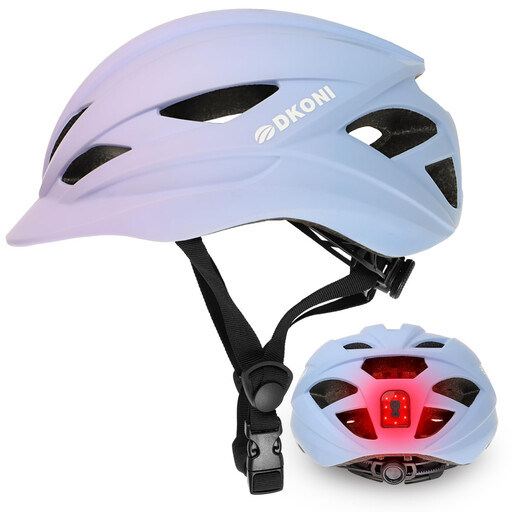
Why This Fits Their Persona: Ideal for the commute to work or running errands in the city. This helmet combines protection with practical functionality for the urban environment, where high visibility is crucial.
Directly addresses the problem of poor visibility. The integrated, USB-rechargeable LED rear light eliminates the need to buy a separate light and increases safety on the road.
In-Mould Construction: Directly fuses the PC outer shell with the EPS foam for a low weight. 15 Vents: Ensure good air circulation during city rides.
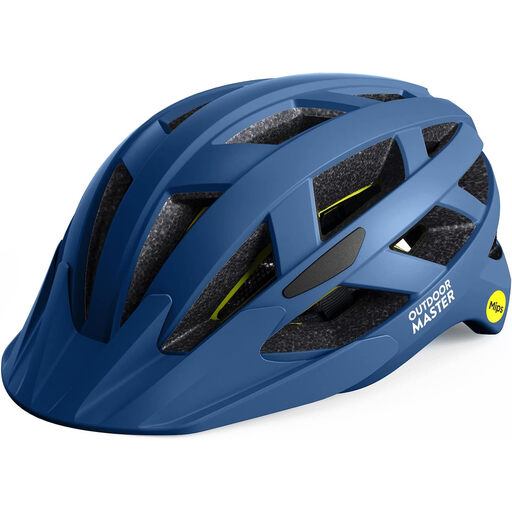
Why This Fits Their Persona: For cyclists who prioritise a higher standard of safety during weekend tours or recreational rides without compromising on comfort.
Avoids the fallacy that every helmet offers the same level of protection. The integration of MIPS technology specifically addresses rotational forces that can occur in angled impact scenarios.
MIPS Safety System: Provides an additional layer of protection. Dual Adjustment System: An adjustment dial and two removable inner liners ensure a precise and comfortable fit.
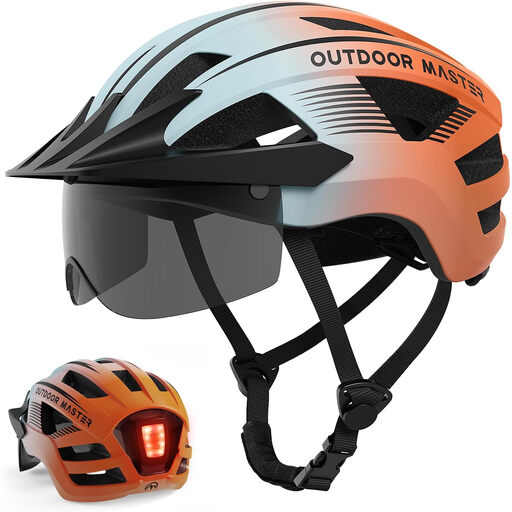
Why This Fits Their Persona: Perfect for longer bike tours or e-bike riders looking for an all-in-one solution that offers protection from the elements and enhanced visibility.
Solves the problem of having to buy and attach multiple accessories like goggles, a visor, and a light separately. This model integrates all functions into one cohesive package.
Magnetic Goggles and Visor: Protect the eyes from UV rays, wind, and debris, and are easily removable when not needed. Rechargeable Rear Light: Improves visibility at dusk and at night.
We have compiled a complete, up-to-date list of products that fully meet these strict selection criteria and European safety regulations.
1. How do I determine the correct helmet size? Measure your head circumference with a flexible tape measure at the widest point, about a finger's width above your eyebrows and ears. Compare this measurement with the manufacturer's size chart. A well-fitting helmet should not move significantly when you shake your head, even before the chin strap is fastened.
2. When should a bicycle helmet be replaced? A bicycle helmet must be replaced after any crash or significant impact, even if there is no visible damage. The inner EPS foam structure can be compressed by the impact and will no longer offer adequate protection in a subsequent fall. Regardless of crashes, most manufacturers recommend replacing a helmet every 3 to 5 years, as materials like plastic and foam can degrade over time due to UV radiation and sweat, losing their protective properties.
3. What does the EN 1078 standard mean for bicycle helmets? The EN 1078 standard is the European safety standard for helmets for cyclists and for users of skateboards and roller skates. A helmet with this certification has passed standardised tests that verify its shock absorption properties, construction (including field of vision), and the strength of its retention system (chin strap). It is the basic seal that guarantees a minimum level of protection.