For small quantities of herbs
If you prepare individual dishes with just a few fresh herbs, a suitable bowl size and easy-to-control operation are important factors to consider.


A compact chopper is a good choice for small quantities of herbs, provided the bowl size and controls suit the amount you usually prepare. A manual model lets you control how finely you chop by pulling the cord repeatedly, but it does require some effort; an electric mini chopper needs space and a power socket. If you regularly prepare larger quantities or also need to slice and grate ingredients, a food processor with the right attachments may be a better fit.
If you prepare individual dishes with just a few fresh herbs, a suitable bowl size and easy-to-control operation are important factors to consider.
If several people use the same kitchen at different times, straightforward cleaning and a designated storage spot make it easier to hand the appliance over to the next person.
If you prepare other ingredients as well as herbs, or want to slice and grate, compare the bowl size and the attachments actually included.
In a shared kitchen, it’s not just portion size that matters: cleaning and getting the appliance ready for the next person are important too. The European Commission and Germany’s Federal Office of Consumer Protection and Food Safety refer to Regulation (EC) No 1935/2004 for materials that come into contact with food, so check the information for the specific product. The Low Voltage Directive 2014/35/EU also applies to mains-powered appliances operating at 50 to 1,000 V AC. The EU’s information on CE marking makes clear that it is not a central EU certification.
A good fit if: you regularly chop small quantities and have a power socket and space for the appliance.
Bear in mind: bowl capacity does not confirm a minimum working quantity; also check which parts can be removed for cleaning.
A good fit if: you want to work without electricity and control how finely you chop by pulling the cord repeatedly.
Bear in mind: it takes some effort to use; according to the manufacturer, the lid of the Tefal K13304 should be wiped clean, while the bowl and blade are dishwasher-safe.
A good fit if: you regularly prepare larger quantities or other ingredients as well as herbs.
Bear in mind: extra attachments need storage space; Rommelsbacher recommends using a smaller grinder rather than the MZ 500 for small quantities of pesto.
| What matters | What to check before buying | Who should pay particular attention |
|---|---|---|
| Small quantities of herbs | Compare the bowl and controls on the specific model. WMF lists a capacity of 0.3 l for the KÜCHENminis, while Kenwood lists 500 ml for the Easy Chop CHP61.100WH; these stated capacities do not confirm a minimum working quantity. | If I usually prepare just a few herbs for one dish, I want to keep an eye on the quantity and how finely they’re chopped. Around 37% of consumers prioritise a suitable portion size and control over chopping. |
| Cleaning between cooking sessions | Check the bowl, blade and lid separately: WMF says all three parts are removable and dishwasher-safe; the Tefal K13304 lid should be wiped clean. Rommelsbacher recommends washing the MZ 500 blade by hand. | If someone else is using the kitchen soon after me, I want to know which parts can be cleaned quickly and put back ready for use. Around 27% of consumers prioritise quick cleaning and getting the appliance ready for the next person. |
| Other food prep jobs | Check working capacity and attachments separately from bowl capacity. Kenwood lists a 1.3 l bowl capacity and a dry working capacity of 0.75 l for the MultiPro Go FDP23.140GY, along with slicing and grating discs. | If we prepare other ingredients as well as herbs, I need the right functions and somewhere to store the attachments. Around 18% of consumers prioritise extra functions or greater working capacity. |
| Noise during use | In its own test, F.A.Z. Kaufkompass rated the Rommelsbacher MZ 500 as comparatively quiet. This is a qualitative assessment of this model, not a dB comparison. According to the manufacturer, the Tefal K13304 is manual. | If other people are cooking or spending time in the kitchen, I want to keep disruption to a minimum. Around 18% of consumers prioritise low disruption during use. |
F.A.Z. Kaufkompass assessed the Rommelsbacher MZ 500 in a general food chopper test; Rommelsbacher recommends a smaller grinder for small quantities of pesto. That doesn’t automatically tell you how well every quantity of herbs will be processed.
Compare the quantity and task you have in mind with the details for the specific appliance, rather than assuming a general test rating means it will work well with tiny quantities.
Cleaning instructions can differ for the bowl, blade and lid. The Tefal K13304 lid is cleaned differently from the bowl and blade, while Rommelsbacher recommends washing the MZ 500 blade by hand.
Check the instructions for the exact model before buying, and agree who will clean the parts after use as part of your shared kitchen routine.
Kenwood lists a 1.3 l bowl and a dry working capacity of 0.75 l for the MultiPro Go FDP23.140GY. These figures refer to different things, and don’t indicate a minimum quantity of herbs.
Compare working capacity, attachments and your usual portions separately.
The KÜCHENminis chopper is a compact electric option; WMF lists a capacity of 0.3 l for this model.
The Easy Chop CHP61.100WH is a mini chopper, while the MultiPro Go FDP23.140GY also comes with slicing and grating discs.
According to Tefal, the manual 5-second chopper K13304 is a 500 ml option that needs no electricity and can also be used for fresh herbs.
The MZ 500 is a food chopper with a 1.5 l glass bowl. For small quantities of pesto, Rommelsbacher recommends the smaller EGK 200.
According to Bosch, the MMR08A1 universal chopper is an electric option with a pulse switch and plastic bowl.
This selection includes manual herb choppers and compact electric appliances for smaller prep jobs.
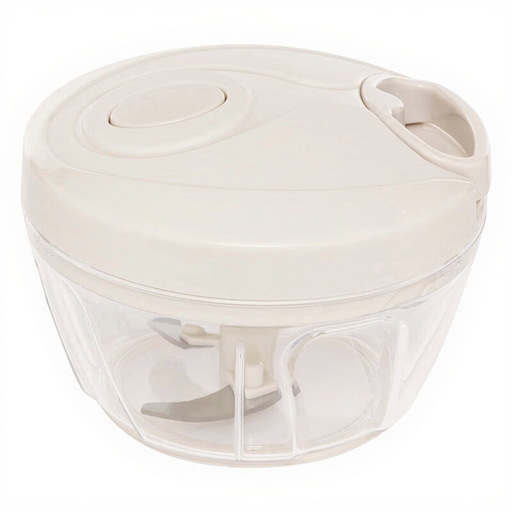 No image available
A manual option if you want to chop herbs without a motor.
Operated using a pull cord; you’ll need to pull it repeatedly.
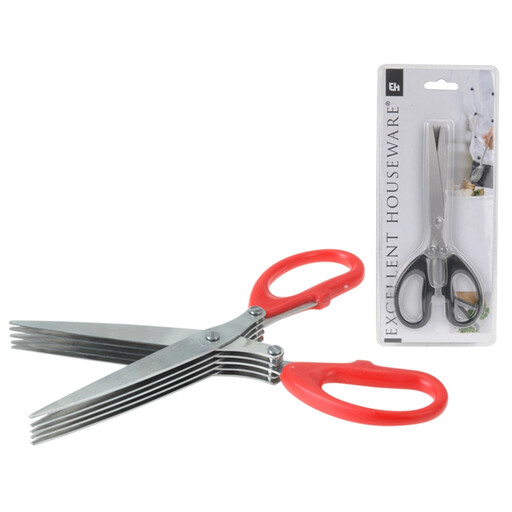 No image available
For fresh herbs, and if you want to control how finely you chop by pressing repeatedly.
The product name specifies five blades.
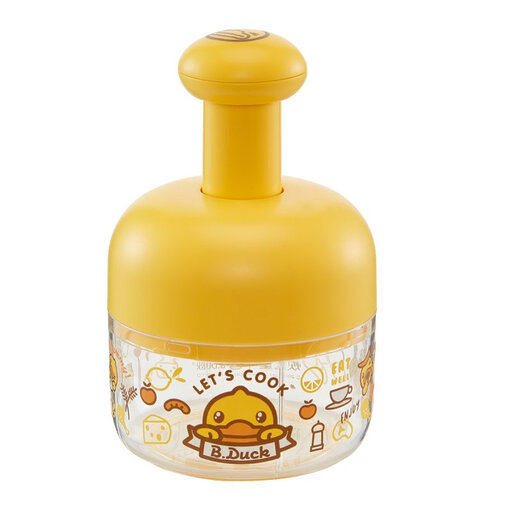 No image available
For small quantities of herbs if you want to chop them manually using a pull cord.
The product title specifies a 220 ml bowl; you’ll need to pull the cord repeatedly.
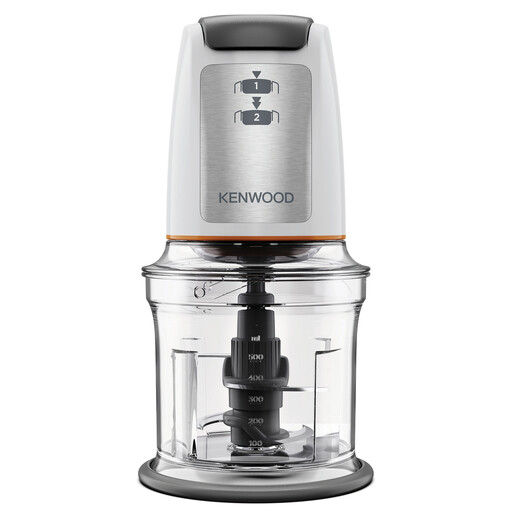 No image available
A compact electric option if you’re looking for a mini chopper with two speed settings.
The product title lists a 0.5 l bowl capacity and 500 W of power.
 No image available
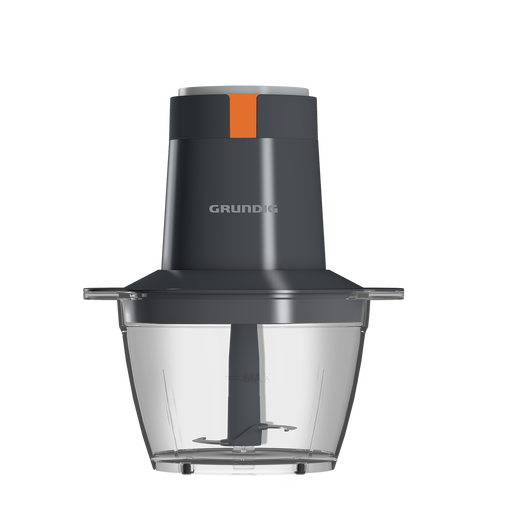
For smaller prep jobs if you want to see the contents while chopping.
The description lists a transparent 0.5 l glass bowl and two speed settings. The removable blades are very sharp, so take care when cleaning them.
Choose an appliance that lets you pause and check the result as you go. For the manual K13304, Tefal says that pulling the cord more times produces finer pieces; Kenwood lists two speed settings for the CHP61.100WH. However, this doesn’t guarantee a particular result for every type or quantity of herb.
No. Check the instructions for the bowl, blade and lid separately. Rommelsbacher recommends washing the MZ 500 blade by hand to preserve its sharpness; the instructions also say to unplug the appliance before cleaning.
As a rule, the seller is responsible for statutory claims relating to defects. The Verbraucherzentrale explains that goods must conform to the contract at the time of delivery, with a two-year period from delivery; a voluntary manufacturer’s guarantee has its own terms and does not replace these rights.
Regulation (EC) No 1935/2004 applies to materials intended to come into contact with food. The Low Voltage Directive 2014/35/EU also applies to mains-powered appliances operating at 50 to 1,000 V AC. CE marking is not an independent EU approval mark, so check the information for the specific product.