
Lieferung heute & morgen

Qualitätsgarantie

Willkommens-Angebote freischalten: KOSTENLOSE Lieferung | Bis zu 80 % RABATT | Kostenlose 30-Tage-JoyPlus-Testphase
App herunterladen
A convertible high chair is an investment that can serve a family for many years. However, the market is crowded, and many models overpromise and underdeliver. Certain design flaws or exaggerated marketing claims often lead to the chair becoming impractical after a short time or even posing a safety risk. This guide will show you what to look for to make an informed decision.
As a Joybuy Product Recommendation Officer, my mission is to provide you with objective and practical purchasing advice, helping you make a durable and safe choice for your child.
Many parents invest in a high chair only to find a few months later that it can't withstand the demands of daily life. Pay special attention to these three common problems:
To avoid the problems mentioned above, you should check three core parameters before buying. These define the true quality and longevity of a high chair.
Safety is the most important criterion. A good high chair must have a high degree of tip-over resistance. Look for a wide base and a design that can tolerate a child pushing off the table without tipping. Models with floor-friendly gliders that allow the chair to slide back slightly instead of tipping offer an advantage here. All high chairs sold in the EU must comply with the safety standard DIN EN 14988. This standard sets requirements for materials, construction, and stability to ensure the child's safety.
A truly durable high chair is distinguished not only by a high maximum weight capacity but, above all, by thoughtful adjustability. Both the seat and the footrest must be independently adjustable in height and depth. This is the only way to ensure an ergonomically correct sitting posture at every stage of growth.
The material also plays a decisive role. A wooden high chair, especially one made of solid beech wood, is often an investment for many years. Models made from FSC-certified wood also come from sustainable forestry.
The user-friendliness in daily life determines whether you will enjoy using the chair. A removable and ideally dishwasher-safe tray is a major advantage. Smooth, wipeable surfaces without unnecessary joints make cleaning much easier. If you have limited space, a folding high chair can be a sensible solution, as long as the folding mechanism is easy to operate and stable when unfolded.
Here are some models that are suitable for different needs and lifestyles, based on objective features.
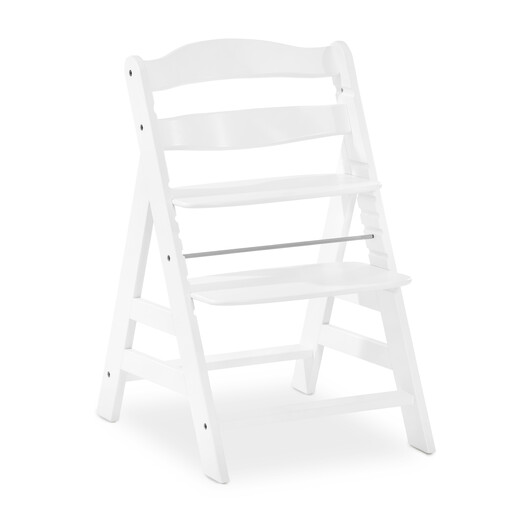
Why it's a good fit: This classic wooden high chair is designed for an extremely long lifespan. It is made from European beech wood from FSC-certified forests and, thanks to its high weight capacity, can accompany a child into adulthood.
The stable construction with floor gliders is explicitly designed to be tip-proof. As a true grow-with-me chair with a weight capacity of 90 kg, it completely bypasses the problem of short-term usability.
Extremely durable (up to 90 kg); made from sustainable, FSC-certified beech wood; tip-proof construction.
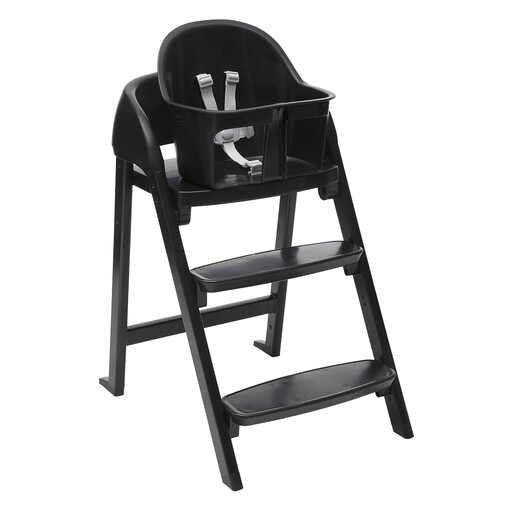
Why it's a good fit: This model combines an extremely long lifespan with a practical folding function. It is ideal for homes where the high chair cannot be left standing permanently.
As a folding high chair, it solves the space problem. At the same time, with a weight capacity of up to 110 kg for use as an adult chair, it is a prime example of longevity and refutes the "false grows-with-you promise."
Folds compactly for space-saving storage; 3-in-1 concept (high chair, child chair, adult chair); exceptionally high weight capacity of up to 110 kg.
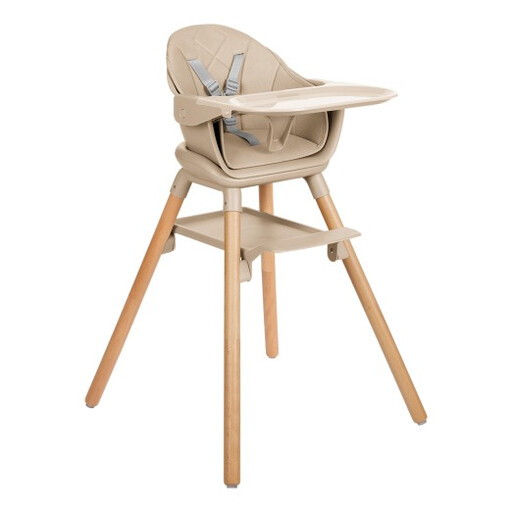
Why it's a good fit: This model offers great versatility at an accessible price point. With six different usage modes, it covers the needs from a baby high chair from 6 months up to a chair for children up to 6 years old.
The 6-in-1 design addresses the pitfall of short-term usability by being designed for multifunctionality from the outset. The easy-to-clean faux leather cover and removable tray bypass the cleaning problem.
High versatility with 6-in-1 function; easy-care, wipeable cover; non-slip feet for a secure stand.
We have compiled a complete, up-to-date list of products that fully meet these strict selection criteria and German safety regulations.
A convertible high chair is generally useful from the moment your child can sit upright independently and unassisted. This is usually around the age of six to nine months. Many models are designed as a baby high chair from 6 months and provide the necessary support with a safety bar and harness system.
For a correct ergonomic posture, you should consider two things:
Both materials have specific pros and cons. A wooden high chair is often very stable, durable, and blends well visually into the living space. Plastic models are generally lighter, often foldable, and cleaning plastic surfaces can be easier. The decision depends on your priorities: longevity and sustainability (wood) versus flexibility and often lower weight (plastic).