
Lieferung heute & morgen

Qualitätsgarantie

Willkommens-Angebote freischalten: KOSTENLOSE Lieferung | Bis zu 80 % RABATT | Kostenlose 30-Tage-JoyPlus-Testphase
App herunterladen
A high chair is an essential item for many families once their baby can sit up unaided. At first, choosing one may seem straightforward: compare the model, colour and price. In practice, though, details such as the harness, seat height, ease of cleaning and footprint determine whether a high chair really works for you day to day.
A high chair that grows with your child can be used through several stages of their development. What matters, though, is which seating position, child size and weight limit the model is approved for. A chair with a weight limit of 90 kg isn’t automatically suitable for a baby without an additional seat insert.
So, check:
With some wooden high chairs, the seat insert, tray or cushions are sold separately. This can make the initial price seem attractive, but you may need to buy extra accessories to get the features you want. Check what’s included and work out the total cost.
A folding high chair is handy for small homes or taking to the grandparents’ house. Before each use, make sure the folding mechanism is fully locked into place. The chair should also have a sufficiently stable base when unfolded. A compact, easy-to-store model won’t necessarily suit every table height or floor surface.
A high chair with a 5-point harness secures your child at the shoulders, hips and crotch. The harness should adjust to your child’s size and fit securely without digging in or being too loose. For smaller children, a seat insert and safety bar can help provide extra support.
Never leave your child unattended in a high chair. Place it on a level, stable surface and make sure your child can’t push against the table or climb onto it. Check the harness, fastenings, screws and feet before every use.
Products that state they comply with EN 14988 meet the standard’s safety requirements for high chairs. However, always follow the product information and instructions for use.
A height-adjustable high chair should adapt to your table height and your child’s size. An adjustable footrest gives your child somewhere to rest their feet, rather than letting them dangle. It’s also important that the backrest, seat and harness work together to provide a stable seating position.
If you’re considering a wooden high chair with several seat and footrest positions, check the adjustment options carefully. More settings can make it easier to get the right fit, but they also call for careful assembly and regular checks of the screw connections.
Food and liquids can quickly get onto the seat, tray and harness at mealtimes. Removable or smooth surfaces are usually easier to clean than heavily textured upholstery. Check the care instructions:
FSC-certified wood indicates that it comes from appropriately managed forests. This is a material and sourcing claim, not a general statement about a product’s overall environmental impact.
The models below vary in their usage range, features, space requirements and materials. The details are based on the product information provided.
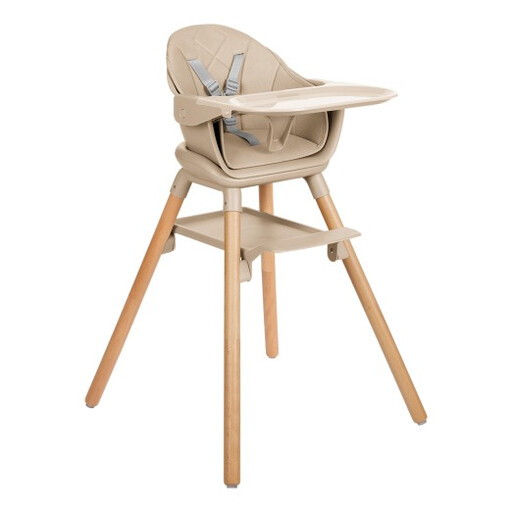
Why this product suits this type of household: This model offers six ways to use it, making it a good fit for families looking for one piece of furniture to see their child through several stages. It’s suitable as a baby high chair from 6 months, provided your child can sit up unaided.
It converts into a high chair, small chair, stool and junior seat, making its actual usage range clear. The weight limits are 15 kg in high chair mode and up to 25 kg as a junior seat.
6-in-1 design, 5-point harness, adjustable footrest, removable double tray and wipe-clean cover.
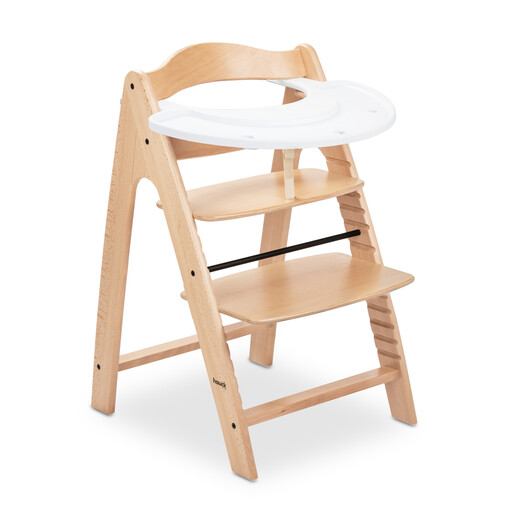
Why this product suits this type of household: This wooden high chair is designed for families who value plenty of adjustment options and accessories for mealtimes and play.
The set description lists a 5-point harness, chest strap, safety bar, footrest and activity board. This makes it easier to check exactly what’s included before you buy.
13 seat and footrest positions, FSC-certified beech wood and a play tray made from GRS-certified recycled material, according to the product information.
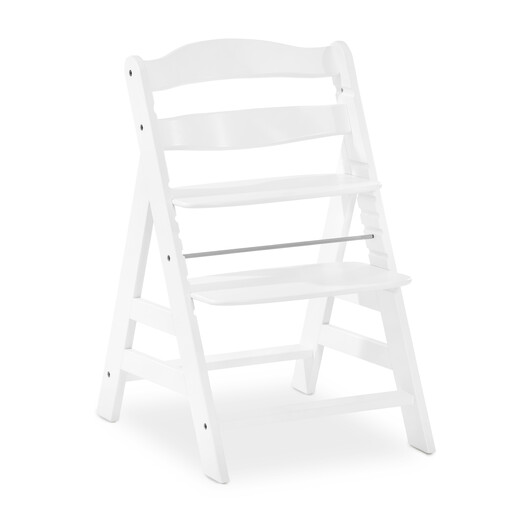
Why this product suits this type of household: This high chair is designed to grow with your child and last for years. It can be used at the family table and later as a seat in its own right.
The product information lists five seat heights, three footrest positions and a weight limit of up to 90 kg. The 5-point harness is included; the tray and cushions are available separately.
European FSC-certified beech wood, according to the supplier, adjustable seat and footrest positions, and integrated floor guides.
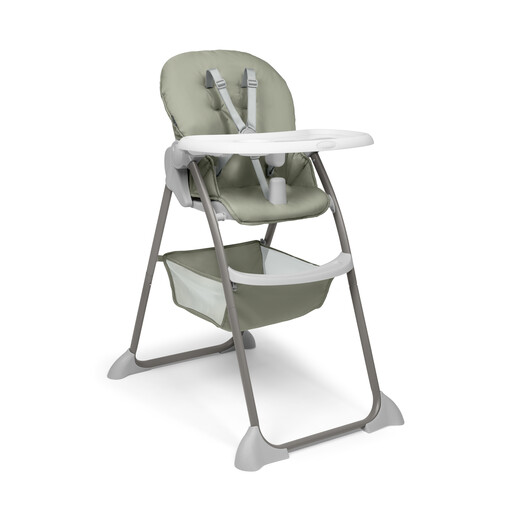
Why this product suits this type of household: This model folds away neatly to save space, making it a good choice for homes where the high chair needs to be stored or transported after mealtimes.
The product details specify a folding mechanism, three seat heights, a maximum weight of 15 kg and use from around 6 to 36 months. This gives you a clearer idea of its limits than general claims that it ‘grows with your child’.
Folding design, 5-point harness, height-adjustable tray, storage basket and wipe-clean cover.
We’ve put together a complete, regularly updated list of products that meet these strict selection criteria and fully comply with the safety regulations in force in the EU.
A high chair from 6 months is generally suitable only once your child can sit up unaided and securely. Always follow the manufacturer’s age and safety guidance. Don’t use the high chair before then.
It depends on the model. Some are designed for use up to around three years of age and a weight of 15 kg. Other wooden high chairs have adjustable seats and footrests and, according to the product information, can be used up to a higher weight limit. Check the limits for each mode of use rather than relying on the advertised age range alone.
Choose easy-wipe surfaces and check whether the covers are removable or machine washable. Clean the high chair after meals with a mild detergent, dry wooden parts straight away and regularly check the harness, screws, feet and folding locks.