
Lieferung heute & morgen

Qualitätsgarantie
App herunterladen
Kategorien
A high chair cushion is a functional accessory that enhances seating comfort for toddlers while simplifying chair cleanup. The selection of the right model depends on specific criteria such as compatibility, material properties, and safety aspects. This article analyzes the technical features of high chair pads and presents a selection of products for popular high chair models.
The decision to purchase a seat cushion should be based on an objective evaluation of its features. The following parameters are relevant for your selection.
The primary requirement for a high chair pad is a precise fit for the specific high chair model. Universal cushions often fail to provide optimal support and can slip, compromising the child's seating stability. Model-specific pads, such as those compatible with Stokke Tripp Trapp, compatible with Hauck Alpha, or compatible with bebeconfort Timba, are designed to perfectly match the contours of the seat and backrest. Cutouts for harness systems and safety bars must be precisely positioned to avoid impairing the high chair's safety features.
The choice of material affects both comfort and ease of care.
A secure attachment is crucial. Most high-quality cushions use Velcro straps or ties to firmly fix the pad to the chair. Some models also feature a non-slip coating on the underside of the seat pad. This prevents the cushion from sliding when the child moves. It is crucial to understand that a high chair cushion is a comfort accessory and never replaces the manufacturer's own harness system.
Ease of cleaning is highly important in daily use. A wipe-clean and coated cushion allows for quick cleanup after every meal. For a more thorough cleaning, machine washability is a key factor. It is important to follow the manufacturer's instructions regarding the maximum washing temperature (usually 30°C or 40°C on a gentle cycle) and tumble dryer suitability to ensure the longevity of the coating and filling.
Based on the technical criteria mentioned above, we present three specific products designed for popular high chair models.
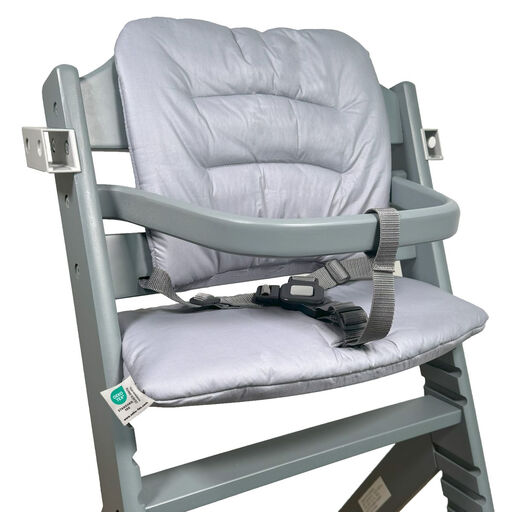
Why We Chose It: This two-piece seat cushion was developed specifically for the bebeconfort Timba high chair. Its design focuses on a precision fit and easy-care properties thanks to a water-repellent coating.
Pros:
Who It's For: Owners of a bebeconfort Timba high chair who are looking for a practical, durable, and easy-to-clean pad.
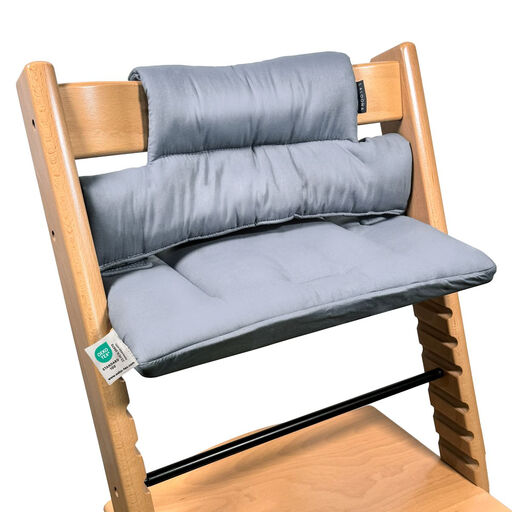
Why We Chose It: This pad is designed for the Stokke Tripp Trapp, one of the most popular grow-with-me high chairs. The flexibility to use the cushion both with and without the Baby Set makes it a versatile option.
Pros:
Who It's For: Owners of a Stokke Tripp Trapp who prefer a flexible and particularly easy-to-clean high chair pad as a high chair accessory.
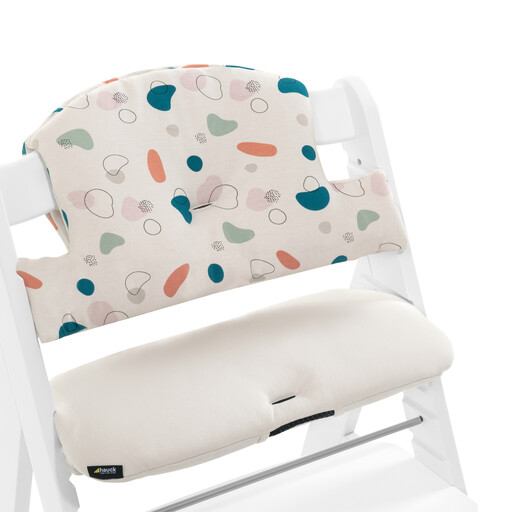
Why We Chose It: This cushion from hauck is designed for the hauck Alpha+ and similar models. The focus here is on material comfort through the use of organic cotton jersey and a functional non-slip underside.
Pros:
Who It's For: Owners of a hauck wooden high chair who place the highest value on skin-friendly, breathable materials and appreciate an additional non-slip feature.
The market offers a wide variety of solutions that differ in material, design, and function. In addition to the model-specific pads presented here, other variants exist to meet different needs. For a broader overview of available models and designs, you can consult our main category for Chair Seat Cushions.
1. When is a high chair cushion recommended? A seat cushion or seat reducer is recommended as soon as a child can sit upright independently, typically from around six months of age. It improves seating comfort and provides a better fit and more stability for smaller children in the high chair.
2. How do you properly clean a coated high chair cushion? For daily cleaning, a coated high chair cushion can simply be wiped down with a damp cloth and, if necessary, a mild detergent. For a more intensive cleaning, you should follow the manufacturer's care instructions. Many models are machine washable at 30°C or 40°C on a gentle cycle. To protect the coating, tumble drying should generally be avoided.