
Lieferung heute & morgen

Qualitätsgarantie

Willkommens-Angebote freischalten: KOSTENLOSE Lieferung | Bis zu 80 % RABATT | Kostenlose 30-Tage-JoyPlus-Testphase
App herunterladen
As a Joybuy Product Recommendation Officer, I see countless people every day looking for ways to support their health. The market for high-dose Vitamin D3 is particularly vast, but the information available is often confusing. Many products make big promises, but not all of them deliver what they claim. This guide is designed to help you navigate the typical pitfalls and make an informed decision that suits your personal needs.
Before you make a choice, it's crucial to understand the most common marketing traps that can lead to an unsuitable product selection.
To ensure you find a suitable product, you should check three key parameters. These will help you objectively evaluate the quality and appropriateness of a dietary supplement.
The term "high-dose" is not strictly defined. Generally, products with 1,000 IU or more per daily dose are described this way. Common dosages range from 1,000 IU to 5,000 IU or more. The right choice depends on your individual needs, which are influenced by factors like the season, your lifestyle, and age. A potential Vitamin D deficiency should ideally be assessed by a doctor to determine the appropriate dosage. Supplements with 2,000 to 4,000 IU are a popular option for supplementation during the months with less sun.
The effectiveness of Vitamin D can be enhanced by combining it with other vitamins and minerals.
Vitamin D tablets are the most common form. Pay attention to the size—micro-tablets are often easier to swallow. Also, check the ingredients list for unnecessary fillers, artificial colours, or allergens like gluten and lactose if you have intolerances.
Based on these criteria, we have identified several products from our range that are well-suited for different needs and user profiles.
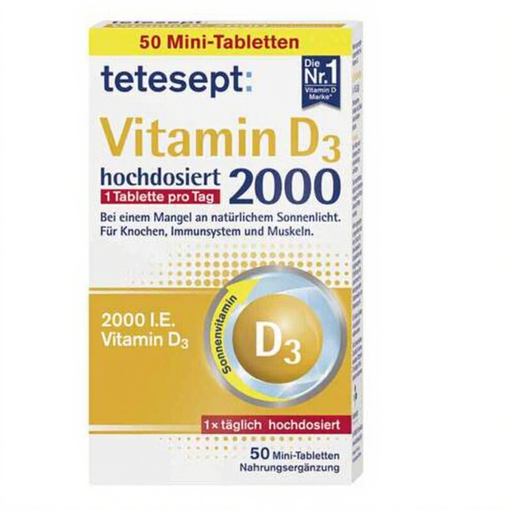
Why This Fits Their Persona: Ideal for individuals seeking a straightforward and reliable Vitamin D supply for the winter months or for those with low sun exposure. The 2000 IU dosage per tablet provides a solid foundation for supporting the immune system, bones, and muscles.
The product offers a clear and direct dosage of 2000 IU (50 ?g) without complex, potentially unnecessary additives. It focuses on the core function of Vitamin D supplementation.
Simple to take (one tablet daily). Gluten- and lactose-free, manufactured by a well-known German company.
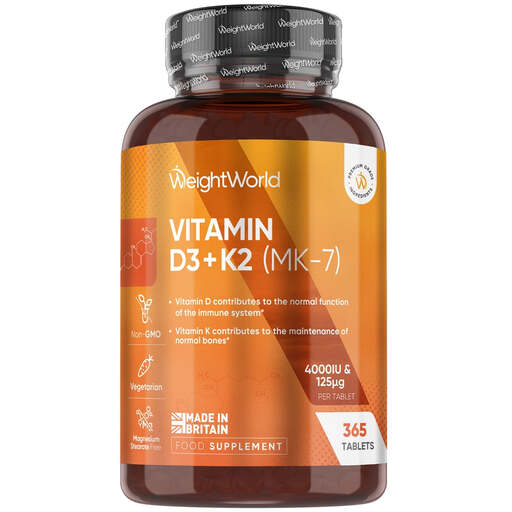
Why This Fits Their Persona: Perfect for users who want to specifically target bone health. The combination of high-dose Vitamin D3 and bioavailable Vitamin K2 (as MK-7) is designed to optimize calcium utilisation.
This product directly addresses the pitfall of ignoring nutrient synergies. It provides a scientifically-backed combination of Vitamin D3 and K2 in a single supplement.
High-dose formula (4000 IU D3 + 125 mcg K2). The one-year supply of 365 tablets offers excellent value for money for long-term use.

Why This Fits Their Persona: Suitable for individuals seeking broad support for bones and muscles. This product combines the three key components—Calcium, Magnesium, and Vitamin D3—in one tablet, covering multiple needs simultaneously.
It offers a well-thought-out Calcium Vitamin D3 combination, supplemented with Magnesium, which contributes to normal muscle function and electrolyte balance. This comprehensively implements the concept of synergy.
Balanced dosage of individual components for daily supplementation. The tablets can be split if needed, making them easier to take.
We have compiled a complete, up-to-date list of products that fully meet these strict selection criteria and German safety regulations.
Supplementation can be particularly considered during the low-sun months from October to March. Individuals who spend little time outdoors for work-related or other reasons may also have an increased need. Consulting with a doctor or pharmacist is recommended to clarify individual requirements.
Vitamin D is a fat-soluble vitamin. This means the body can absorb it best when taken with a meal that contains fat. Many manufacturers explicitly recommend this on the packaging.
Vitamin D3 (cholecalciferol) is usually derived from animal sources (e.g., lanolin from sheep's wool) and is the form that the human body also produces itself when exposed to sunlight. Vitamin D2 (ergocalciferol) is of plant origin. Studies suggest that Vitamin D3 is more effective at raising Vitamin D levels in the blood than Vitamin D2.