
Lieferung heute & morgen

Qualitätsgarantie

Willkommens-Angebote freischalten: KOSTENLOSE Lieferung | Bis zu 80 % RABATT | Kostenlose 30-Tage-JoyPlus-Testphase
App herunterladen
By Joybuy Product Recommendation Officer, August 29, 2026
Finding a suitable high-dose vitamin D supplement can be more complex than it first appears. The market offers a wealth of options, but not all products live up to their labels' claims. Many consumers invest in supplements that fail to deliver the desired benefits due to misleading information or a suboptimal formulation. This guide will help you identify the essential quality markers and make an informed decision.
Before you add a product to your cart, you should be aware of the most common issues that can lead to a poor choice.
To ensure you get a functional and correctly dosed product, you should check three central criteria.
If you are specifically looking to buy Vitamin D3, it's important to consider the form. Vitamin D3 (cholecalciferol) is the form that the human body produces itself when exposed to sunlight. It is considered more effective at raising vitamin D levels in the blood than vitamin D2 (ergocalciferol), which is of plant origin. For targeted supplementation, especially for a potential Vitamin D deficiency during the Vitamin D winter, D3 is the preferred option. Look for a clear dosage indication in IU, as this is the established standard. Products considered high-dose Vitamin D typically contain 1000 IU or more per dose.
Vitamin D tablets and capsules are the most common forms. They offer a precise, pre-dosed amount and are easy to handle. Since vitamin D is fat-soluble, taking it with a meal containing fat is recommended to optimise absorption. Some products in capsule form already contain oil, which can support bioavailability.
A particularly relevant combination is that of Vitamin D and K2. Vitamin D promotes the absorption of calcium from the intestine. Vitamin K2 (especially in the form of MK-7, menaquinone-7) helps transport this calcium to the bones and teeth and prevents it from being deposited in arteries and other soft tissues. When taking high-dose Vitamin D3, the additional intake of vitamin K2 can be a sensible supplement to support bone health.
Here is a selection of products tailored to specific needs and use cases.
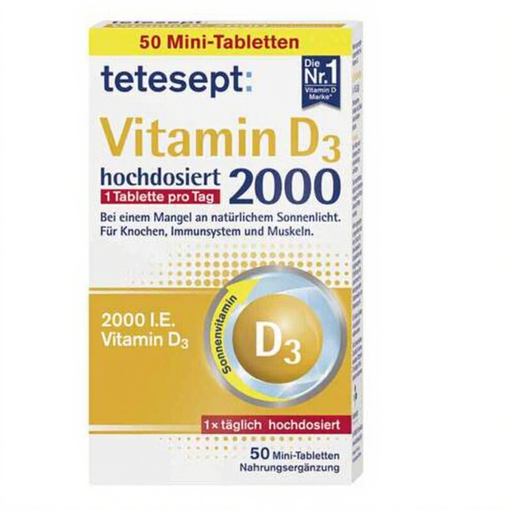
Why This Fits Their Persona: Ideal for individuals seeking a solid baseline with a relevant dose, without committing to a complex combination formula or a bulk package. Perfect for supporting the immune system during the low-sunlight months.
The product clearly states the dosage as 2000 IU and uses the bioavailable form Vitamin D3. It avoids unnecessary additives, focusing on the essential active ingredient.
Simple, once-daily intake. The tablets are also gluten- and lactose-free, making them suitable for individuals with corresponding intolerances.
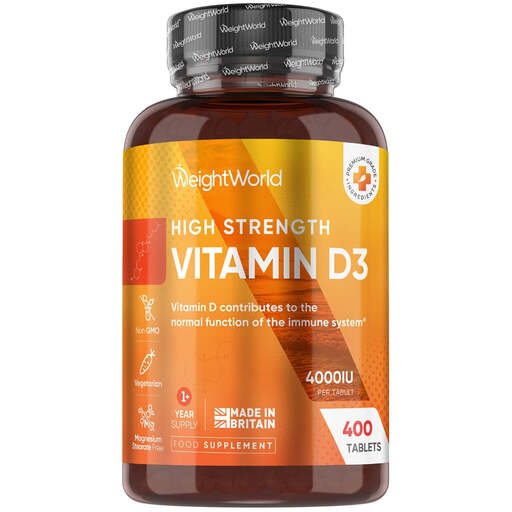
Why This Fits Their Persona: Suitable for individuals who have a higher requirement after consulting with a doctor or who want to ensure a long-term, uninterrupted supply. The bulk pack offers excellent value for money for continuous use.
This product offers a clear, high dosage of 4000 IU of Vitamin D3 per tablet. The pack size of 400 tablets prevents frequent repurchasing and the associated costs.
Provides a supply for over a year (400 days). The small micro-tablets are easy to swallow. The formula is vegetarian and free from gluten, lactose, and soy.
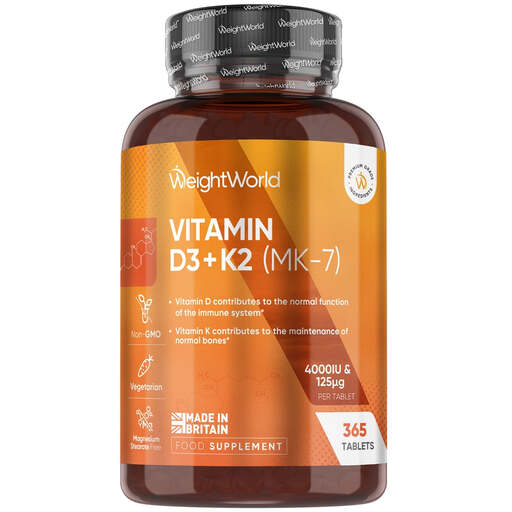
Why This Fits Their Persona: For health-conscious users who want to leverage the synergistic effect of Vitamin D3 and K2, particularly for supporting bone health and normal calcium metabolism.
This product bypasses the pitfall of unbalanced combination formulas by offering a scientifically-backed pairing. It uses the highly bioavailable form Vitamin K2 as MK-7.
Combines a high dose of 4000 IU of D3 with 125 mcg of K2 (MK-7). The 365-tablet pack lasts for a full year, supporting consistent intake.
We've compiled a complete, up-to-date list of products that fully meet these strict selection criteria and UK regulations.
Supplementation can be considered, especially during the low-sunlight months from October to March. People who spend little time outdoors for work-related or other reasons, as well as older adults, may also have an increased need. Taking it to correct a diagnosed Vitamin D deficiency should always be done after consulting with a doctor to determine the correct dosage.
Yes, this is highly recommended. As a fat-soluble vitamin, cholecalciferol is absorbed much better by the body when taken with a meal containing fat. Taking it on an empty stomach can significantly reduce its bioavailability.
IU stands for International Units and is a measure of a substance's biological activity. mcg stands for micrograms and is purely a unit of weight. For Vitamin D3, the conversion is: 1 mcg = 40 IU. Therefore, a product with 50 mcg of Vitamin D3 contains 2000 IU. Pay attention to this conversion to objectively compare the dosages of different products.