
Lieferung heute & morgen

Qualitätsgarantie

Willkommens-Angebote freischalten: KOSTENLOSE Lieferung | Bis zu 80 % RABATT | Kostenlose 30-Tage-JoyPlus-Testphase
App herunterladen
The range of vitamin D supplements is vast, and choosing the right product can quickly become overwhelming. Many who search for "high-dose vitamin D3" encounter marketing promises that create more confusion than clarity. As your Joybuy Product Recommendation Officer, I'm here to help you separate fact from fiction and make an informed decision. We'll highlight the most common pitfalls and show you what truly matters when making your selection.
Before you buy vitamin D, it's crucial to understand the typical marketing traps that can lead to an unsuitable purchase.
To avoid buyer's remorse, you should check three core parameters. These will help you objectively assess product quality.
The dosage of vitamin D is stated in International Units (IU) or micrograms (?g). Supplements with 2000 IU or more per daily dose are generally considered "high-dose".
Always look for a clear indication of the IU per tablet or recommended daily portion.
Vitamin D3 contributes to the normal absorption and utilisation of calcium. Vitamin K2, in turn, contributes to the maintenance of normal bones by helping to transport calcium where it is needed—into the bones and teeth. A Vitamin D3 K2 combination supplement can therefore be a sensible choice, especially if the focus is on supporting bone structure. Pay attention to the form of vitamin K2; MK-7 is considered a form with high bioavailability.
The choice of format depends on your personal preference. Each form has specific characteristics:
Regardless of the form, checking the ingredients list is crucial to identify unwanted fillers, allergens, or high amounts of sugar.
Based on the criteria above, we have compiled a selection of products tailored to different needs.
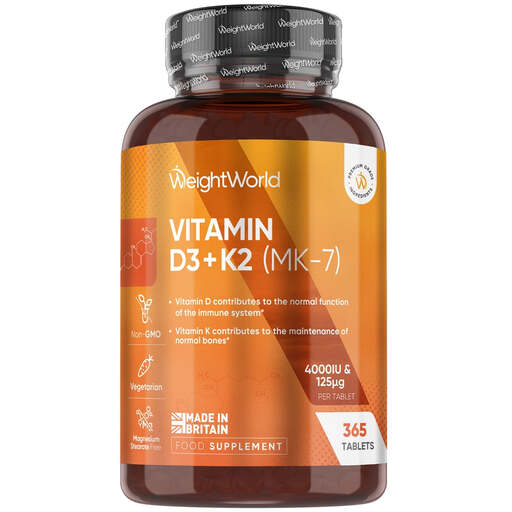
Why This Fits Their Persona: This product is designed for users seeking long-term, synergistic support. The combination of high-dose vitamin D3 and the bioavailable K2 form, MK-7, specifically addresses the maintenance of normal bones. The one-year supply also offers excellent convenience.
It bypasses the "solo ingredient" trap by specifically combining Vitamin D3 and K2, which is relevant for calcium utilisation.
One-year supply (365 tablets); contains the highly absorbable vitamin K2 form MK-7.
Why This Fits Their Persona: For anyone who has difficulty swallowing tablets, these gummies offer a pleasant and flavourful alternative. They deliver a high dose of 4000 IU per daily serving in an easy-to-chew format.
Although it contains sugar, the composition is transparent. It uses pectin instead of gelatine, making it suitable for vegetarians and a clear alternative to traditional tablets.
Easy, chewable intake with fruit flavour; vegetarian and gelatine-free.
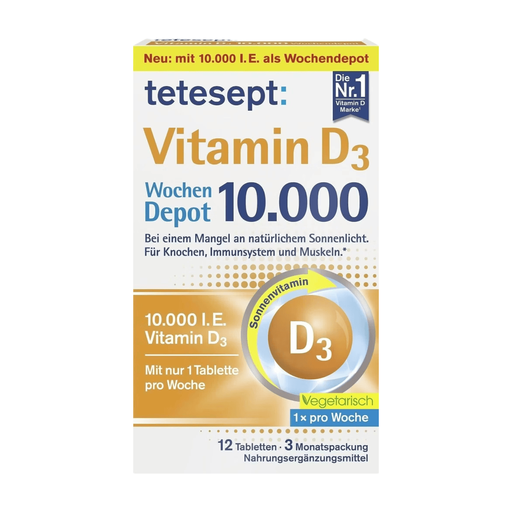
Why This Fits Their Persona: This product is ideal for people with a busy schedule who are looking for a hassle-free solution. Taking just one tablet per week significantly simplifies the routine while still ensuring supply, as the body can store vitamin D.
It addresses the "high-dose" ambiguity by clearly labelling itself as a weekly depot. The 10,000 IU dosage is explicitly intended for weekly, not daily, consumption.
Maximum convenience with just one dose per week; vegetarian, lactose- and gluten-free.
We've compiled a complete, up-to-date list of products that fully meet these strict selection criteria and UK safety regulations.
Supplementation may be considered when the body's own production is limited. This is often the case during the low-sun months from October to March. People who spend little time outdoors for work or other reasons, as well as older adults, can also be target groups. Vitamin D contributes to the normal function of the immune system (vitamin D for the immune system) and the maintenance of normal bones and muscle function. If you are unsure about a vitamin D deficiency, you should seek medical advice.
Both intake methods are common. Daily intake ensures a steady level in the blood. A weekly vitamin D depot utilises the body's ability to store fat-soluble vitamins and offers a high degree of convenience. The choice ultimately depends on personal preference and lifestyle.
Since vitamin D is fat-soluble, its absorption in the body can be improved when taken with a fat-containing meal. Many manufacturers explicitly recommend this in their intake instructions. A look at the product packaging will provide this information.